How to Grow Autoflowers: Seed to Harvest Guide
Autoflowers grow from seed to harvest in about 7 to 9 weeks for most strains (up to 13 to 14 weeks for slower varieties), flowering on age instead of a light-cycle change. This guide walks the full lifecycle: how to start the seeds, how to set up an indoor space, which soil and feeding work best, and when flowering and harvest happen.
It also covers the mistakes that shrink an auto harvest and how autoflower seeds compare to other cannabis seeds. By the end you will know how to run an autoflower grow from the first taproot to the final cut.

Gabriel ILGM
Table of contents
What Are Autoflowers and How Do They Grow?
Autoflowers are cannabis plants that start flowering on age instead of waiting for a light-cycle change. A photoperiod plant only flowers when daily light drops to about 12 hours, but an autoflower flips to flowering on its own after a few weeks of growth.
This trait comes from ruderalis, a hardy cannabis subspecies native to the Volga River region of southern Siberia and Russia, where short growing seasons favored fast, age-based flowering. The result is a fast, compact plant that runs the same light schedule from sprout to harvest.
Autoflowers are not a weaker type of cannabis. They are full cannabis plants that grow buds, or nugs, the same way photoperiod plants do, just on a shorter and more predictable clock.
Why Autoflowers Flower on Age, Not Light
Autoflowers flower on age because ruderalis genetics trigger flowering after a set number of weeks, not after a change in the light cycle. Photoperiod cannabis plants read shorter days as the signal to flower, so growers cut their lights to 12 hours to start bud production.
Autoflowering cannabis plants ignore that signal and switch to flowering on an internal timer instead. This is why autos can stay under the same light schedule the whole grow and still finish on time.
How Long Does an Autoflower Grow Take?
An autoflower grow takes about 7 to 9 weeks from seed to harvest for most strains, with slower varieties running up to 13 to 14 weeks. A typical plant spends roughly 4 to 6 weeks in early growth before flowering, then several weeks finishing. The total clock is fixed by genetics, so the plant moves forward whether or not the grow is perfect.
That short timeline rewards good early care and punishes delays, because there is no long vegetative window to make up lost ground.
Our Bestsellers

How to Start Autoflower Seeds the Right Way
Autoflower seeds start best when germinated and planted straight into their final pot. The short lifecycle gives autos little time to recover from setbacks, so the goal is a fast, clean start with no transplant shock.
Germinate seeds only where permitted by federal, state and local rules. ILGM stocks autoflowering seeds for eligible adult buyers who want to begin a grow.
These are the three early steps:
Germinating the seed — cracking the shell and releasing the taproot
Skipping the transplant — planting into the final container to protect the roots
The seedling stage — the first weeks of slow above-ground growth
How to Germinate Autoflower Seeds
Autoflower seeds germinate when warmth and moisture crack the shell and release the taproot. A common method places the seed between damp paper towels at room temperature, around 70 to 78°F, until a small white root appears in 1 to 3 days. Some growers plant the seed directly into moist soil and skip handling the sprout.
Either way, keep the seed dark, damp and warm, because dry or cold conditions stall germination.
Why Autoflowers Skip Transplanting
Autoflowers skip transplanting because their short lifecycle leaves no time to recover from root stress. Moving a young plant breaks fine roots and can shock it for several days, and an auto cannot afford lost days.
Planting the germinated seed straight into its final container, often a 3 to 5 gallon fabric pot, lets the roots spread without interruption. The plant then grows on one clean timeline from seedling to harvest.
How Long Is the Autoflower Seedling Stage?
The autoflower seedling stage lasts about 1 to 3 weeks from sprout to the first sets of true leaves. During this stage the seedling builds its first roots and leaves, so growth above the soil looks slow. Light feeding and gentle watering matter most here, because the small root zone burns easily.
The seedling stage ends when the plant shifts into faster vegetative growth and starts stacking nodes.
How to Grow Autoflowers Indoors
Autoflowers grow indoors under a fixed light schedule inside a tent or small space. Indoor growing gives the grower control over light, temperature, humidity and airflow, which suits the auto's short cycle, where there is less time to recover from a major early mistake. The compact size of most autoflowering plants also fits tight indoor spaces well.
Three things shape a good indoor auto setup. Here's what each one comes down to:
Light schedule — how many hours of light autos need
Plant height — how big autos get in an indoor space
Grow tent setup — the controlled environment most indoor growers use
What Light Schedule Do Autoflowers Need?
Autoflowers need a steady light schedule, often 18 to 24 hours of light per day for the whole grow. Because autos flower on age, the grower never has to drop the lights to 12 hours like a photoperiod grow.
An 18/6 schedule, meaning 18 hours on and 6 hours off, balances strong growth with lower power use. A few growers run 24 hours of light, but a dark period gives the plant time to rest and can reduce heat.
How Tall Do Autoflowers Get Indoors?
Autoflowers get about 1 to 4 feet tall indoors, depending on strain and pot size. Most autoflowering strains stay short and bushy, which is part of why they fit grow tents and small rooms. Pot size, light distance and genetics all shape the final height.
Because autoflowers have limited time to recover from stress, low-stress training is generally a safer choice than topping for controlling plant size and shape.
Growing Autoflowers in a Grow Tent
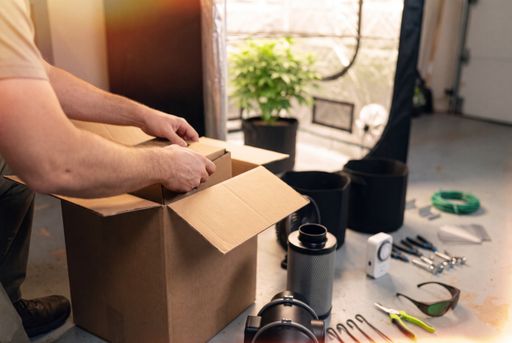
A grow tent gives autoflowers a controlled space for light, airflow and humidity. The reflective walls bounce light back onto the plants, and a fan plus carbon filter handle airflow and smell. A small tent, around 2x2 or 3x3 feet, holds one to four autoflowering plants depending on their size.
The enclosed space lets the grower hold steady conditions, which matters most during the fast auto cycle.
First Grow?
Best Soil and Feeding for Autoflowers
Autoflowers grow best in a light, airy soil that drains well and holds gentle nutrition. Heavy, nutrient-rich soils can overfeed an auto's small root zone and burn the plant early. The aim is a medium that stays loose, drains fast and feeds the plant slowly. This protects the seedling and supports steady growth through the short cycle.
What Soil Recipe Works for Autoflowers?
An autoflower soil recipe mixes a light base with aeration and a mild slow-release feed. A common blend combines a peat or coco base with perlite for drainage and a small amount of worm castings for gentle nutrition.
The mix should feel fluffy, not dense, so air and water reach the roots. A light pre-mixed potting soil works too, as long as it is not loaded with strong nutrients.
How to Feed Autoflowers Without Overdoing It
Autoflowers feed lightly because their fast cycle and small root zone burn easily on heavy nutrients. Start with about a quarter to half of the dose listed for photoperiod plants and watch the leaves for signs of stress.
Yellow, clawed or burnt leaf tips usually mean too much feed, so growers cut back rather than push more. Light, consistent feeding through flowering supports bud development without overwhelming the plant.
Autoflower Flowering and Harvest Window
Autoflowers enter flowering on their own around weeks 4 to 6 from sprout. No light change is needed, so the grower keeps the same schedule and lets the plant shift on its internal timer. Flowering then runs for roughly 7 to 9 weeks while the buds, or flower clusters, fill out. Watching the plant during this window tells the grower when to harvest.
When Do Autoflowers Start Flowering?
Autoflowers start flowering about 4 to 6 weeks after they sprout, with no light change needed. The first sign is usually pre-flowers at the nodes, where small white hairs called pistils appear. From there the plant stretches and starts stacking buds along the stems. Because the flowering trigger is age, the timing stays close to the strain's listed schedule across most setups.
How to Tell When Autoflowers Are Ready to Harvest
Autoflowers signal harvest readiness when the trichomes turn cloudy and the pistils darken. Trichomes are the tiny resin glands on the buds, and they shift from clear to milky to amber as the plant ripens.
Most growers harvest when the trichomes look mostly cloudy with a few amber, checked with a cheap magnifier. The darkening of the white hairs to orange or brown is a second clue that the harvest window is open.
Common Autoflower Growing Mistakes to Avoid
Autoflower growing mistakes usually come from treating autos like photoperiod plants. The short, fixed cycle changes which habits help and which ones hurt. Autos are a popular path for new growers, and ILGM groups beginner-friendly options under cannabis seeds for beginners. The most common mistakes are:
Heavy feeding — full-strength nutrients burn an auto's small root zone, so start low
Transplanting — moving the plant costs recovery days the short cycle cannot spare
Heavy training — topping and aggressive pruning stress autos, so gentle methods like low-stress training fit better
Overwatering — soggy soil starves the roots of air, so water before the medium dries out, but only once the top inch or two has lost a bit of its moisture
Trying to extend veg — autos flower on age no matter what, so there is no long veg stage to chase
Fixing these habits early protects the harvest, because an auto gives little time to correct a problem once the cycle is running.
Can You Grow Autoflowers Outdoors?
Yes, autoflowers grow outdoors and can fit more than one harvest into a single season where permitted by federal, state and local rules. Because autos flower on age instead of shortening days, they do not wait for late summer to bud.
A grower can start one round in spring and a second in summer in many climates. Autos also stay small, which makes them easier to manage in a private outdoor space.
Outdoor autos still need strong direct sun, well-draining soil and protection from heavy rain near harvest. The same light-feeding rule applies, since outdoor soil can already carry nutrition.
How Autoflower Seeds Compare to Other Cannabis Seeds
Autoflower seeds are one of the main cannabis seed options available to growers, alongside traditional photoperiod varieties. Their key difference is that they begin flowering based on age rather than changes in the light cycle, offering a simpler timeline while typically producing smaller plants.
Feminized cannabis seeds are bred to produce female plants, helping growers focus on bud-producing crops, and they can include both autoflower and photoperiod varieties.
Photoperiod strains give growers more control over when flowering begins, often allowing for larger plants and longer vegetative growth.
Buyers chasing strong effects across seed types can also compare high THC seeds, since reported potency depends on genetics, growing environment and lawful cultivation conditions. The right choice depends on space, timeline and how much control the grower wants over the flowering switch.
Frequently Asked Questions About Growing Autoflowers
Do You Plant Autoflower Seeds Right After Germination?
Yes, plant the germinated seed into its final pot once the taproot shows. Handling the sprout as little as possible protects the fragile root and avoids transplant shock.
How Long Does an Autoflower Take From Start to Finish?
Most autoflowers run about 7 to 9 weeks from seed to harvest, with slower varieties reaching 13 to 14 weeks. Early growth takes around 4 to 6 weeks before the plant flowers on its internal timer, set by the strain's genetics.
Can You Grow Autoflowers in a Micro Grow?
Yes, autos suit micro grows because most stay short and bushy. A small tent and a low-power light can finish a compact autoflowering plant in tight space.
Can You Top Autoflowers?
Topping is risky on autoflowers because the short cycle leaves little recovery time. Low-stress training, which gently bends and ties the stems, shapes the plant with less risk.
Where Can Eligible Adults Buy Autoflower Seeds?
Eligible adult buyers can browse autoflower and other cannabis seeds at ILGM where purchase is permitted by federal, state and local rules.

Gabriel ILGM
Gab Wulff is an ecologist and designer linking sustainability, community gardening, and cannabis reform.
Continue Reading
You might also find these interesting.