
Spot the Early Signs of a Hermie Plant & Save Your Cannabis Grow [Visual Guide]
Hermies can seed (and wreck) your whole crop before you even notice. The early signs of a hermie plant are small, so you have to know exactly what to look for. This in-depth guide comes with pictures — and shows you how to spot a hermaphrodite weed plant as soon as possible. You'll learn:
The difference between hermie plants and nanners.
Early hermie plant signs to catch.
How to tell pollen sacs from normal calyxes.
What triggers herming (and how stronger genetics minimize the risk).
The steps to safely remove a hermie plant from your grow.
Quick Snapshot:
Check the nodes and inside the buds every day once flowering starts. Round, smooth, ball-like sacs with no white hairs are male pollen sacs. Thin yellow banana shapes poking from a bud are nanners. Either one means you remove the plant fast, before the pollen spreads.

Gabriel ILGM
Table of contents
What is a Hermie (Hermaphrodite) Cannabis Plant?
A hermie cannabis plant grows both female pistils and male pollen sacs on one plant. Hermie is short for hermaphrodite, which means the plant carries both sex organs. A hermaphrodite weed plant can pollinate itself and seed nearby females, because it makes its own pollen.
Seeded buds ruin your grow because pollination shifts a female's energy from flower to seeds. That trade reduces both the size and the quality of the buds you harvest. Most growers want sinsemilla, the Spanish term for seedless flower from unpollinated female plants.
One hermie in the room puts that seedless harvest at risk.
True Hermie Plants vs Nanners (Bananas)
True hermie plants grow separate male and female flowers on different parts of the plant. Nanners are thin yellow anthers, the pollen-bearing part, that poke straight out of female buds.
The two differ in stability: true hermies often run in the genetics, while nanners usually come from stress. Nanners spread pollen fast, because they don't need a sac to burst first — an exposed anther can shed the moment it appears.
What Are the Early Signs of a Hermie Plant?
The early signs of a hermie plant show up at the nodes and inside the buds. You're looking for small round pollen sacs or thin yellow nanners that don't belong on a female. Catch them early and you protect the rest of the crop, because pollen spreads fast once a sac opens.
Below, you’ll learn about:
Male pollen sacs: the round, hairless balls that cluster at the nodes.
Bananas (nanners): yellow anthers that push out from inside the buds.
Pollen sacs vs female calyxes: how to avoid the most common mix-up.
Low-reliability signs: stress clues that hint at trouble but don't confirm it.
Male Pollen Sacs on Female Cannabis Plants
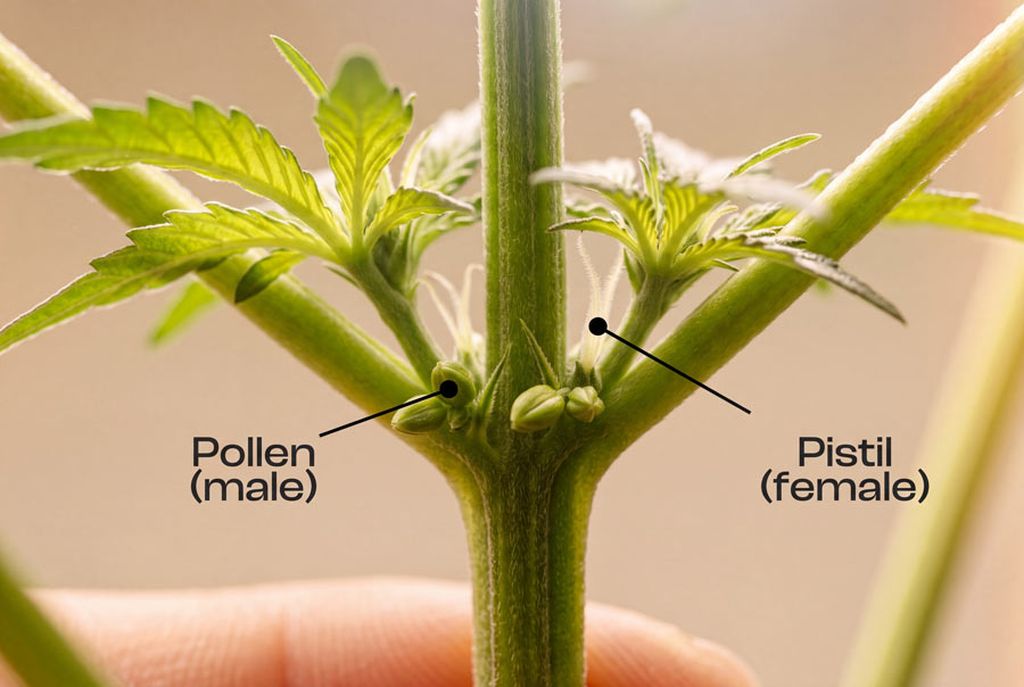
Male pollen sacs look like small, smooth, round balls that cluster at the nodes and grow no white hairs. They appear at the joints where branches meet the stem, often on lower or shaded growth first. Before they open, the sacs can look like tiny green grapes bunched together. Once a sac splits, it releases pollen that seeds every female within reach.
Bananas (Nanners) Inside Cannabis Buds
Bananas, or nanners, are thin yellow male anthers that push out from inside female buds and release pollen fast. Unlike a sac, a nanner doesn't need to burst, so it can pollinate the moment it appears.
Nanners often show late in bloom, especially on stressed plants or buds left past harvest. They can hide deep in a cola (the main flower cluster) so part the buds and look closely.
Pollen Sacs vs Female Calyxes
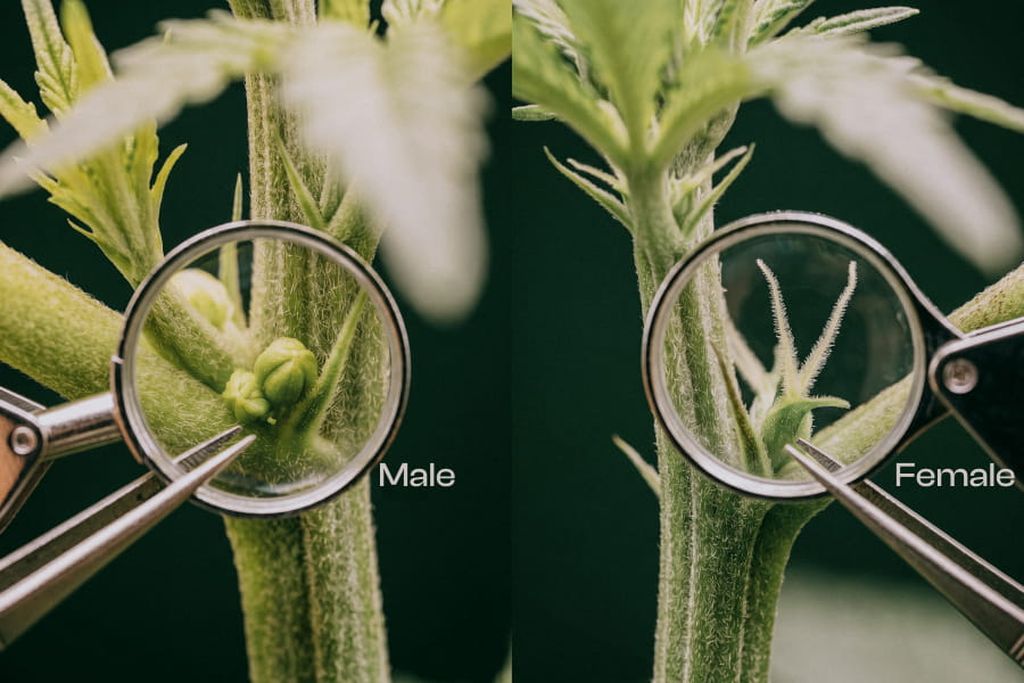
Pollen sacs sit round and hairless, while a female calyx looks teardrop-shaped with two white pistils. A calyx is the small pod that holds a flower, and pistils are the white hairs that catch pollen. A single swollen calyx with pistils is usually normal, not a hermie sign. That swelling usually means the calyx is maturing or stacking new growth, so keep watching before you cull.
Here's how female calyxes vs pollen sacs compare, with a reliability rating for each tell:
Shape: A female calyx is teardrop-shaped and pointed. A pollen sac or nanner is round or thin and banana-shaped. High reliability.
White pistils: Female calyxes carry two white pistils. Pollen sacs and nanners have none. High reliability.
Location: Female calyxes hug the stem or bud site. Hermie structures cluster at nodes or push out from between buds. High reliability.
Surface texture: Female calyxes feel resinous with a slight fuzz. Pollen sacs are smooth and waxy to the touch. Medium reliability.
Color: Female pistils start white and darken as the plant matures. Nanners come in yellow or lime green. Medium reliability.
Lean on the high-reliability tells first — shape and missing pistils give you the clearest read.
Low-Reliability Hermie Plant Signs
Low-reliability hermie plant signs include orange pistils and odd bud shapes, which point to stress but don't confirm a hermie. These clues usually mean the plant is stressed or starting to pollinate, not that it's intersex. Treat them as a prompt to inspect the nodes and buds, not as proof to cull the plant.
When Do Early Signs of a Hermie Plant Show Up?
Early signs of a hermie plant show up once flowering starts, so daily checks matter most early in bloom. You won't see a clear sex signal in veg. Checks ramp up at the flip to 12/12, the start of flowering. Daily checks of the nodes and inside the colas catch problems early.
Hermie Signs During the Flowering Stage
Hermie signs during the flowering stage appear at the nodes first, then inside the colas as buds swell and stack. Early flower is the highest-risk window, because a single open sac then can seed the whole tent. Late-flower nanners do less damage, because seeds need time to form before harvest.
Do Autoflower Cannabis Plants Turn Hermie?
Yes, autoflower cannabis plants can turn hermie, but they avoid the light-leak stress that triggers many photoperiod hermies. Plants grown from autoflower seeds flower on age instead of a light cycle, so a light leak in the dark period won't flip them. They can still herm from heat or weak genetics, so a steady environment and stable genetics still matter.
What Causes a Cannabis Plant to Turn Into a Hermie?
A cannabis plant turns into a hermie when stress or unstable genetics push it to make male flowers as a survival move. Stress is the trigger you control most, and genetics set the baseline risk underneath it.
Environmental Stress and Hermie Plants
Environmental stress drives most hermies. Light leaks in the dark period top the list, because broken darkness confuses a flowering plant, with heat spikes close behind and rough handling adding to the load.
Feed on a steady schedule with balanced cannabis nutrients, since erratic feeding piles on more stress. A pH problem can trigger cannabis nutrient lockout, which starves the plant and adds further stress that flips a hermie.
Genetics and Hermie Cannabis Plants
Genetics set the baseline for hermie risk, because unstable lines and bagseed throw male parts more often than stable stock. Bagseed refers to the seeds you find in bought flower, and it carries no breeding record at all.
Reputable breeders stabilize their genetics across generations and typically cull any plant that shows intersex traits, so their seeds start from a cleaner line.
What Should You Do If You Find a Hermie Plant?
hen you find a hermie plant, act fast to stop the pollen, because one open sac seeds a whole tent. Your move depends on how many male parts you see and how far into bloom you are. Here's how to match what you're seeing to the right response:
Round, hairless sacs at nodes — male pollen sacs forming. Confirmed. Remove the plant or affected branch immediately.
Yellow nanner poking from a bud — nanner actively releasing pollen. Confirmed. Mist it first to neutralize loose pollen, then remove fast.
One swollen calyx with pistils still showing — likely a normal calyx, not a hermie sign. Suspected. Keep watching daily before you act.
Pistils turning orange early — possible stress response or early pollination. Low confidence. Inspect the nodes for sacs before drawing any conclusions.
Confirmed sightings call for immediate action. Suspected ones call for a closer daily look before you cull anything.
How to Remove a Hermie Plant Safely
Removing a hermie plant safely comes down to keeping loose pollen from drifting onto your females. Work in this order:
Cut the airflow. Turn off fans and any intake or exhaust so stray pollen has nothing to ride on.
Mist the plant lightly. A light spray weighs down loose pollen and keeps it stuck in place instead of becoming airborne.
Pluck the male parts. Use clean tweezers to remove any pollen sacs or nanners, working slowly so nothing tears open.
Bag a heavily affected plant. If male parts cover the plant, slip a bag over it from the top down and remove it whole. The bag traps loose pollen so it can't reach the buds you're protecting.
Can You Save a Hermie Plant?
Yes, you can sometimes save a hermie plant when you catch one or two nanners early and remove them daily. This works only if you can inspect every day and keep the plant away from the others. A heavy hermie isn't worth saving, because one missed anther still seeds the buds nearby. Removing the plant is the safer call rather than risking the whole crop.
How Do You Prevent Hermie Plants in Future Grows?
You prevent hermie plants by keeping stress low and genetics stable, so plants never throw male flowers in the first place. Consistency does most of the work, from the light schedule to feeding and temperature.
Keeping Your Grow Environment Stable
Keeping your grow environment stable means a locked light schedule, steady temps and balanced feeding from seedling to harvest. Seal light leaks before you flip to flower, then hold the dark period to a full twelve hours.
Hold temperatures in a steady range and avoid big day-to-night swings during bloom. Go easy on heavy pruning or training late in veg and early flower, because shock can trigger male flowers.
How Stable Seed Genetics Reduce Hermie Risk
Stable seed genetics reduce hermie risk, because reputable breeders select against intersex traits before the seeds reach you. Strong genetics start before germination, so pick cannabis seeds from a breeder that breeds for stability.
High-quality feminized seeds aren't more likely to herm. That old myth confuses bad breeding with the feminizing process. What matters is the stability of the parent plants, not the feminizing step itself.
New growers stack the odds in their favor with resilient beginner cannabis seeds that handle small mistakes. These seeds are sold to eligible adult buyers where permitted by federal, state and local rules.
FAQs About Hermie Weed Plants
How is a Hermie Different From a Male Plant?
A male cannabis plant grows only pollen sacs and no buds, while a hermie grows both. A pure male shows clusters of sacs at the nodes soon after the flip to flower. A hermie can look female for weeks, then throw a few sacs or nanners among the buds.
Should You Grow Seeds From a Hermie Plant?
No, you shouldn't grow seeds from a hermie plant, because they carry a higher chance of herming again. You'd likely face the same seeded buds and lost potency next round. Stable genetics give you a cleaner shot at a seedless harvest.
When Should You Harvest a Hermie Plant?
Harvest a hermie plant early if nanners show up close to your normal harvest window. Seeds need time to form, so cutting before pollen matures limits the damage. Removal usually beats a late rescue, if the plant herms with weeks left.

Gabriel ILGM
Gab Wulff is an ecologist and designer linking sustainability, community gardening, and cannabis reform.