
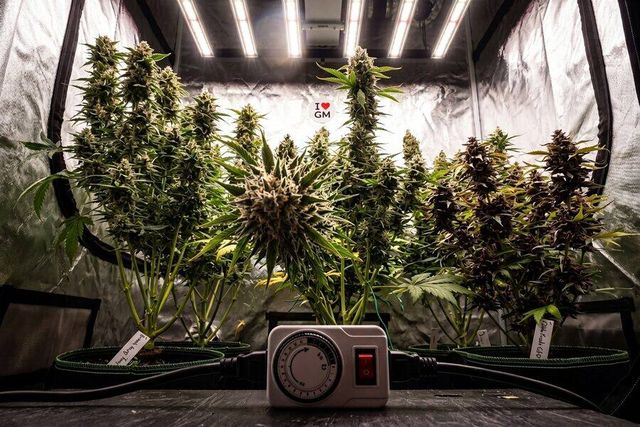
Autoflower Light Schedule: Best Light Cycle for Autos
Autoflowers run one light schedule from seed to harvest, usually 18 to 24 hours of light per day. They flower on age, so the grower never drops the lights to 12 hours like a photoperiod grow.
This guide explains the autoflower light cycle, compares 18/6, 20/4 and 24/0, answers whether autos really need 24 hours of light, and walks the schedule through each lifecycle stage. By the end you will know which schedule fits your space, your power bill and your plants.

Gabriel ILGM
Table of contents
What Is an Autoflower Light Schedule?
An autoflower light schedule sets the daily hours of light and darkness autoflowering cannabis plants get from seed to harvest. Most growers run between 18 and 24 hours of light per day for the whole grow.
The schedule stays fixed because autos flower on age, not on a change in day length. That one constant clock is what makes autoflowers simpler to time than photoperiod plants.
The light hours still feed growth even though they do not control flowering. More light hours give the plant more energy for buds, while the dark hours let it rest and move nutrients. The schedule you pick mostly affects growth speed, heat and your power bill, not whether the plant flowers.
How Does the Autoflower Light Cycle Differ From Photoperiod?
The autoflower light cycle differs from the photoperiod light cycle because autoflowers flower on age, not on a light change.
A photoperiod plant only starts flowering when daily light drops to about 12 hours, so the grower runs a long veg schedule and then flips to 12/12. Autoflowering cannabis plants ignore day length and switch to flowering on an internal timer after a few weeks. This means the autoflower light schedule never changes mid-grow.
That difference shapes the whole grow. A photoperiod grower controls when the plant flowers by controlling the light, but an autoflower grower cannot speed up or delay flowering with the lights. If you want to choose your flowering point and run longer veg, photoperiod seeds give that control. If you want one fixed schedule and a faster finish, autos do the timing for you.
What Is the Best Light Schedule for Autoflowers?
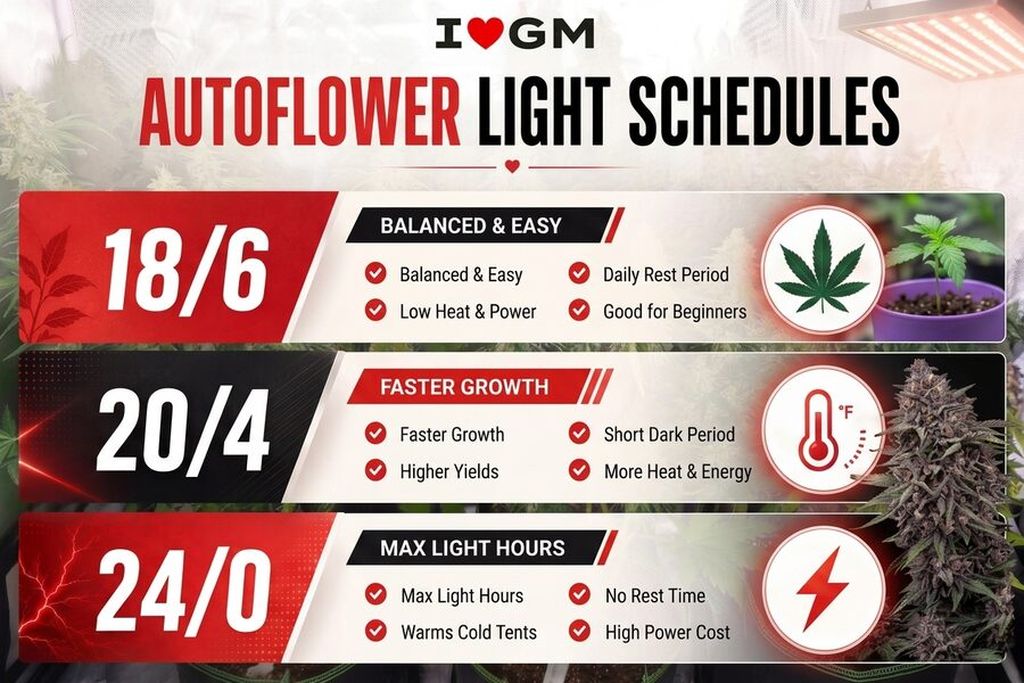
The best light schedule for autoflowers is usually 18 hours of light and 6 hours of dark, though some growers run 20/4 or even 24/0. The 18/6 schedule gives strong growth while still letting the plant rest in the dark and cutting some heat and power cost.
There is no single schedule that wins for every grower, because the right choice depends on your space, your power bill and your strain.
These are the three schedules most autoflower growers choose between:
18/6 — the balanced default, strong growth with a rest period
20/4 — slightly faster growth, a small dark window, more heat and cost
24/0 — maximum light hours, no dark period, highest heat and power use
Whichever you pick, run the same schedule the whole grow. ILGM stocks cannabis seeds for eligible adult buyers planning a grow where it is lawful.
The 18/6 Autoflower Light Schedule
The 18/6 autoflower light schedule gives 18 hours of light and 6 hours of dark each day. This is the most common choice because it balances fast growth with lower heat and a smaller power bill.
The 6-hour dark period lets the plant rest and move water and nutrients, which some growers believe supports healthier development. For most home setups, 18/6 is the safest starting point.
The 20/4 Autoflower Light Schedule
The 20/4 autoflower light schedule gives 20 hours of light and 4 hours of dark each day. The extra two hours of light can push slightly faster growth than 18/6, while the short dark window still gives the plant a brief rest. The trade-off is more heat in the tent and a higher power bill. Growers in cool spaces with good airflow often pick 20/4 as a middle ground.
The 24/0 Autoflower Light Schedule
The 24/0 autoflower light schedule gives 24 hours of light with no dark period. Some growers run 24/0 to push the most growth, since more light hours mean more energy for the plant. The downsides are the highest heat, the highest power bill and no rest period for the plant.
Strong growth and potency still depend on genetics, so buyers chasing those traits should compare highest yielding seeds and high THC seeds rather than relying on light hours alone.
Do Autoflowers Need 24 Hours of Light?
No, autoflowers do not need 24 hours of light. Autoflowering cannabis plants grow well on 18 to 24 hours of light, and the dark hours (where you run them) give the plant time to rest. A 24-hour schedule can work, but it adds heat and power cost without a guaranteed gain. The plant flowers on age either way, so the extra light hours do not change when buds appear.
Many growers prefer giving autos a dark period because it mirrors a natural rest cycle. The dark hours are when plants move water and nutrients and recover from the day. If your goal is steady growth with lower cost, 18/6 reaches that without running the lights around the clock.
What Light Schedule Do Autoflower Seedlings Need?
Autoflower seedlings need the same 18 to 24 hours of light as the rest of the grow. There is no separate seedling schedule, because autos run one light cycle from sprout to harvest. The main difference at the seedling stage is light strength, not light hours. Keep the light gentle and a bit further from the plant so the small seedling does not get stressed or burned.
Seedlings are fragile, so soft light at a safe distance matters more than the exact hour count. Once the plant builds its first true leaves and roots, it handles brighter light and faster growth. The schedule itself stays the same the whole time. For the full picture across plant types, see this cannabis light schedule guide.
How Does the Light Schedule Change Across the Autoflower Lifecycle?
The autoflower light schedule stays the same across the whole lifecycle, unlike a photoperiod grow that needs a flip to 12/12. The hours you set at the seedling stage carry through vegetative growth and flowering with no change.
What changes across the lifecycle is light strength and plant size, not the schedule. This is the main reason autoflowers are simpler to time.
Here is how each stage uses the same schedule:
Seedling stage — same hours, gentler light at a safe distance
Vegetative stage — same hours, brighter light as the plant grows
Flowering stage — same hours, strong light to feed bud growth
Autoflower Seedling Stage Lighting
The autoflower seedling stage uses 18 to 24 hours of light with low intensity. The young plant has a small root zone and few leaves, so it needs soft light rather than long dark periods. Keep the light source a bit further away to avoid stress and stretch. The hours match the rest of the grow, but the strength stays low.
Autoflower Vegetative Stage Lighting
The autoflower vegetative stage keeps the same light hours while the plant grows faster. During veg the plant stacks nodes and builds the frame that will hold buds later. You can move the light closer and raise intensity as the plant gets sturdier. The schedule does not change, but the plant now uses the light more heavily.
Autoflower Flowering Stage Lighting
The autoflower flowering stage runs the same schedule while the plant builds buds. Autos start flowering on age, often around weeks 3 to 4, with no change to the lights. Strong, steady light during flowering helps feed bud development. Because the schedule never flips, the plant moves from veg to flower on its own clock.
Where Autoflower Seeds Fit Your Light Schedule Choice
Autoflower seeds suit growers who want one fixed light schedule from seed to harvest. Because the plant flowers on age, you set the schedule once and never flip the lights, which removes a common timing mistake.
This makes autos a popular pick for first-time growers and for tight indoor spaces. ILGM stocks autoflowering seeds for eligible adult buyers where cultivation is lawful.
The schedule choice also connects to which seed type fits your goals. Growers who want to control the flowering point and run longer veg often choose feminized cannabis seeds on a photoperiod schedule instead. If you are new to lighting and want the simplest path, starting with cannabis seeds for beginners and a basic 18/6 auto schedule keeps the first grow manageable.

Gabriel ILGM
Gab Wulff is an ecologist and designer linking sustainability, community gardening, and cannabis reform.