
Autoflower Week by Week: Pictures and Growth Guide
Most autos go from seed to harvest in 7–12 weeks, with some strains taking up to 14 weeks. Since the growth cycle is age-based, autoflower week-by-week pictures give you a visual benchmark for every stage so you always know what your plant should look like. In this visual guide, you’ll uncover weekly care tips, nutrient targets and stunted autoflower warning signs.
If you're just getting started, pick the right cannabis seeds before your first grow and you'll be set up for success from week one.

Gabriel ILGM
Table of contents
What to Expect From an Autoflower Week by Week
Autoflowering cannabis seeds generally complete their full lifecycle in 7–9 weeks, with some genetics taking up to 14 weeks. They flower automatically based on age, so you don't need to flip a light switch or change your schedule to trigger flowering.
This list maps each week to its stage, primary focus and what a healthy autoflowering weed plant looks like. Use it as a quick reference before diving into the weekly sections with pictures below.
Week 1 — Germination/Seedling: Cotyledon leaves, 0.5–1.25 inches (1–3 cm), bright green.
Week 2 — Late Seedling: Serrated true leaves emerging, 1–3 inches (3–7 cm).
Week 3 — Early Veg: 4–6 node pairs, 4–8 inches (10–20 cm), rapid growth.
Week 4 — Late Veg (≈ 1 month): First white pistil hairs at nodes, 6–12 inches (15–30 cm).
Week 5 — Pre-Flower: Pistils at multiple nodes, stretch begins, 8–16 inches (20–40 cm).
Week 6 — Early Flower: Bud sites at every node, clusters forming, light aroma.
Week 7 — Mid Flower: Dense bud clusters, strong aroma, white pistils dominant.
Week 8 — Mid-Late Flower (≈ 2 months): Pistils darkening, trichomes turning cloudy
Week 9 — Late Flower: 50–70% amber pistils, milky trichomes throughout.
Week 10 — Final Ripening: Harvest window opens, 70–90% amber pistils.
Week 11 — Flush/Harvest Prep: Stop nutes, fan leaves yellowing, final trichome check.
Week 12 — Harvest (≈ 3 months): Pistils fully darkened, trichomes at target ratio
If you're tracking by month rather than week: a 1-month-old autoflower sits at roughly week 4, a 2-month-old sits around week 8 and a 3-month-old is at or near harvest. Outdoor grows may run 1–2 weeks longer than indoor grows, depending on sun hours and temperature. Every section below covers the stage in detail and includes pictures to match your plant against.
Week 1 Autoflower: Germination and Seedling Stage
A week 1 autoflower spends its first days germinating and then pushing the first seedling leaves above the soil. The seed cracks open, a white taproot emerges and your plant breaks through the surface within 2–5 days.
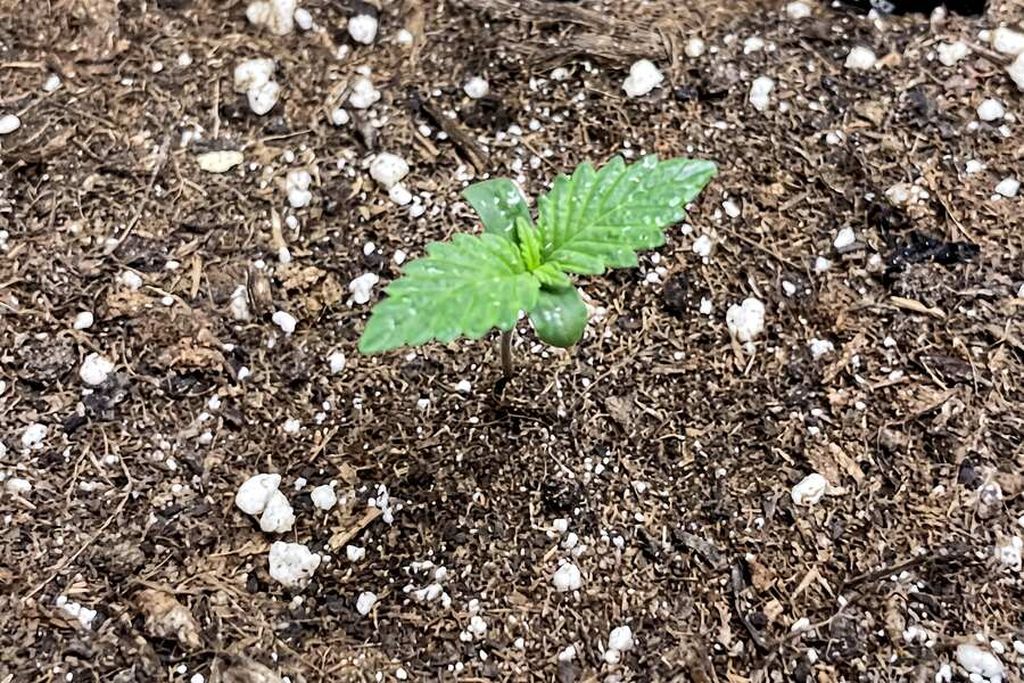
Two small round leaves called cotyledons appear first. These are the seed's initial energy supply, not true leaves. A healthy week 1 seedling stands 0.5–1.25 inches (1–3 cm) tall with upright, bright green cotyledons and a thin green stem.
Here’s how to start your auto grow successfully:
Plant your autoflowering seeds directly into their final container from day one. A 5–7 gallon fabric pot gives roots the space they need from the start. Transplanting later stresses the plant during its short vegetative window and cuts into your final yield.
Keep your growing medium moist but not waterlogged, maintain temperatures between 70–78°F and hold humidity at 70–80%.
Don't add nutrients in week 1 if you're growing in soil. The seedling pulls everything it needs from the seed itself.
If nothing breaks soil by day 7, check your moisture level and ambient temperature first. Germinate in a consistently warm, stable environment to give your seeds the best possible start.
Week 2 Autoflower: Late Seedling Stage
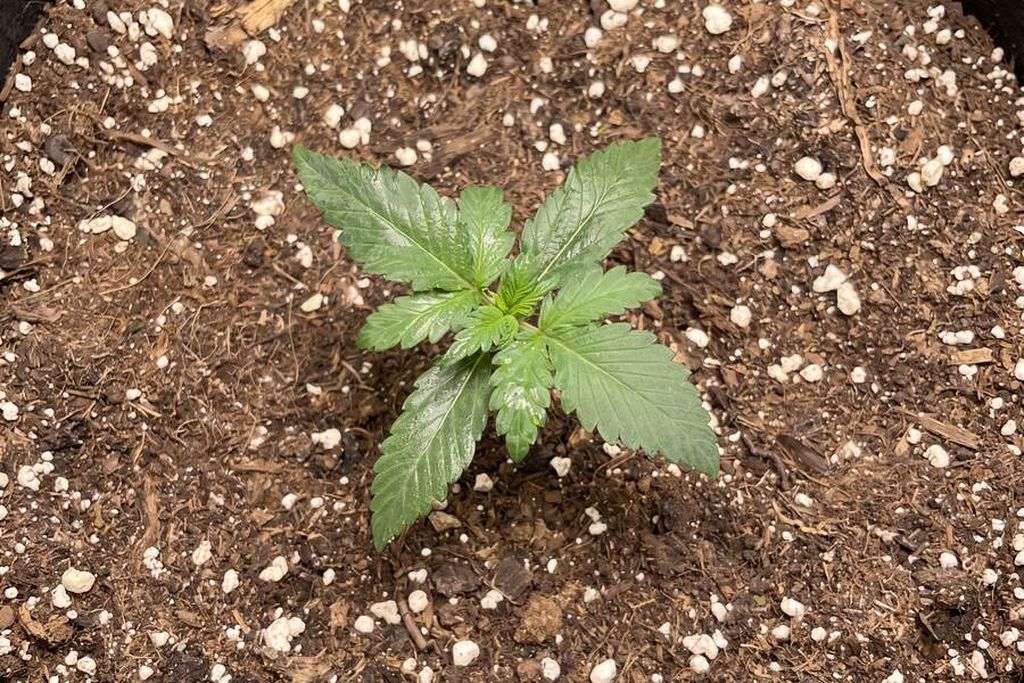
A week 2 autoflower develops its first set of true serrated leaves and begins establishing its root system below the soil surface. You'll see the round cotyledons give way to 3-bladed true leaves with serrated edges, a clear sign the plant has moved past the initial seedling phase.
A healthy 2-week-old autoflower stands 1–3 inches (3–7 cm) tall with deep green true leaves and no drooping or yellowing.
Follow these tips for optimal seedling health:
Keep your light schedule at 18/6 or 20/4 and position LEDs 24–30 inches above the canopy.
Introduce very mild nutrients at this stage, no more than ¼ strength, if your soil isn't pre-fertilized.
Water in a small circle around the plant rather than saturating the whole pot. The root system is still small at this point, so let the top 1–2 inches (2–5 cm) of soil dry slightly before watering again. Overwatering is the number one cause of stunted seedlings.
Weeks 3-4 Autoflower: Vegetative Stage
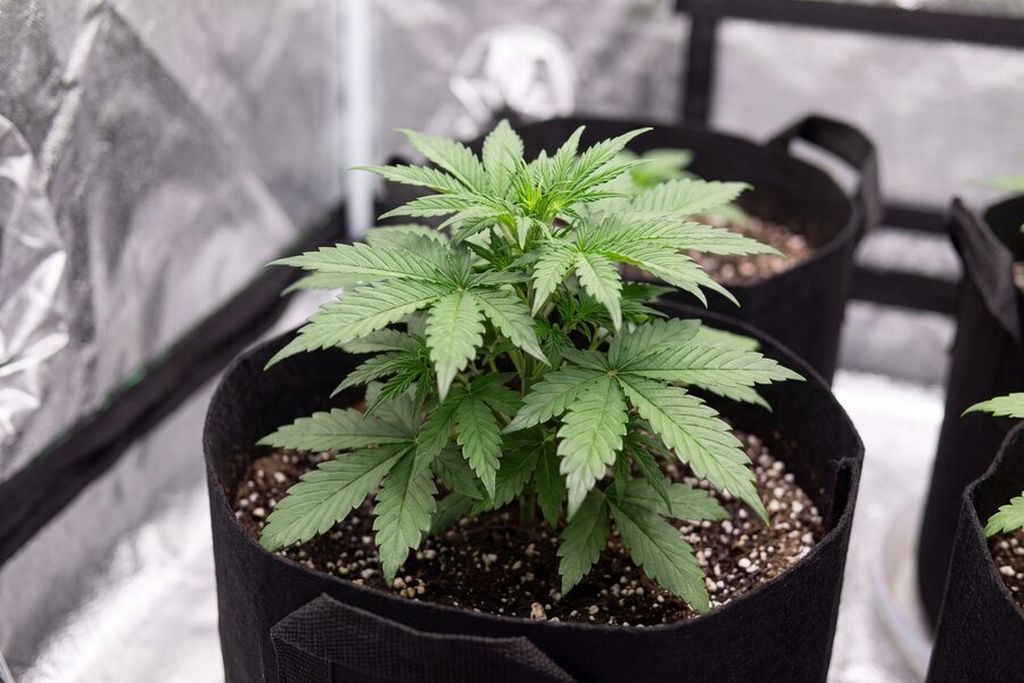
Autoflower plants in weeks 3 and 4 enter active vegetative growth, adding new leaf sets rapidly and building the node structure that will support future buds. You'll notice the plant getting noticeably taller and bushier day by day. By the end of week 4, most autos show the first pre-flower signs at the stem nodes, a signal that flowering is close.
Week 3 Autoflower: Vegetative Growth Begins
A week 3 autoflower grows rapidly, adding multiple leaf sets and reaching 4–8 inches (10–20 cm) depending on genetics and growing conditions. The root system is now well established, which is why you'll see fast growth above the soil. A healthy 3-week-old autoflower has 4–6 node pairs, lush dark green leaves and tight internodal spacing with no stretching.
This is the ideal window for low-stress training, or LST. Tying branches down gently opens the canopy and exposes lower bud sites to more light. Increase nutrients to a half-strength grow formula with a focus on nitrogen.
Keep humidity at 50–60% and check your light height. Autoflowering weed plants typically double their size quickly during this phase and can reach the canopy faster than you expect.
Week 4 Autoflower: First Pre-Flower Signs Appear
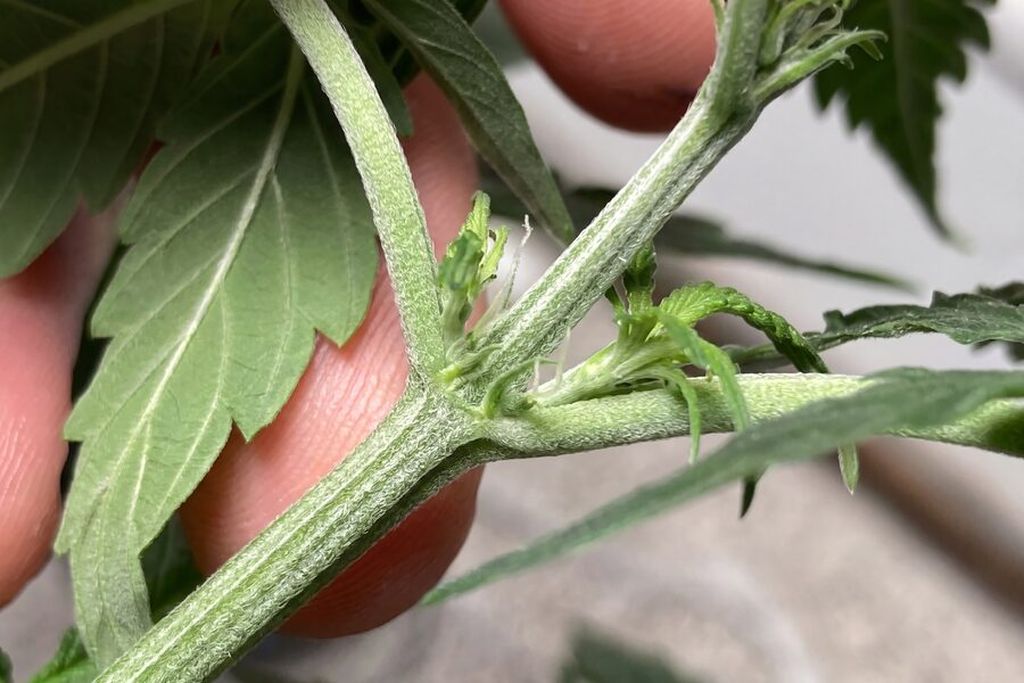
Week 4 autoflowers start showing the first pre-flower pistils at stem nodes, signaling that flowering will begin soon. Pistils are tiny white hairs that emerge from small pointed calyxes at the nodes and confirm the plant is female and on schedule. A healthy week 4 plant stands 6–12 inches (15–30 cm) with 5–8 node pairs and consistent green growth throughout.
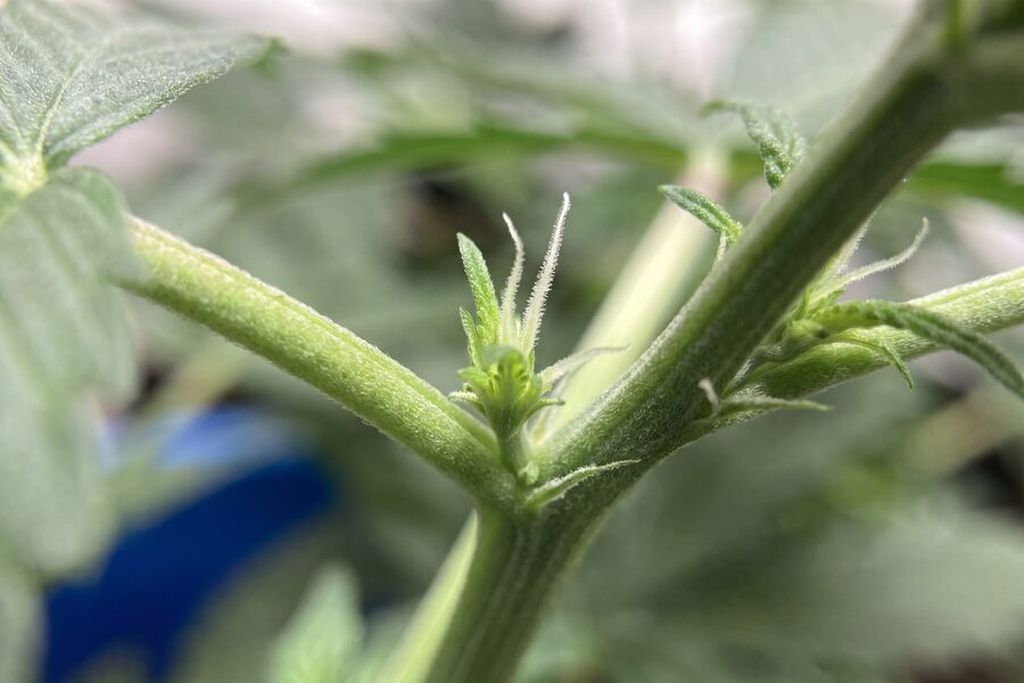
If your autoflowering plant is about a month old, this is roughly where it should be.
Keep feeding with veg nutrients for now. Switching to bloom nutrients too early stunts the remaining vegetative development and reduces yield.
Continue LST if you started in week 3, adjusting ties as the plant grows outward.
Reduce humidity toward 50% and keep temperatures between 70–82°F.
Week 5 Autoflower: Pre-Flowering Stage
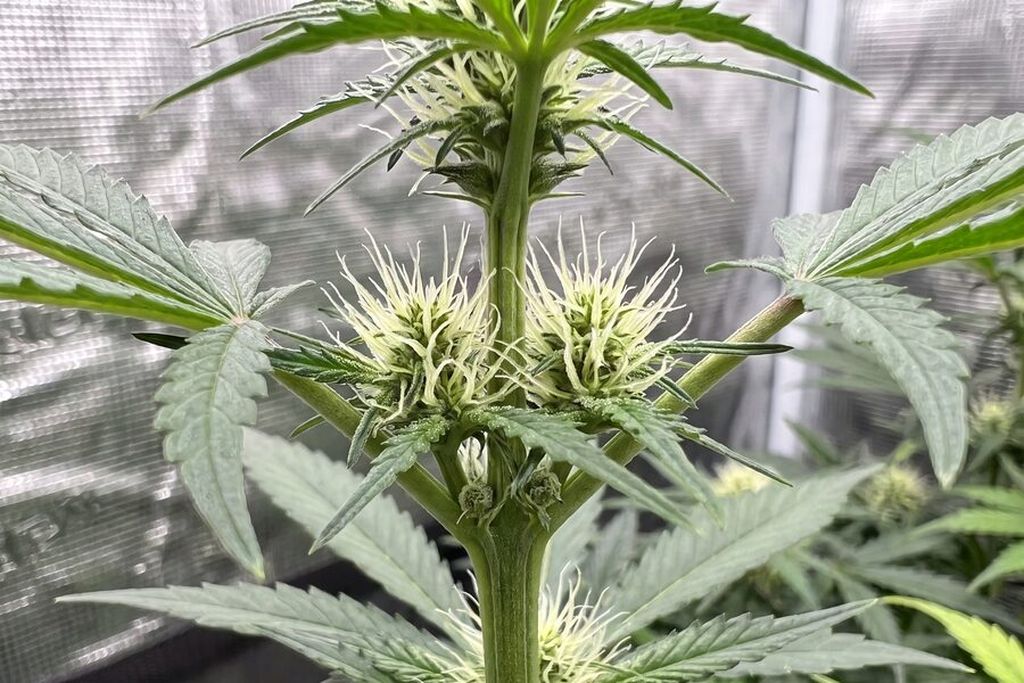
Week 5 autoflowers enter full pre-flowering, with white pistil hairs clearly visible at multiple nodes and vertical stretch beginning. You'll see the plant reaching upward more aggressively as it prepares for flower production.
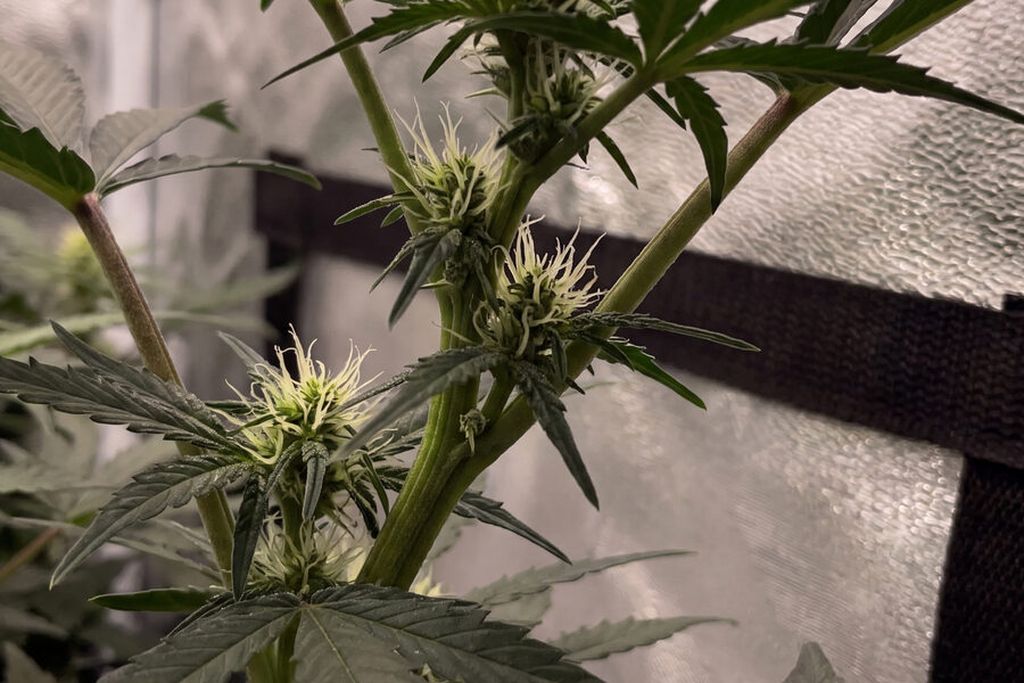
This stretch phase typically adds 20–50% of the plant's vegetative height. A healthy 5-week-old autoflower stands 8–16 inches (20–40 cm) with pistils forming at every node and no yellowing in established leaves.
This is the time to switch to a bloom nutrient formula with lower nitrogen and higher phosphorus and potassium. Adjusting LST stakes during the stretch helps maintain an even canopy and keeps every bud site in the light.
Drop humidity to 40–50% and keep temperatures between 68–82°F. If you're running LED lights, shifting to a warmer spectrum at this point supports early flowering development.
Week 6 Autoflower: Early Flowering Stage
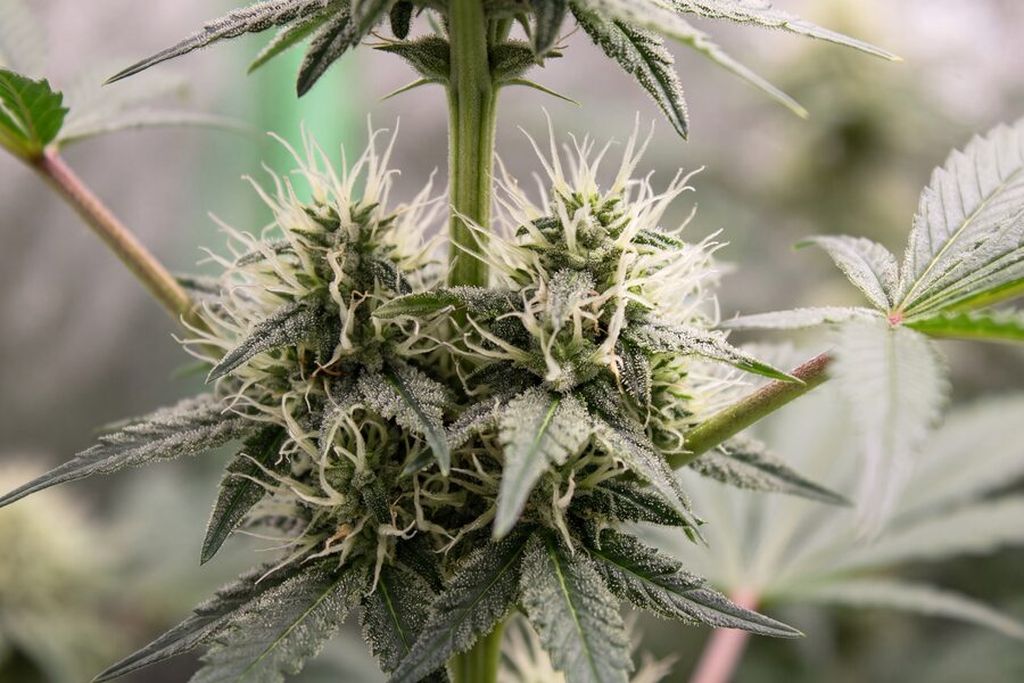
A week 6 autoflower shows distinct bud sites at every node, with white pistils multiplying rapidly. The plant's aroma becomes clearly noticeable for the first time. This is when the grow starts to get exciting.
You can see the structure of your eventual harvest forming across the entire canopy. A healthy 6-week-old autoflower stands 10–20 inches (25–50 cm) tall, has bud clusters forming at every node and carries a light but unmistakable cannabis smell.
Stop all LST at week 6. Stressing the plant now pulls energy away from bud development. Keep bloom nutrients at full strength with phosphorus and potassium as the primary focus.
Lower humidity to 40–50% to prevent moisture buildup inside the developing bud clusters. Check your light distance. The tops of the canopy are closer to the light than veg foliage was and more vulnerable to heat.
Inspect your plants twice weekly from this point forward. Watch for early signs of mold or pests, since bud sites create more surface area for problems to develop.
Keep airflow consistent with an oscillating fan and maintain temperatures between 68–79°F.
Weeks 7-8 Autoflower: Mid Flowering Stage
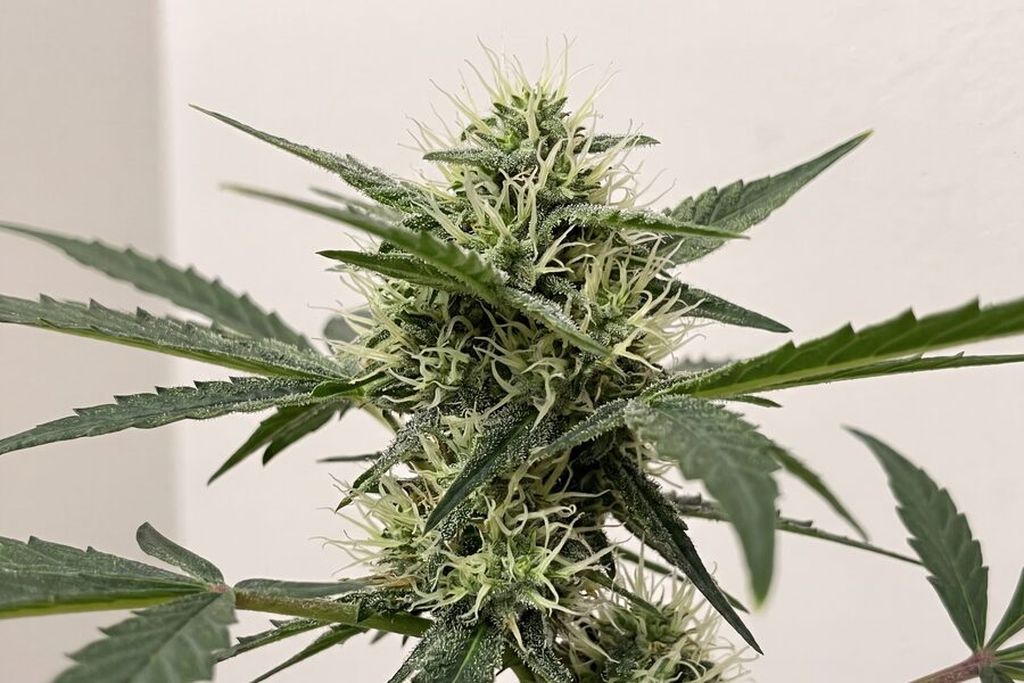
Autoflowers in weeks 7 and 8 focus entirely on fattening their buds. Trichome production accelerates and pistils begin to darken from white to light orange. The plant's vertical growth has stopped at this point. All energy now goes to bud development. This is when your autos start looking and smelling like the harvest you've been working toward.
Week 7 Autoflower: Buds Fatten Up
Week 7 autoflowers enter the bud-fattening phase. Dense flower clusters form at every bud site and trichomes become visible to the naked eye on close inspection. A healthy week 7 plant has dense bud clusters at every node with white pistils and a strong cannabis aroma. Fan leaves should still be green with no significant yellowing.
Keep bloom nutrients at full strength and water more frequently as the plant's demand increases with bud growth. Phosphorus and potassium are the priority now. Lower humidity to 40–50% and maintain temperatures between 68–79°F. Light defoliation of large fan leaves that block lower bud sites is fine at this stage. Don't remove more than 20% of foliage at once.
Week 8 Autoflower: Flowering Continues
An 8-week-old autoflower displays dense buds coated in visible trichomes. Some pistils are starting to curl and darken from white to orange or red. If your plant is about 2 months old, this is roughly where it should be. Some fast-finishing strains approach harvest at week 8. Use trichome development to make your timing call, not the calendar.
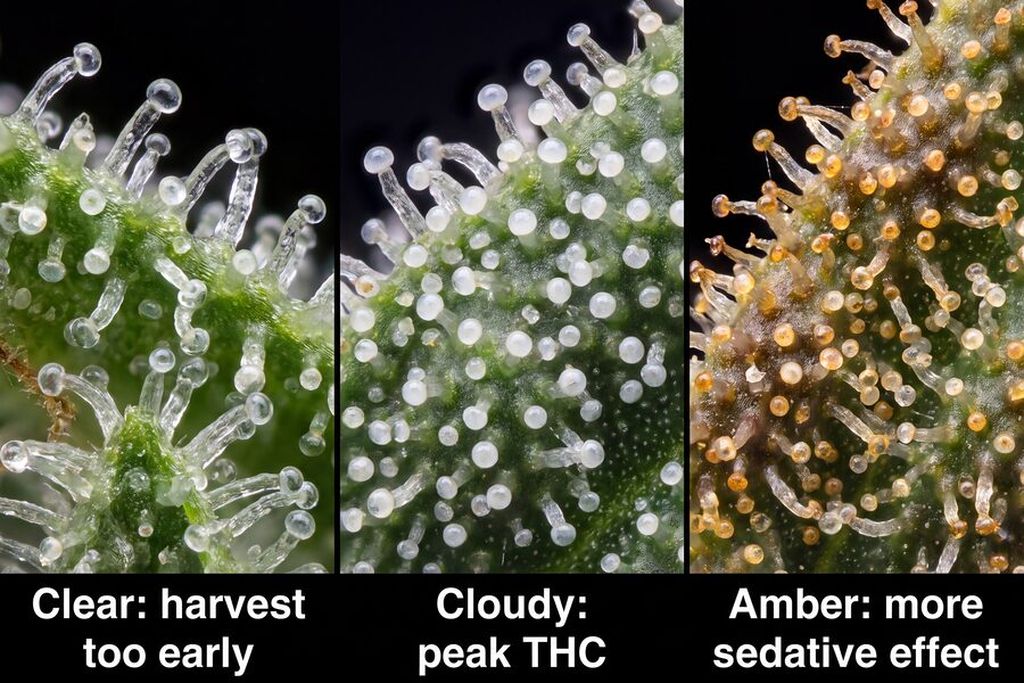
Start checking your plants with a jeweler's loupe or handheld magnifier at week 8. Trichomes are the tiny resin glands that coat your buds and surrounding leaves. They start as clear, turn milky white and then shift to amber as the plant matures.
At week 8, most trichomes should be transitioning from clear to milky. Lower leaves may show some yellowing, which is normal as the plant redirects nutrients upward into the flower. Keep feeding bloom nutrients and watch humidity closely.
Weeks 9-10 Autoflower: Late Flowering Stage
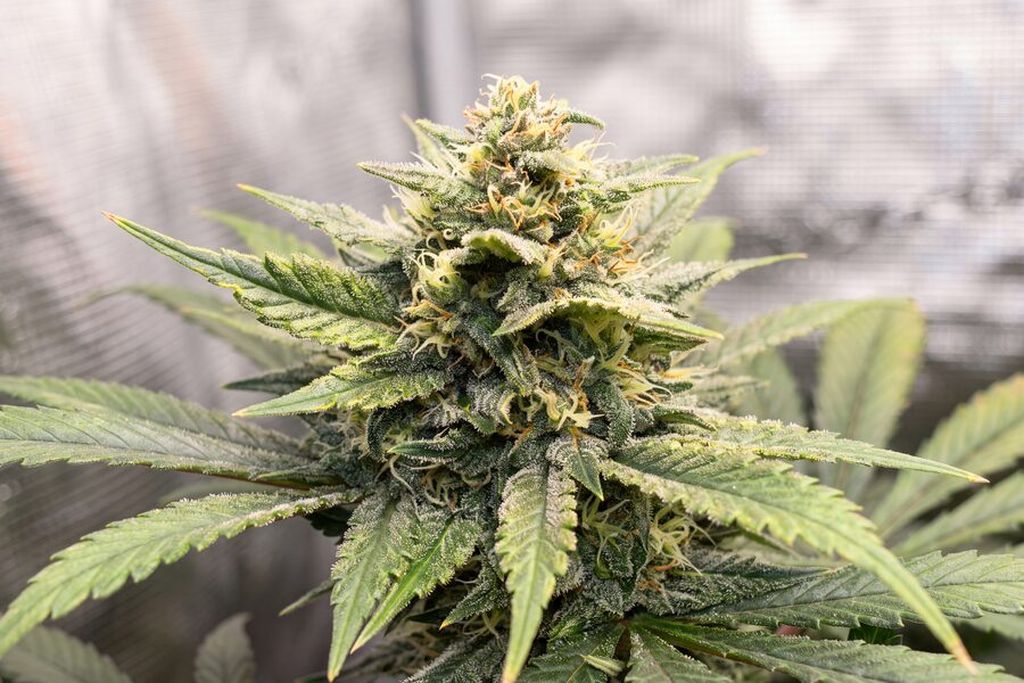
Autoflowers in weeks 9 and 10 reach peak ripeness, with trichomes shifting from cloudy to amber and most pistils darkening to orange or red. You're in the final stretch now. The difference between week 9 and week 10 can be significant in trichome maturity. Keep checking closely rather than harvesting by week number alone.
Week 9 Autoflower: Trichome Monitoring Begins
Week 9 autoflowers signal approaching harvest by showing 50–70% amber pistils and increasingly milky white trichomes throughout the bud. The plant's aroma intensifies noticeably at this stage, filling the grow space with a thick, distinct cannabis smell.
A healthy week 9 plant has dense, heavy buds with most pistils darkened. Lower fan leaves continue to yellow naturally as the plant draws nutrients upward.
Check trichomes daily with your loupe. You're looking for trichomes that are mostly cloudy with the first amber ones starting to appear. Amber trichomes indicate the resin is oxidizing past peak potency. Some growers associate this stage with a more relaxing effect, but trichome color alone is not a universally reliable harvest indicator and results vary by cultivar.
If you want peak THC, harvest before amber trichomes exceed 30% of the total. Keep humidity at 40% or below to prevent late-stage mold from developing in the dense bud clusters.
Week 10 Autoflower: Flushing and Final Ripening
Week 10 marks the final ripening phase for most autoflower strains. Growers begin flushing and watching trichomes for the 70/30 cloudy-to-amber ratio that signals the peak harvest window (though exact ratios vary by strain).
If you choose to flush, start now and run for 7–14 days. Note that flushing is a debated practice with no strong scientific consensus. Nutrient tapering in the final 1–2 weeks is a common alternative.
Lower humidity to 40% or below and reduce temperatures slightly to 64–75°F to encourage final resin production. Most pistils should be darkened to orange or red by week 10, with buds feeling firm and heavy.
Some sativa-dominant autos may need another 1–2 weeks. Use your trichome reading as the final decision point, not the week number.
Weeks 11-12 Autoflower: Harvest Time
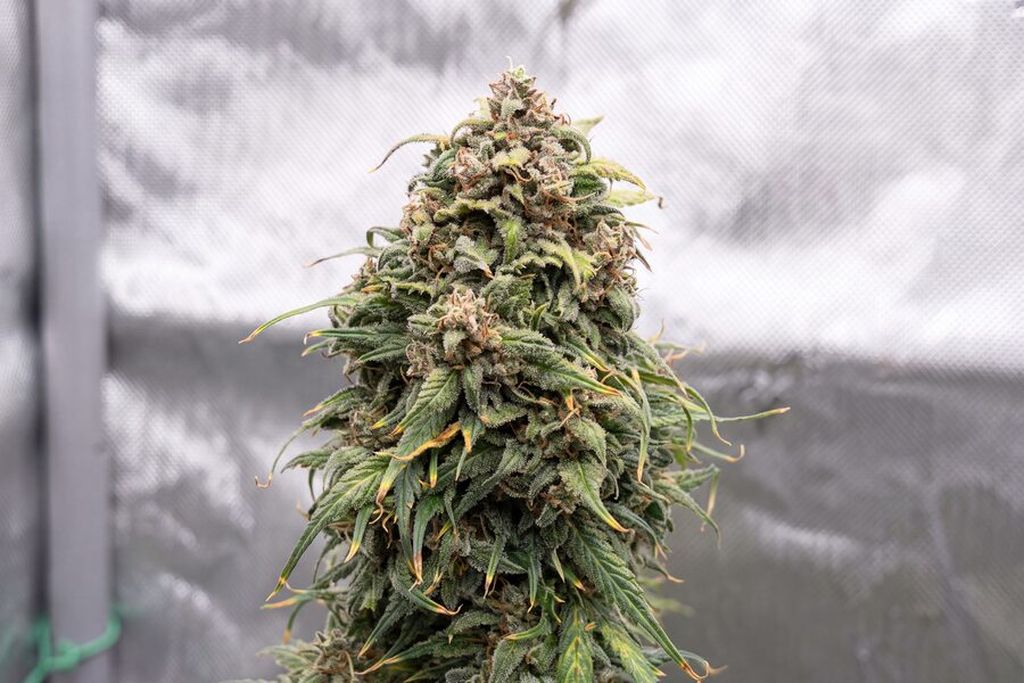
Autoflowers ready for harvest in weeks 11–12 display fully darkened pistils, swollen calyxes and trichomes at the cloudy-to-amber ratio you've been targeting. If your plant is about 3 months old, you're right on schedule.
Sativa-dominant autos may push to week 12 or slightly beyond, while fast-finishing indica-dominant autos may have been ready since week 8–9. Always confirm with a trichome check before cutting.
Harvest when most pistils have darkened, buds feel firm and trichomes match your target ratio.
Use sterilized scissors or pruning shears and cut branches individually for easier handling.
Hang branches in a dark, well-ventilated space at 60–70°F and 55–65% relative humidity to dry slowly over 7–14 days. Slow drying preserves terpenes and produces a smoother flower.
After drying, trim and cure your buds in sealed glass jars for at least two weeks. Burp the jars daily for the first two weeks to let residual moisture escape.
If potency is the goal for your next grow, starting with high THC seeds gives you the best genetic ceiling to work with. If harvest weight matters most, choose the highest yielding seeds for maximum outputs.
Why is My Autoflower So Small?
A small autoflower usually results from one or more of five causes: transplant stress, overwatering, light problems, nutrient errors or genetics. Most of these are identifiable early, and catching the problem before flowering begins gives you the best chance of a full recovery.
Autos that stunt during weeks 1–3 have the most time to bounce back. Plants that stunt after week 4 carry some of that limitation into flowering regardless of what you do.
What Causes a Stunted Autoflower?
A stunted autoflower shows slowed or stopped growth because of an identifiable problem, and it's often more than one cause at once. The five most common causes, their symptoms and the fix are listed below.
Transplanting after germination causes slow recovery and undersized plants through early veg. Germinate directly in the final container to avoid it entirely.
Overwatering shows up as drooping leaves, yellowing and a waterlogged medium. Let the top 1–2 inches (3–5 cm) dry out completely before watering again.
Light positioned too far or too close produces two distinct symptoms — stretching with thin stems when it's too far, bleached or burned tips when it's too close. Adjust to the manufacturer's recommended hanging height.
Nutrient burn or lockout leaves brown, crispy leaf tips and stalls new growth. Flush with plain water and dial back nutrient strength before resuming feeding.
Genetics or a small container can produce a compact plant with no other distress symptoms. If everything else looks healthy, small size may simply be normal for that cultivar.
If you're not sure how to tell if your autoflower is stunted, compare it to the weekly height benchmarks in this guide. A plant more than 30–40% smaller than the listed height range for its current week, with no clear explanation, is likely dealing with one of the causes above.
Can a Stunted Autoflower Recover?
Yes, a stunted autoflower can recover if you find the cause early and the plant still has veg time remaining. The key window is before week 4–5, when most autos switch to flowering whether they're ready or not. Once flowering starts, the plant commits its energy to bud production and recovery slows significantly.
To give your plant the best shot, start by identifying and fixing the root cause. Then flush with plain pH-balanced water for 2–3 days to clear any nutrient buildup. Resume feeding at half strength after flushing.
If overwatering caused the stunt, increase the time between waterings and let the medium dry out more thoroughly. Don't apply any training or additional stress during the recovery period. A plant that stunted early and got a fix by week 3 can still reach a respectable harvest. It'll be smaller than the benchmark, but real and worth finishing.
When Do Autoflowers Start Flowering?
Autoflowers start flowering based on age, typically between weeks 3 and 5 from germination, regardless of your light schedule. The first sign is small white pistil hairs emerging from pointed calyxes at the stem nodes.
No light cycle change is required to trigger this. The ruderalis genetics in every autoflowering strain carry an internal timer that flips the plant toward flowering automatically.
The first pistils usually appear in week 3–4. Pre-flowering is confirmed by week 4–5 and distinct bud sites form at every node by week 5–6. When you spot the first pistils, switch to a bloom nutrient formula with lower nitrogen and higher phosphorus and potassium.
With photoperiod seeds, you'd need to flip to a 12/12 light schedule to trigger flowering in the first place. Autos handle that for you automatically.
How Autoflower Genetics Affect Your Week-by-Week Timeline
Autoflower genetics determine how closely your plants' week-by-week development matches the benchmarks in this guide.
Indica-dominant autos tend to finish on the faster end of the 8–12 week range, usually wrapping up in 8–9 weeks with a compact plant structure.
Sativa-dominant autos run longer, often 10–12 weeks or more, and stretch taller during pre-flowering. Hybrid autos fall somewhere between the two.
White Widow Auto, Bruce Banner Auto or Northern Lights Auto all follow the same stage sequence covered in this guide. They may land 1–2 weeks ahead or behind the midpoint benchmarks depending on genetics and environment.
Use the stage descriptions and plant benchmarks as your guide, not a strict week number on the calendar. Outdoor autoflowering plants can vary by regional climate, available sun hours and temperature.
Most autoflowering seeds are also feminized cannabis seeds, meaning they carry both traits in one seed. You get the short lifecycle of an auto and all-female plants without having to sex your crop.
If you're choosing between strain families, indica seeds tend to run faster and stay compact. Sativa seeds give you longer timelines and more stretch, while hybrid seeds balance both traits in one plant. For first-timers, our cannabis seeds for beginners collection highlights the most forgiving options to start with. At ILGM, all of these categories include autoflowering seeds.
Always check federal, state and regional laws before buying or germinating any cannabis seeds.
FAQs About Autoflowers Week By Week
How Long Do Autoflowers Take From Seed to Harvest?
Most autoflowers are ready to harvest in 8–10 weeks from germination. Fast-finishing strains can wrap up in 7–9 weeks, while sativa-dominant autos may push to 12–14 weeks. Always base your harvest decision on trichome development, not the breeder's stated timeline alone.
What Week Do Autoflowers Start to Fatten Up?
Autoflower buds start fattening around weeks 5–7, with the most noticeable bulk-up happening in week 7. You'll see bud clusters become visibly denser and heavier during this phase. Keeping phosphorus and potassium levels strong through the entire flowering stage supports maximum bud development.
When Do Autoflowers Stop Growing in Height?
Autoflowers stop growing in height around weeks 5–7, when they shift all energy from vertical stretch to bud production. Most autos reach between 60–120 cm depending on genetics and container size. Indica-dominant autos stay more compact while sativa-dominant varieties tend to stretch taller before locking in.
What's the Best Light Schedule for Autoflowers?
The best light schedule for autoflowers is anywhere from 18 to 24 hours of light per day. Since they flower based on age, you don’t need to change your schedule to trigger flowering. More light hours generally means more growth, so your choice comes down to heat management and running costs rather than plant biology.
Why Does My Autoflower Look Different From the Pictures?
Autoflowers vary in appearance by strain, environment and pot size, so some difference is completely normal. Your plant may be 1–2 weeks ahead or behind the benchmarks in this guide and still be perfectly healthy. Compare your plant to the description for its current week and check the stunted autoflower section above if growth seems significantly off.

Gabriel ILGM
Gab Wulff is an ecologist and designer linking sustainability, community gardening, and cannabis reform.