
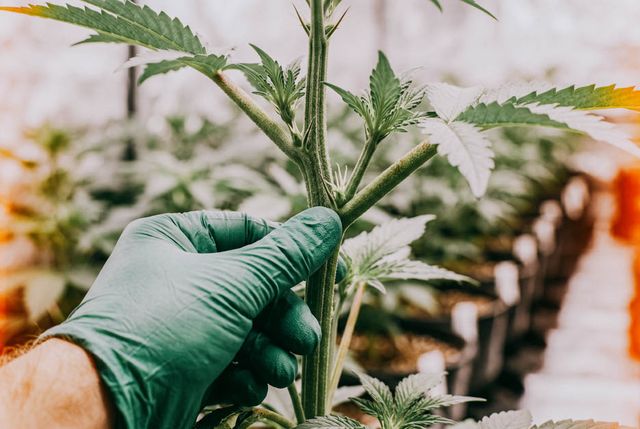
Early Signs of a Female Cannabis Plant: How to Tell
Spotting a female cannabis plant early saves weeks of wasted space and effort. The signs are small but specific: thin white hairs at the nodes, a particular calyx shape and a clear timing window.
This guide shows you what a female plant looks like in its early stage, when the first signs appear and how to read them step by step. It also clears up the biggest myth in this topic, that you can sex a seed by looking at it. By the end you will know exactly where to look and what confirms a female plant.
Quick Answer: A female cannabis plant shows one or two thin white hairs, called pistils, at the nodes where leaves meet the stem, usually in weeks 4 to 6. A male plant shows round pollen sacs with no hairs. Seed appearance tells you nothing about sex.

Gabriel ILGM
Table of contents
What Does a Female Cannabis Plant Look Like Early On?
A female cannabis plant reveals its sex through pre-flowers that form at the nodes, the points where branches meet the main stem. These pre-flowers start as a small green calyx with one or two thin white hairs pushing out.
The hairs are pistils, and they are the clearest early sign of a female weed plant. On a young female plant the pistils look fine and translucent before they thicken and curl.
The female cannabis plant keeps these pistils at almost every node as it matures. Each node becomes a small bud site, so the early hairs mark where flower clusters will later form. A female pot plant does not produce pollen sacs, which is the fastest way to separate it from a male plant.
When Do Female Cannabis Plants Show Their First Signs?
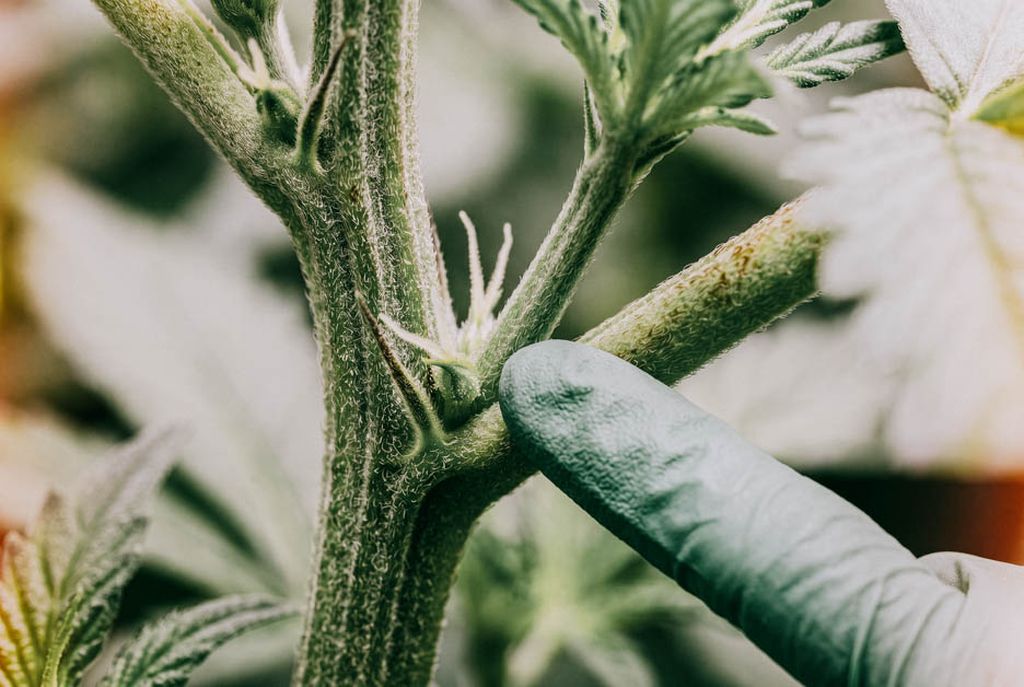
Female cannabis plants show their first pre-flowers around weeks 4 to 6 of growth, once the plant is mature enough to express sex. The exact timing shifts with seed type, genetics and growing conditions, so the window is a guide and not a fixed date. Pre-flowers appear at the upper nodes first, then spread down the plant.
This section covers the three timing situations that change when you will see early female signs:
Photoperiod timing: how light-driven plants reveal pre-flowers by node maturity.
Autoflower timing: how age-driven plants often show signs earlier.
Seedling stage: why very young plants cannot be sexed yet.
Female Pre-Flower Timing on Photoperiod Plants
Autoflower female cannabis plants reveal pre-flowers by age, often earlier than photoperiod plants. Autoflower genetics trigger flowering on a built-in clock rather than a light change, so sex signs can show up within the first few weeks.
For early sexing, the key point is that an autoflower female weed plant works on age, which compresses the window where you watch for pistils. Buyers comparing seed types can review the autoflower seeds category to see how age-based flowering changes the timeline.
Female Signs at the Seedling Stage
Female cannabis seedlings do not show reliable sex signs in their first two to three weeks. A seedling has not formed mature nodes yet, so there are no pistils or pollen sacs to read.
What a young plant shows instead is basic growth: the first true leaves, early node spacing and stem development. Wait until the plant builds several nodes before you start checking for early female signs.
How to Identify Female Pre-Flowers Step by Step
Female pre-flowers appear as small calyxes with thin white pistils at the nodes, and three checks confirm them. The process is visual and works best with a magnifier or phone macro lens. Move from the structure outward: find the right spot, then read the hairs, then check the shape.
These three steps build the full identification:
Step 1 — Find the nodes: locate where branches meet the stem.
Step 2 — Spot the pistils: look for thin white hairs.
Step 3 — Confirm the calyx: check the teardrop shape under the hairs.
Step 1: Find the Nodes on a Female Plant
Nodes on a female plant sit at every point where a branch or leaf stem meets the main stalk. These junctions are where pre-flowers form, so they are the only place worth checking for early sex signs. Start at the upper third of the plant, because the top nodes mature first. Spread the foliage gently so you can see the bare stem at each junction.
Step 2: Spot White Pistils on a Female Plant
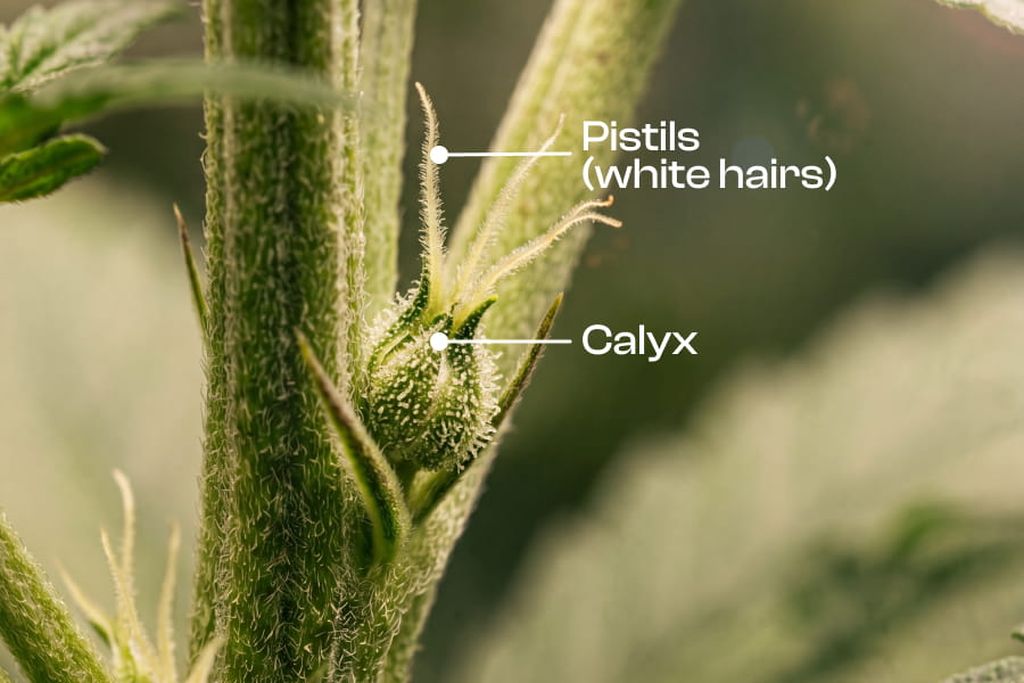
White pistils on a female plant emerge as one or two thin hairs pushing out of a small green pod at the node. These hairs are the single most reliable early sign of a female cannabis plant. They look pale, fine and slightly curved, and they sit upright rather than tucked against the stem. If you see clear white hairs, you are almost certainly looking at a female plant.
Step 3: Confirm the Calyx Shape on a Female Plant
The calyx on a female plant is the small teardrop-shaped pod that the white pistils grow out of. This pod is technically a bract, the small modified leaf that wraps the seed site (growers usually call it a calyx), and on a female plant it carries pistils. When you see a teardrop calyx with hairs, the sex is confirmed. A rounded sac with no hairs points to a male plant instead.
Female vs Male Cannabis Plants: Early Signs Compared
Female and male cannabis plants differ at the pre-flower stage by pistils versus pollen sacs. The female pot plant grows thin white hairs, and the male plant grows small round balls that hold pollen. Reading the right structure at the right node tells you the sex with high confidence.
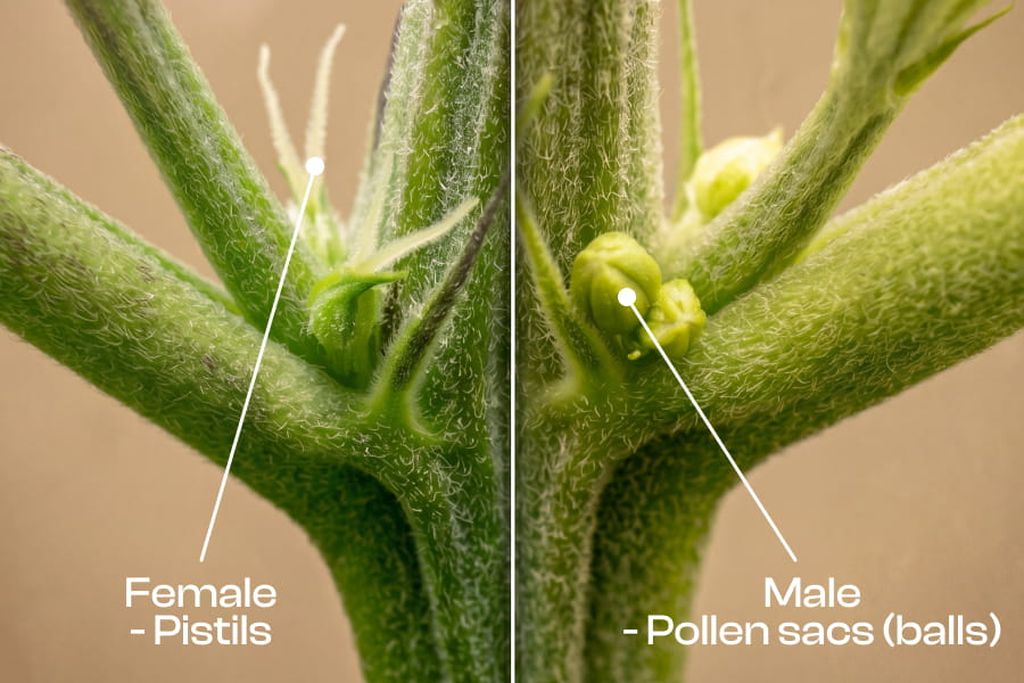
Height and node spacing are screening clues only. A tall plant is not automatically male, and a short plant is not automatically female. Always confirm with the pistil-versus-sac check at the node.
Can You Identify a Female Seed by Looking at It?
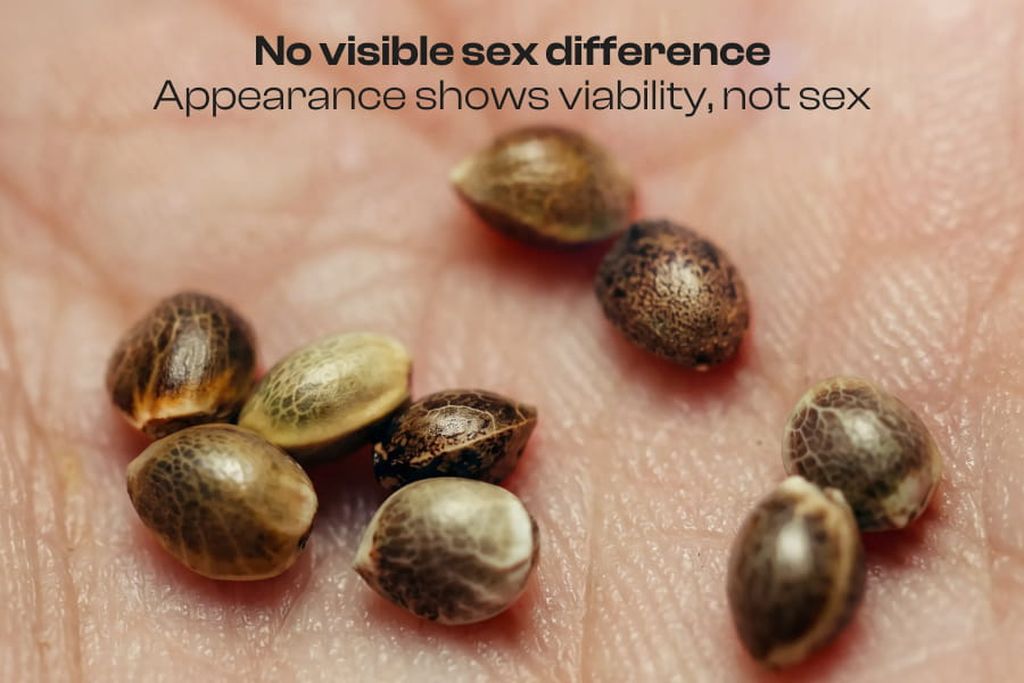
No, you cannot identify a female cannabis seed by looking at it. Seed size, color, shape and the tiger-stripe pattern on the shell tell you about maturity and storage, not sex. A plump dark seed and a pale seed have the same odds of growing into a female plant. The sex of a cannabis plant is set by genetics inside the seed, and no external feature reveals it.
What seed appearance actually tells you is viability. A mature, hard, well-marked seed is more likely to germinate, while a pale, soft or cracked seed is less likely to sprout. So inspect seeds for quality, not for sex. Anyone selling "female seeds you can spot by sight" is selling a myth.
How Feminized Seeds Remove Female-Plant Guesswork
Feminized cannabis seeds remove sex guesswork by producing female plants virtually all of the time. Because you cannot sex a seed by sight and pre-flowers take weeks to appear, the seed type is the only way to start with near-certainty.
Feminized seeds suit growers who want every plant to develop pistils and bud sites, which keeps attention on plant care instead of culling males, where cultivation is permitted by federal, state and local rules.
This certainty matters most for new growers with limited space. A first-time grower who plants cannabis seeds faces a roughly even male-female split and the work of removing males early. Choosing beginner cannabis seeds in feminized form lets a beginner skip that step and focus on reading the early female signs covered above.
Frequently Asked Questions
Should You Remove Male Plants From Female Plants?
Yes, remove male plants once you confirm pollen sacs, if your goal is seedless buds. Male pollen fertilizes female plants and turns flower into seed production, which lowers bud quality. Separating or removing males early protects the female plants you want to harvest.
Can a Female Cannabis Plant Turn Male?
A female cannabis plant does not turn fully male, but stress can push it to grow both pistils and pollen sacs, a condition growers call a hermie. Heat, light leaks and damage are common triggers. A stressed hermaphrodite plant releases its own pollen, which can fertilize its buds and any female plants nearby, so stable conditions protect a clean, seedless result.
Do Pistils Always Mean a Plant is Female?
Pistils almost always mean a plant is female, because pollen sacs without any hairs signal a male plant. The rare exception is a stressed plant showing both structures at once. When you see only thin white hairs at the nodes, you can treat the plant as female with high confidence.

Gabriel ILGM
Gab Wulff is an ecologist and designer linking sustainability, community gardening, and cannabis reform.