
Early Signs of a Male Plant: How to Spot One Fast
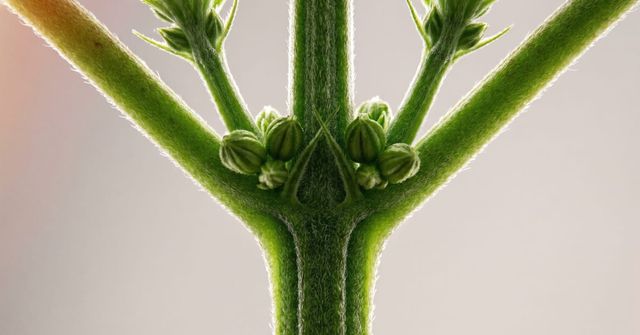
A male cannabis plant reveals itself at the nodes around weeks 3 to 6 from seed, usually a week or two before females. The earliest sign is a small round ball where the stem meets a branch, with no white hair attached. Catching that ball early protects every female plant in the space from pollination.
This guide walks through the first signs to look for, the timing window, what a male plant looks like up close and how seed choice changes your odds of seeing males at all.
Fast Rule: Check the nodes where branches meet the main stem between weeks 3 and 6. A smooth round ball with no white hair means male. A pointed teardrop shape with one or two thin white hairs means female. Pull confirmed males before the sacs open.

Gabriel ILGM
Table of contents
What Are the Early Signs of a Male Plant?
The early signs of a male plant are small round pollen sacs that form at the nodes before any flowering starts. These sacs look like smooth balls or tiny grape-like clusters tucked where a branch meets the main stem.
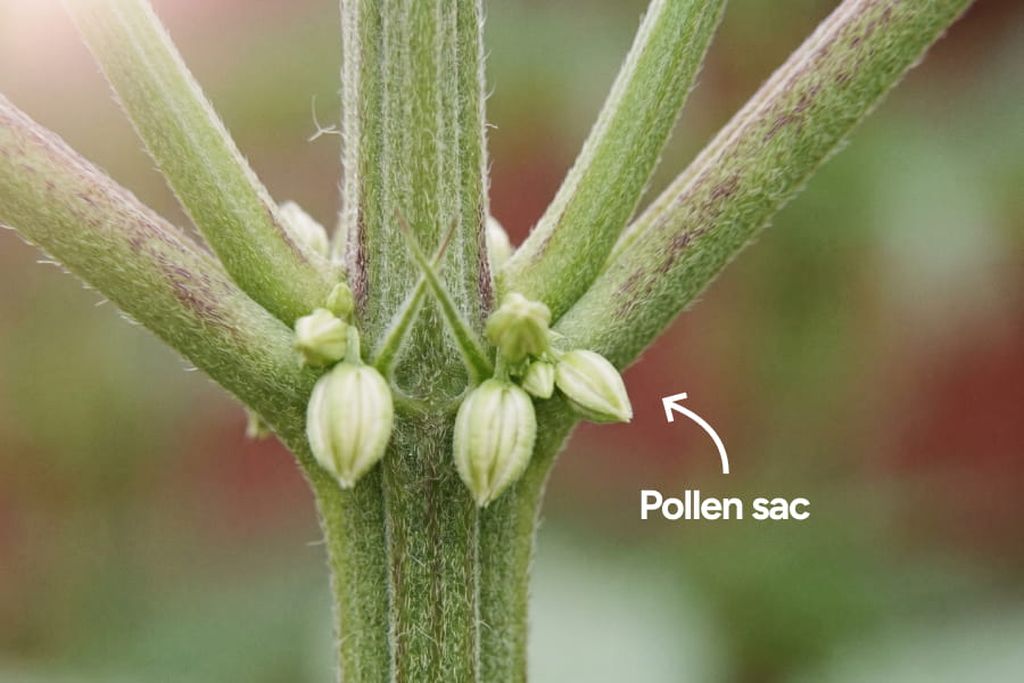
A male cannabis plant grows them 1 to 2 weeks earlier than a female plant shows its first white hairs. Spotting them at the pre-flower stage is the difference between a clean harvest and a seeded one.
Three signs matter, ranked by how much weight to give each one:
Round pre-flower sacs at the nodes: the single most reliable early sign of a male plant. A smooth hairless ball at the node confirms male on its own.
Earlier reveal timing: male weed plants declare their sex 1 to 2 weeks before females do, so the first plant to show anything at the nodes is often male.
Taller, lankier structure: a weak secondary clue only. A male marijuana plant tends to stretch taller, but some strains stretch regardless of sex, so height never confirms anything by itself.
Check the nodes first, because that is where the answer is. The earliest sacs show up at the lower and middle nodes as tiny rounded bumps on a short stalk, often while the rest of the garden still looks like plain green growth. You do not need to flip to 12/12 to catch a male, so start a node check during late veg and work up the plant.
When Do Male Plants Show Early Signs?
Male plants show their first signs between weeks 3 and 6 from seed, during the late vegetative stage. Male cannabis plants reveal pre-flowers about 1 to 2 weeks before female plants do, which gives growers an early window to act. The exact timing shifts with genetics, light schedule and how vigorously the plant grew.
Photoperiod plants reveal sex once they mature enough, while autoflower plants reveal it by age rather than a light-cycle change.
In the context of early sexing, the important point is that the veg-stage pre-flower is the first place sex becomes visible. Male weed plants often give themselves away well before flowering, so a node check during late veg catches most of them.
What Does a Male Cannabis Plant Look Like?
A male cannabis plant looks taller and more open than a female from across the room, before you ever inspect a node. These are the whole-plant traits that stand out at a glance:
Taller, lankier frame: male marijuana plants stretch upward faster and reach greater height than females.
Thicker, sturdier main stem: male pot plants build a more rigid stem to support that taller frame.
Sparser foliage and fewer branches: male weed plants carry open canopies with more gaps between leaves.
More space between nodes: male cannabis plants often show longer gaps along the stem than bushier females.
These whole-plant traits are screening clues, not proof. A tall lanky plant points your eye toward a likely male, but the confirmation always happens at the node. The close-up below shows exactly what settles it.
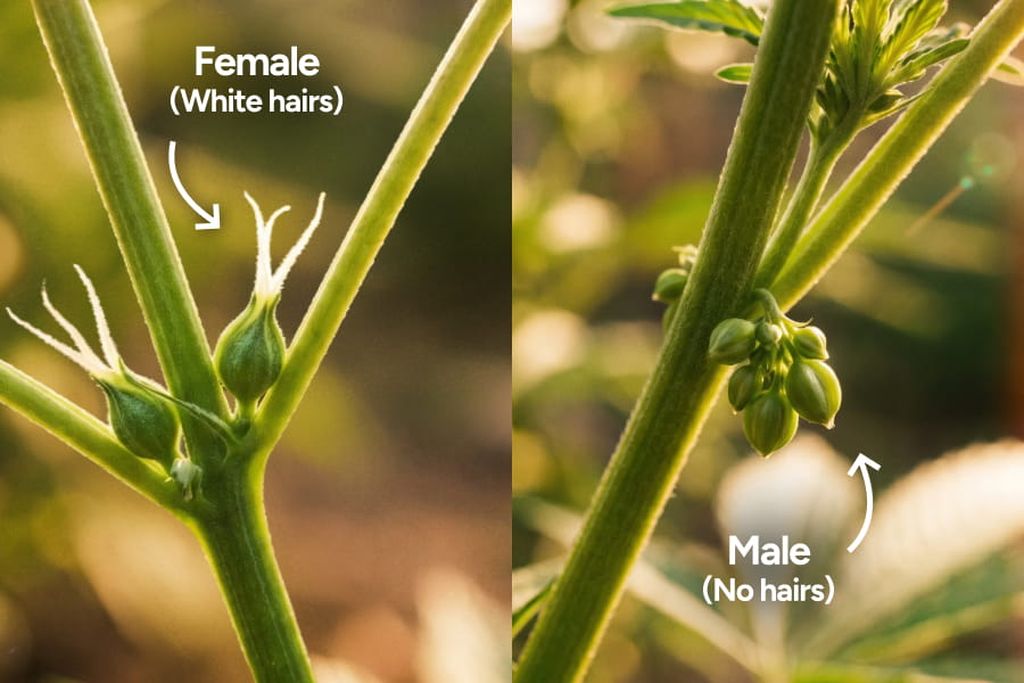
How to Tell a Male Pre-Flower From a Female Pre-Flower
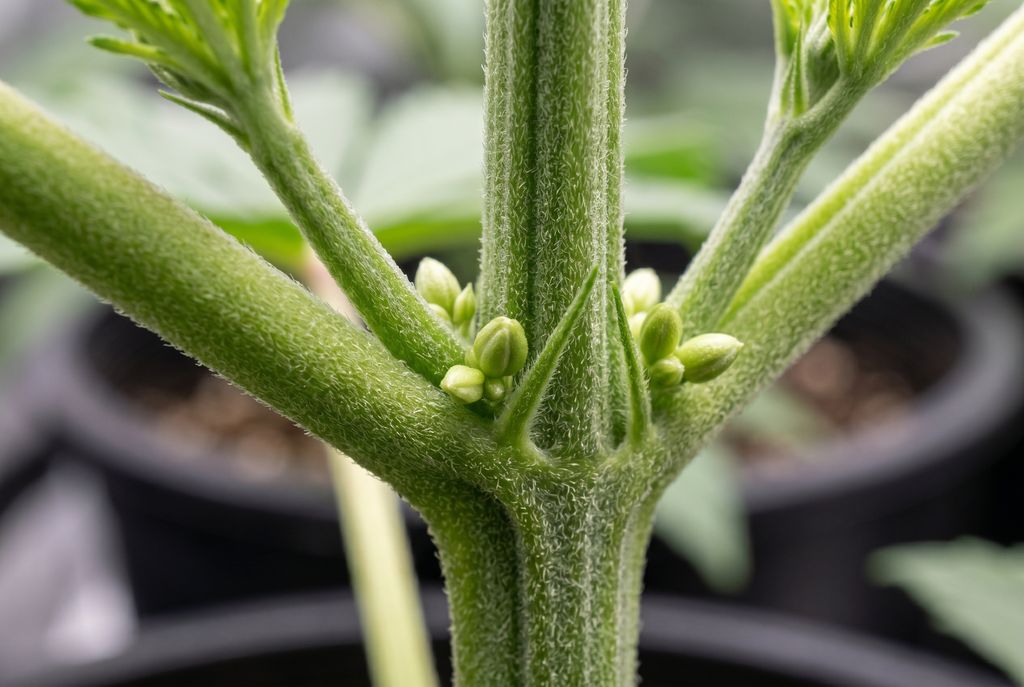
A male pre-flower differs from a female pre-flower by shape and by the presence of white hairs. The male pre-flower is a round, smooth, hairless ball on a short stalk. The female pre-flower is a pointed teardrop calyx that pushes out one or two thin white hairs called pistils. When you see hairs, the plant is female. When you see a bare ball, the plant is male.
Stipules are not pistils. Stipules are small leaf-like growths beside the node that appear on both male and female plants and never indicate sex. Stipules sit right at the node and can partly hide an emerging pre-flower, so the rule stays simple: look behind them at the node itself, where the ball or the hair actually forms, not at the stipule in front of it.
Do Male Plants Produce Buds?
No, male plants do not produce buds. Male cannabis plants produce pollen sacs instead, which exist only to release pollen and fertilize female plants. The dense resin-coated flower clusters people call buds or nugs come only from female cannabis plants.
A male marijuana plant puts its energy into reproduction, not into the sticky flower that contains meaningful cannabinoid levels.
This matters for one practical reason. If a male weed plant opens its sacs near females, the pollen fertilizes those females and they shift energy from swelling buds to filling seeds. The flower stops developing the way a flower-focused grower wants, so removing males early keeps the harvest seedless.
Why Catching Male Plants Early Protects Your Harvest
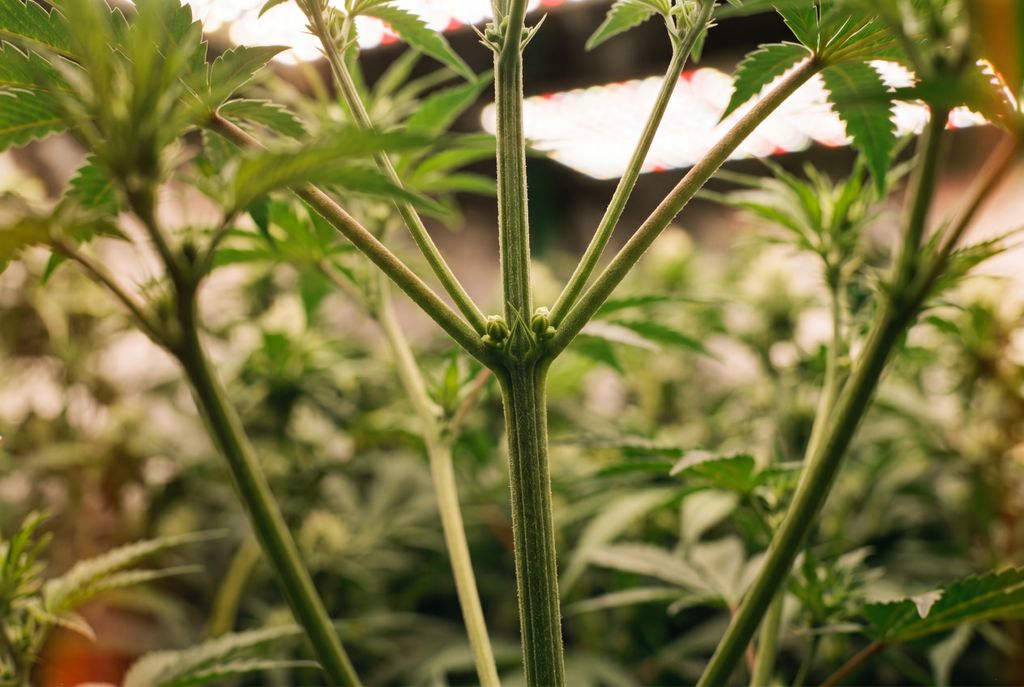
Catching male plants early protects the harvest because one open pollen sac can seed an entire room of females. Male pollen lands on a female pistil, and the cannabis plant treats fertilization as a signal to switch reproductive priorities.
The buds stop swelling outward and start filling inward with developing seeds. Resin production drops too, because a pollinated female no longer needs sticky flower to catch pollen.
Pulling a confirmed male before the sacs open is the single highest-value action in a mixed garden. Eligible adult growers should remove and dispose of males away from the females, then check remaining plants again over the next few days, where cultivation is lawful.
How Seed Type Changes Your Odds of Seeing Male Plants
Seed type determines how often male plants appear in a grow, which is the root cause of the whole sexing problem. Regular cannabis seeds produce a roughly 50/50 mix of male and female plants, so half the garden may show male signs.
Feminized seeds shift that ratio so that virtually all the plants come up female, which removes most of the male-plant guesswork. Autoflower seeds reveal sex by age rather than by a light-cycle flip, and most sold today are also feminized, so a male turning up stays unlikely.
For flower-focused growers who want to skip male hunting almost entirely, feminized cannabis seeds are the standard starting point. Buyers new to growing often pair that certainty with strains chosen for forgiving, predictable plants, so a focused set of beginner cannabis seeds keeps early grows simple.
Browsing the full range of cannabis seeds helps first-time buyers see how seed type maps to how much sexing work a grow will need.
Where Feminized Seeds Reduce Male-Plant Uncertainty
Feminized cannabis seeds reduce male-plant uncertainty because the seed type is bred to grow into female plants almost every time. That near-certainty cuts out the time, space and energy a grower would spend inspecting nodes and pulling males.
Buyers who want to keep their attention on plant care rather than sex checks tend to start with feminized seeds and branch out later. The trade-off is that feminized genetics are not meant for breeding, where male plants are needed.
Where Autoflower Seeds Change Early-Sign Timing
Autoflower cannabis seeds change early-sign timing because they flower by age instead of by a light-cycle change. An autoflower plant reaches its pre-flower stage on a fixed internal clock, so any male signs tend to appear earlier in the calendar than with photoperiod plants. Growers running short timelines or small spaces often choose autoflower seeds for that speed.
Since most autoflower seeds on the market are feminized as well, the odds of a male appearing stay low.
Frequently Asked Questions
What Is the Very First Sign of a Male Plant?
The very first sign is a small round ball at a node with no white hair attached. It shows up in late veg, usually a week or two before females reveal pistils.
Can You Tell Sex From Seeds Before Planting?
No. Seed size, shape and color do not reveal sex. Sex only becomes visible at the pre-flower stage once the plant matures at the nodes.
Are Tall Plants Always Male?
No. A taller plant under identical conditions is statistically a bit more likely to be male, but some sativa-leaning strains stretch regardless of sex. Height is a screening clue only, never a confirmation.
What Should I Do Once I Confirm a Male Plant?
Remove the confirmed male away from your females before the sacs open, then recheck the rest of the garden over the next few days. Handle disposal where cultivation is lawful under federal, state and local rules.

Gabriel ILGM
Gab Wulff is an ecologist and designer linking sustainability, community gardening, and cannabis reform.