
Cannabis Ruderalis: The Genetics Behind Autoflowering Seeds [Full Guide]
Cannabis ruderalis is the least-known of the three cannabis subspecies. But it's the plant behind every autoflowering seed on the market. It's smaller and less potent than sativa or indica, and you won't find pure ruderalis in most seed catalogs. What you will find is its most valuable trait baked into thousands of modern strains: autoflowering.
This guide covers what ruderalis is, where it grows in the wild, how it compares to sativa and indica and why ruderalis genetics matter when you're shopping for cannabis seeds.

Gabriel ILGM
Table of contents
What is Cannabis Ruderalis?
Cannabis ruderalis is a compact, resilient cannabis subspecies that flowers based on age, not light. It's smaller and less psychoactive than sativa or indica, but it carries the one genetic trait that reshaped modern cannabis: autoflowering. Here's what this section covers:
What the name means and where ruderalis was first classified — the etymology and scientific background behind the subspecies.
Where cannabis ruderalis comes from — the geographic origins and climate pressures that shaped its traits.
What cannabis ruderalis looks like — height, leaf shape, stem structure and bud form.
Cannabis Ruderalis Meaning and Scientific Name
C. ruderalis takes its name from the Latin word "ruderal," which describes plants that colonize disturbed or waste land without cultivation. Russian botanist Dmitrij Janischewsky first classified it in 1924, noting that its buds developed automatically between 20 and 40 days after sprouting.
Some botanists still debate whether ruderalis is a subspecies of Cannabis sativa or a fully separate species, but most growers and breeders treat it as the third member of the cannabis genus.
Where Does Cannabis Ruderalis Come From?
Cannabis ruderalis originated in the Volga River region of southern Russia and Siberia, where short growing seasons and unpredictable weather drove its most important evolutionary adaptation.
Because the growing season was too short to wait for a light change, ruderalis developed the ability to flower based on age alone. That adaptation is what makes ruderalis genetics so valuable to breeders today.
What Does Cannabis Ruderalis Look Like?
Cannabis ruderalis grows shorter than sativa and indica plants, typically reaching 1 to 3 feet tall with thick stems, narrow leaves and compact buds.
Its leaves have three main points plus two smaller ones on either side, compared to the seven- or nine-pointed leaves you'd see on indica or sativa plants. The stems are sturdy and fibrous, a trait developed in response to cold and wind.
Ruderalis buds are dense and compact but smaller in number than what you'd expect from a sativa or indica plant of similar age.
How Does Cannabis Ruderalis Flower Automatically?
Cannabis ruderalis flowers automatically based on age, entering bloom roughly 5 to 7 weeks after germination. It does this regardless of how many hours of light it receives each day. That's the core difference between ruderalis and photoperiod cannabis.
Photoperiod plants, including most sativa and indica strains, only start flowering when the daily light drops to around 12 hours. That shift mimics the shorter days of late summer and triggers the plant to bloom. Ruderalis carries an internal timing signal that triggers flowering without any light schedule change at all.
You don't need to flip to 12/12 or manage separate veg and flower rooms. The plant moves through its stages on its own clock. A ruderalis-based plant typically completes its full cycle from seed to harvest in 7 to 9 weeks (although some hybrid genetics can take up to 14 weeks).
That speed and light independence are what breeders harnessed to build the autoflowering seed market. If you're comparing seed types, photoperiod seeds give you more control over plant size and timing, but they require managing the light cycle throughout the grow.
How Does Cannabis Ruderalis Compare to Indica and Sativa?
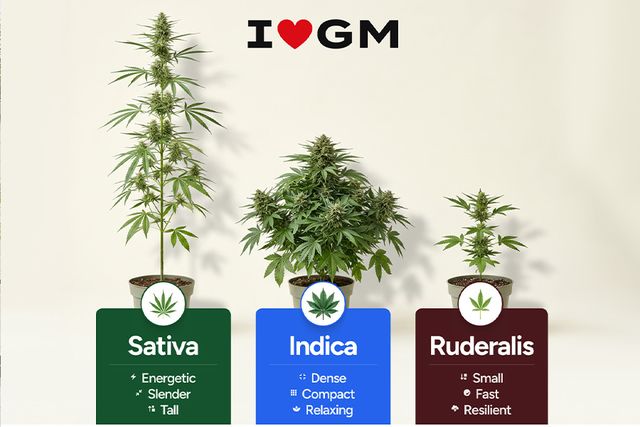
Cannabis ruderalis differs from indica and sativa in three key ways: plant size, flowering trigger and THC content. Here's how all three subspecies compare across the attributes that matter most to growers and buyers:
Typical height: Ruderalis stays compact at 1-3 feet. Indica reaches 2-6 feet. Sativa stretches the furthest at 5-12 feet.
Flowering trigger: Ruderalis flowers by age — no light change needed. Both sativa and indica photoperiod plants flower in response to a 12/12 light cycle.
THC content: Ruderalis typically comes in under 3% THC. Sativa and indica both range from 10-30%+ depending on the genetics.
Leaf shape: Ruderalis leaves have narrow points in a 3+2 arrangement. Sativa produces 9 thin, elongated points. Indica leaves are broader with 7 wider points.
Typical lifecycle: Ruderalis finishes in 7-9 weeks. Indica runs 8-12 weeks. Sativa takes the longest at 10-16 weeks.
Ruderalis produces the least THC of the three but finishes fastest and needs no light management. That said, there are plenty of high THC seeds with ruderalis (autoflowering) genetics.
Growers choose indica seeds for more relaxing effect profiles. If the energizing sativa experience is what you're after, sativa seeds cover that end of the spectrum. The best part? You can find both indica- and sativa-dominant options in the autoflowering category.
Where Does Cannabis Grow in the Wild?
Wild cannabis grows across Central Asia, Eastern Europe and parts of Russia. Ruderalis is the subspecies you're most likely to find in feral and disturbed-soil environments. It earned the "ruderal" label because it colonizes roadsides, abandoned fields and mountain slopes where most crops can't survive. It doesn't need a gardener. It just grows.
Sativa grows wild in equatorial regions, where long, sunny seasons match its extended lifecycle.
Indica grows wild in the Hindu Kush mountain range, where the climate shaped its compact, resinous structure.
Ruderalis occupies the colder, northern end of the cannabis geographic range.
Feral ruderalis plants in Siberia or southern Russia look nothing like the polished hybrids in a modern seed catalog. They're small, leafy and low in THC. But they carry the autoflower gene that breeders have been working with for decades.
What Are Cannabis Ruderalis Effects?
Cannabis ruderalis produces milder psychoactive effects than indica or sativa because its THC content is naturally low, typically under 3%. Pure ruderalis won't deliver the potency most buyers are looking for.
What ruderalis does have is a higher CBD-to-THC ratio than most sativa or indica strains. That ratio makes ruderalis genetics useful to breeders creating CBD seeds that flower based on age.
Today, modern ruderalis hybrids (autoflowering strains) developed through selective crossbreeding carry significantly more THC than pure ruderalis.
Cannabis Ruderalis Strains and Hybrids
Cannabis ruderalis strains fall into two categories: pure ruderalis, which is rarely sold commercially, and ruderalis hybrids, which dominate the autoflowering seed market.
Pure Ruderalis Strains
Pure ruderalis strains exist but aren't widely available as commercial seeds because their low THC and small bud production make them unappealing to most buyers.
Where pure ruderalis is genuinely valuable is in breeding. Its genetics are the raw material breeders use to transfer the autoflowering trait into high-performing sativa and indica strains.
Popular Cannabis Ruderalis Hybrid Strains
Popular cannabis ruderalis hybrid strains combine the autoflowering trait of ruderalis with the potency and yield of indica or sativa genetics.
Here are a few well-known examples:
Northern Lights Auto carries the relaxing indica character of the original Northern Lights in autoflowering form. It's fast, consistent and forgiving for newer growers.
Triple XL Auto blends sativa and indica influence in a manageable, reliable package that suits both new and experienced growers.
Lowryder Auto was one of the earliest ruderalis hybrids, bred specifically for compact size and a fast turnaround. It typically finishes in 7 to 9 weeks from seed.
AK-47 Auto brings the sativa-leaning character of the classic AK-47 into a ruderalis auto format known for its resinous buds and skunky-sweet profile.
Blue Dream Auto is a high-THC sativa hybrid that’s also beginner-friendly, growing indoors or outdoors in 10-12 weeks from seed.
All of these are examples of hybrid seeds built on a ruderalis genetic foundation. If you're just getting started, many of them appear on the cannabis seeds for beginners list because the autoflowering trait removes a lot of the timing complexity from the grow.
How Ruderalis Genetics Power Autoflowering Seeds
Ruderalis genetics gave breeders the autoflowering trait that every modern autoflowering seed carries today.
Breeders crossed ruderalis with sativa and indica strains and produced hybrids that inherited the time-based flowering alongside better potency, yield and flavor.
The result was the autoflowering seeds category that now fills seed catalogs worldwide.
Every autoflowering seed you buy is a ruderalis hybrid at its genetic core. The ruderalis percentage in modern hybrids is much smaller than in early crosses, but the key trait, flowering without a light change, comes directly from this subspecies.
Most autoflowering seeds are also feminized cannabis seeds, which means they're bred to produce female plants. That combination of autoflowering and feminized genetics makes them one of the most beginner-friendly cannabis seed types available.
If you prefer more control over the grow cycle and plant size, photoperiod strains let you manage veg and flower timing separately. For buyers who want speed, fast flowering seeds offer a middle option.
But for simplicity and quick turnarounds, autoflowering seeds and the ruderalis genetics behind them are hard to beat.
Eligible adult buyers should check federal, state and local rules before germinating any cannabis seeds.
FAQs About Ruderalis
What Does Ruderalis Mean?
Ruderalis comes from the Latin "ruderal," which describes plants that grow on disturbed or neglected land without cultivation. Dmitrij Janischewsky coined the term in 1924 when he classified the plant as a distinct subspecies based on its autoflowering behavior.
Is Ruderalis a Sativa, Indica, or its Own Species?
Ruderalis is most commonly classified as a third cannabis subspecies, separate from sativa and indica. Some botanists argue it should be classified as a subspecies of Cannabis sativa rather than a species of its own, but most breeders and growers treat it as a distinct third category within the cannabis genus.
Can You Buy Pure Ruderalis Seeds?
Pure ruderalis seeds are rarely available from commercial seed banks. Most breeders don't carry them because pure ruderalis plants produce very little THC and limited bud mass. What you'll find instead are ruderalis hybrids that carry the auto-flower trait with far better potency and yield. Check federal, state and local rules before purchasing or germinating any cannabis seeds.
Does Ruderalis Get You High?
Pure ruderalis produces very little psychoactive effect because its THC content typically falls under 3%. Ruderalis hybrids are a different story: modern autoflowering strains carry ruderalis genetics for the timing trait but have been selectively bred to reach THC levels comparable to many photoperiod strains.
What is Female Ruderalis?
Female ruderalis plants produce the buds associated with terms like "full-grown female ruderalis buds." Like sativa and indica, ruderalis plants can be male or female. Female plants produce flower clusters while male plants produce pollen sacs. Most modern ruderalis-based autoflowering seeds are feminized, so they grow into female plants almost every time.
What is Ruderalis Used For?
Ruderalis is used primarily as a genetic donor in cannabis breeding programs. Its autoflowering trait and disease resistance make it valuable for creating autoflowering hybrids that are faster to harvest and easier to manage. Its higher CBD-to-THC ratio has also made it useful in CBD seed development.

Gabriel ILGM
Gab Wulff is an ecologist and designer linking sustainability, community gardening, and cannabis reform.