
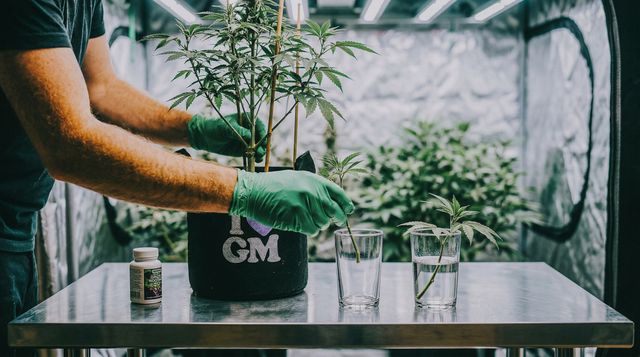
How to Clone Cannabis Plants in Water: A Step-by-Step Guide
You might just be getting into growing cannabis or you've got a favorite plant you never want to lose, then learning how to clone marijuana is the skill you need to learn. No complicated gear, no fancy tricks: just clean cuts, clean jars, and a bit of patience while those water roots do their thing. Ready to turn one great plant into many? Let’s get cloning.

Gabriel ILGM
Table of contents
How to Clone Cannabis Plants in Water
Cloning cannabis is the process of taking a cutting from a healthy, mature cannabis plant (usually called a mother plant and kept in the vegetative stage) and encouraging that cutting to grow roots and develop into a new, independent plant. Instead of starting from seed, you're creating a genetic copy of a plant you already know and love.
This method is a favorite among experienced growers for a few solid reasons.
Clones take the guesswork out of growing. If the original plant is strong, high-yielding, and delivers the effects and flavors you want, cloning cannabis ensures every plant that comes from it carries those same traits.
Cloning speeds up your grow. Since clones are already past the seedling stage, they root and grow faster than starting from scratch. That means quicker harvests and a more streamlined operation, especially if you’re dialing in a consistent, repeatable grow cycle.
Cloning cannabis is more cost-effective in the long run. Once you’ve got a reliable mother plant, you can keep producing more plants without buying seeds.
Pros and Cons of Water Cloning
As with any aspect of the cultivation journey, there are advantages and disadvantages to the process of rooting in water. Here’s a comparison table of notable points:
| Pros | Cons | |
|---|---|---|
| Setup | Low cost, easy to monitor | Requires frequent water changes |
| Root visibility | Can watch roots take shape | Roots may be weaker than soil or rapid rooters |
| Oxygen | Some circulation if changed regularly | Limited oxygen compared to medium |
| Scalability | Good for small experiments | Not ideal for large crops |
| Transition | Can move to soil once roots reach ~1 inch | Extra step needed for medium transfer |
Why Clone Weed Plants In Water?
Cloning cannabis in water is one of the simplest and most accessible ways to replicate the same plant without fancy gear or messy media. If you’re new to cloning or just want a low-fuss way to multiply your best plant, water’s the way to go, and here’s why:
Low stress, high success: Water gives your cuttings a stable, gentle space to root: no shock, no compact soil, just steady hydration.
You see what’s happening: Transparent containers let you monitor root growth in real time, so you don’t have to guess or deal with surprises.
Cheap and easy: All you need is a clean jar, some water, and a healthy mother plant. No rockwool, no domes, no extra costs.
Step-by-Step: Cloning Cannabis in Water the Easy Way
With a strong mother plant ready to go, you’re set to start cloning. This section shows you exactly how to take clone cuttings and root them in water, using a simple, effective method.If you're just getting started and don't have a mother plant yet, start with beginner-friendly cannabis seeds that are easy to grow and clone.
Step 1: Selecting the Right Mother Plant
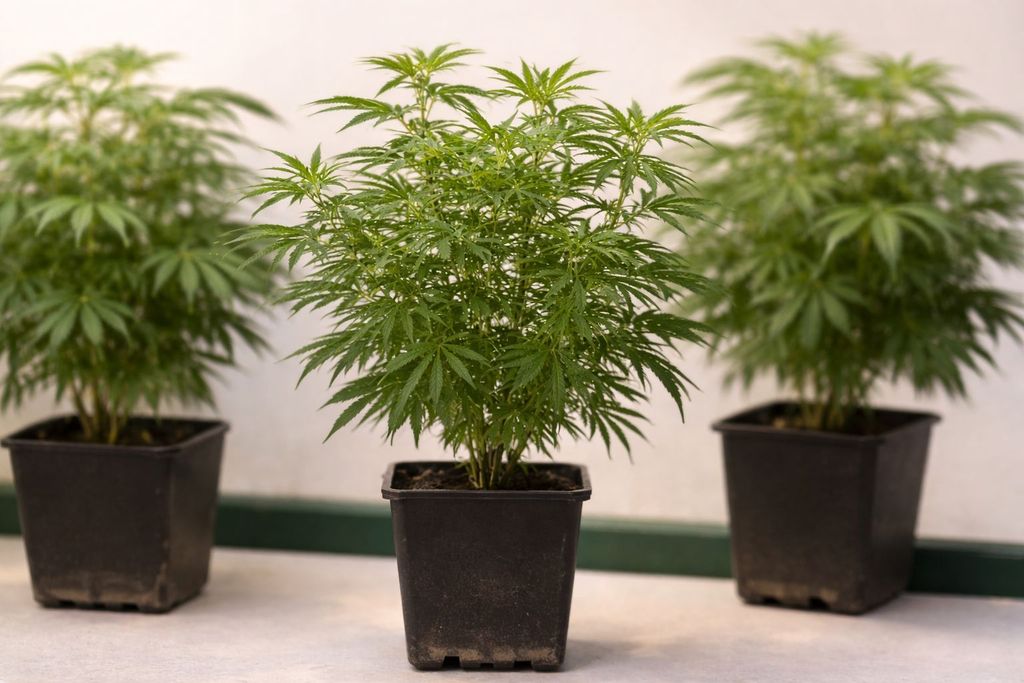
Cloning starts with a strong foundation, which means choosing the right mother plant. You want a healthy female plant that’s still in the vegetative stage. Why? Because cutting from a plant that hasn’t started flowering gives you the best chance of fast, stress-free rooting and allows you to veg the plant, ensuring it grows roots and shoots to support big flowers
Look for a mother with vigorous growth, thick stems, and a well-developed root system. It should be pest-free, disease-free, and already showing traits you want to preserve, like aroma, bud structure, or resilience.
Avoid flowering plants when cloning. Once a plant starts producing buds, it shifts its energy away from root development, making cuttings slower to take and more likely to fail.
Choose a mature vegetative plant with several healthy nodes and strong growth. While many growers wait 6–8 weeks, maturity and vigor matter more than exact age.Understanding the cannabis growth stages helps you identify the right moment to take cuttings.
Step 2: Prepping for the Cloning Process
Before cutting, make sure you’ve got everything ready to give your clones the best shot at healthy root development. A smooth setup means less stress for the plant, which means less stress for you.If you're still building out your setup, check out this guide to essential growing supplies for a full rundown of what you'll need.
What You’ll Need:
A clean cup of water (preferably spring water) for each cutting
Sharp sterilized scissors or sterilized pruning shears
Rooting hormones (optional, but can speed things up)
A humidity dome or plastic cover (to keep moisture levels high during rooting)
Key Prep Steps:
Sterilize everything: tools, containers, hands. This prevents contamination and protects your young clones.
Fill your jars with fresh spring water and set them aside.
If using rooting hormones such as a rooting gel, have it ready to dip the cut end of each clone right after cutting.
Set up your humidity dome (or DIY one with plastic wrap or a clear lid) to maintain a moist, warm environment, ideal for fast rooting.
Make sure your environment stays between 70–75°F with 70–80% humidity, and place your cuttings where they’ll get gentle light but no direct sun.
Once all that’s in place, you’re ready to take your cuttings and start cloning cannabis in water like a pro.
Step 3: The Water‑Cloning Method
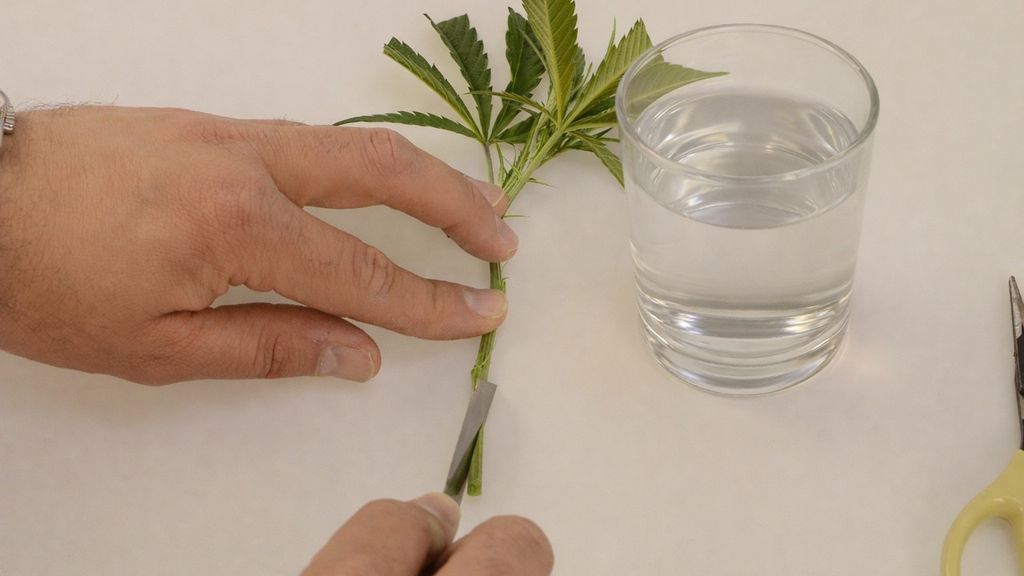
Take cuttings from the mother plant
Choose a healthy branch from your mother plant, ideally about 6–8 inches long, with a couple of nodes.
Cut just below a node, at a 45‑degree angle. This angled cut increases the surface area at the base, giving roots a better chance to form.
Remove the lower leaves from the cutting, leaving a few at the top so the cutting can still photosynthesize but doesn’t waste energy while it tries to root.
Immediately place the cutting into water
As soon as the cutting is made, submerge the cut end in a cup of water (or clear container), to prevent air from entering the stem. Immediately placing the cutting in water prevents drying and reduces stress to the exposed vascular tissue. Clear cups make it easy to monitor root growth, though opaque containers work too.
Use spring water, distilled water, or at least filtered water if possible. These tend to be gentler on cuttings than untreated tap water, especially if your tap water is hard or heavily chlorinated.
Optionally, dip the cut end in a rooting hormone or cloning gel (sometimes called “rooting gel/clone gel”). This can help stimulate and speed up root development.
Adjust the environment for the cuttings
Place the cups somewhere in your grow room (or a suitable propagation area) where they’ll receive indirect light or indirect sunlight. Avoid harsh direct light that can overheat or stress the cuttings.
Keep the temperature warm and stable (roughly 20–25 °C / 68–77 °F) and maintain a humid, gentle atmosphere (some growers use a humidity dome or cover the cups loosely with plastic to raise humidity).
Care and maintenance while clones grow roots
Refresh the water every few days to keep oxygen levels high and avoid stagnation or bacterial growth.
Watch for early signs of root development: little white root nubs should start appearing in about 2-4 weeks (sometimes a bit longer depending on strain).
As soon as roots are healthy and 1-2 inches long (or longer, depending on your transplant plan), the clones are ready to be moved into a proper cloning medium — soil, coco, rock‑wool, or another growing medium — and begin vegetative growth.
Encouraging Root Development
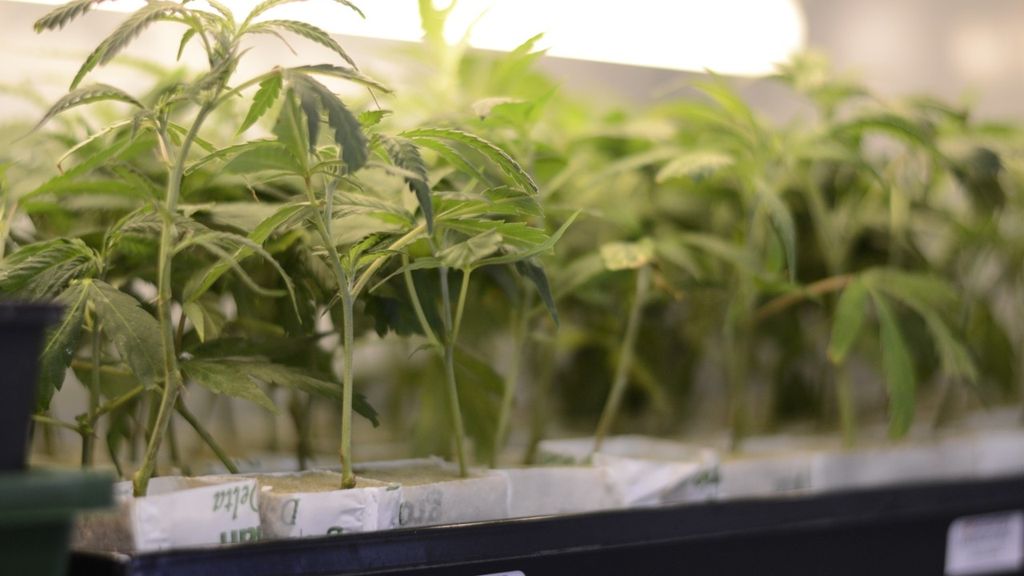
Once you see early signs of rooting - tiny white bumps or thin roots emerging from the stem - your job is to maintain a healthy environment so those roots grow strong and steady.
Change the water every few days to keep it fresh and oxygen-rich.
Use a spray bottle to mist the leaves if humidity drops, especially if you're not using a dome.
Keep the clones warm, humid, and in gentle, indirect light. Avoid harsh sun or extreme temps.
Once the roots reach a couple of inches and begin branching out, move the clones into soil or your preferred medium.
Pro tip: If you buy Homegrown Cannabis Co. clones, you can skip straight to transplanting. We deliver rooted, vigorous plants with no cutting, waiting, or guesswork needed.
Transplanting Your Rooted Cannabis Clones
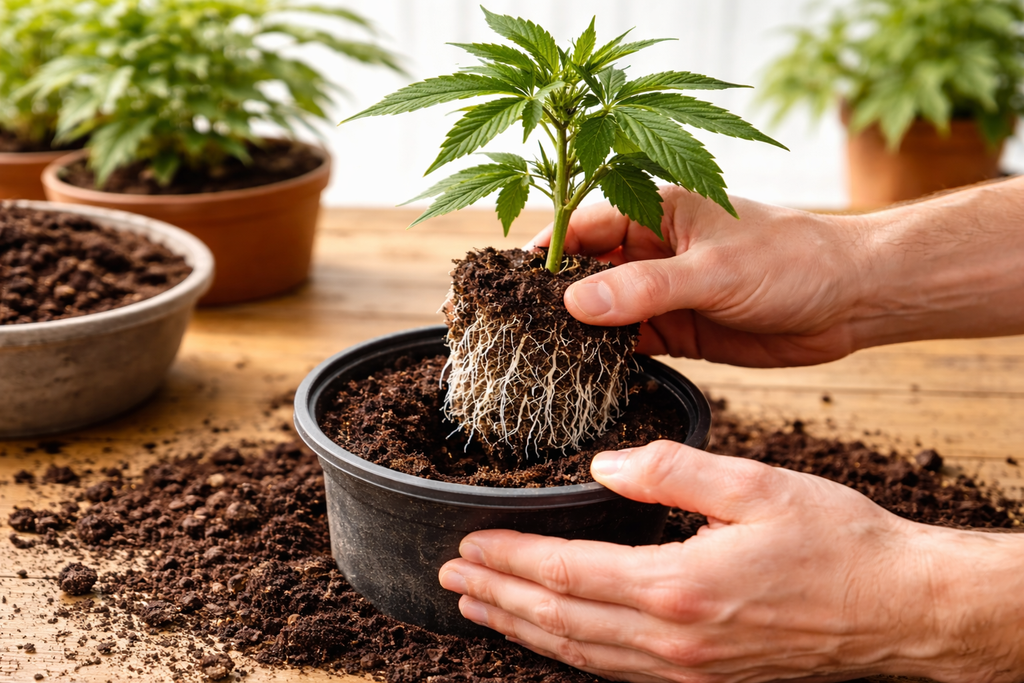
Once your clones have developed strong roots, it’s time to move them from water into soil or another growing medium. This stage is all about care and gentleness. Remember that your young plant is still delicate and adjusting to a new environment.
Roots formed in water are typically more delicate than soil-grown roots, so transplant once they reach 1–2 inches to minimize shock.For a more detailed walkthrough, check out our guide on how to transplant cannabis plants for step-by-step support.
Prepare a small pot, ideally a BudTrainer Bud Cup, with fresh, lightly moist soil or your preferred medium, and make sure it has proper drainage.
Create a hole deep enough for the roots to sit comfortably.
Gently place the clone into the hole, taking care not to damage the fragile roots.
Firm the soil around the base so the plant stays upright, then give it a light watering.
Keep the clone in a warm, humid spot with indirect sunlight to minimize stress and prevent transplant shock.
If you want a more detailed walkthrough, don’t worry—we’ve got you. Check out our complete guide on how to transplant clones for step-by-step support.
Clone Care After Transplant
Once your rooted clones are tucked into their new growing medium, the goal is to keep them stable and supported as they enter the vegetative phase. This is when your new plants shift focus from rooting to growing foliage and structure.
For the first few daysStaying moist is the priority. Keep the soil lightly damp (not soaked) and don’t let it dry out. Use plain or fresh water only, since nutrients come later once the clone is well rooted and showing new growth.
Keep lighting gentle at the startPlace your clones in a warm spot with indirect lighting. Hold off on direct sun or high-intensity fixtures until they’ve settled, since strong light too soon can dry them out or create stress.Once your clones are established, you can gradually introduce a standard 18/6 cycle. Read more about cannabis light schedules to dial in your setup.
Give them space to breatheMake sure your clones aren’t overcrowded and have room for good airflow. Many growers wait several weeks before using plant training techniques or strong lighting, allowing the roots to establish a solid foundation first.
With the right care, your clones will quickly take off, ready to grow into thriving, harvest-ready plants.
Final Word: Simple, Reliable, and Ready to Grow
Cloning in water is hands-down one of the easiest methods to grow weed: no fancy gear, no complicated steps, just patience, clean water, and a good mother plant. This approach gives you a clear path to healthy plants’ roots and future harvests.
Some other growers use more advanced setups, but water cloning is a great starting point. It’s simple, low-cost, and perfect for replicating your best plants without overcomplicating things.
Now you’ve got the knowledge and the steps to confidently clone at home. Follow the guide, trust the process, and soon you'll have a batch of rooted, thriving clones ready to take off.
FAQ on Water-Cloned Cannabis Plants
How Often Should I Water My Clones?
It depends. Most growers water every two to three days so the medium can dry out a bit and pull oxygen into the roots. This helps your weed plants build stronger water roots and keeps them from getting soggy.
Should You Spray Water on Clones?
Yes. Light misting helps the cannabis plant take in moisture through the leaves before roots develop. Use plain water or fresh water and give a gentle mist a few times a day so the leaves don’t dry out, especially if they're exposed to warm temps or indirect sunlight. Light misting can help if humidity drops below 65–70%, but avoid soaking the leaves to prevent fungal issues.
How Long Can You Leave Cannabis Cuttings in Water?
It depends. Some cuttings root in clear cups of tap water in as little as 2–4 weeks, though certain strains take longer. This is one of the easiest methods for beginners because you can actually watch little bumps turn into roots before moving them into a new medium for the next stage.
Should Clones Be Submerged in Water?
Yes, but only the stem. Keeping just the stem in water keeps it hydrated while still giving the cutting enough oxygen to form healthy roots instead of drowning.
Can You Clone a Clone?
Yes. A clone taken from a clone will carry the same genetics as the original mother plant. There's no generational loss in DNA, so your fifth-generation clone is genetically identical to the first. That said, overall plant health matters. If you're cloning from weak or stressed plants, the cuttings will reflect that. The best practice is to keep a dedicated mother plant in veg and take cuttings from her directly, rather than cloning down a long chain where each generation may have picked up stress or pathogens along the way.
How Long Do Clones Take to Root?
Most cannabis clones develop visible roots within 2 to 4 weeks when kept in the right conditions (70-75F, 70-80% humidity, indirect light). Some strains root faster than others, and using a rooting hormone can speed things up by a few days. If you're cloning in water, you'll see small white bumps forming on the stem first, followed by thin roots. Once those roots reach 1 to 2 inches, the clone is ready to transplant.
How Old Should a Mother Plant Be Before Cloning?
Most growers wait until the mother plant is at least 6 to 8 weeks into vegetative growth before taking cuttings. What matters more than age is maturity and vigor. The plant should have multiple healthy nodes, thick stems, and strong branching. A young plant that's growing fast and looks healthy can be ready sooner than a slow grower at the same age. Avoid taking cuttings from seedlings or plants that haven't developed a solid root system yet.
Can You Grow Clones From a Dispensary?
Yes, if the dispensary sells live clones (rooted cuttings), you can take them home and grow them just like any other clone. The main thing to watch for is pests and disease. Inspect the leaves and stems carefully before introducing a dispensary clone to your grow space. Quarantine new clones for a few days if possible. Once you're confident they're clean, transplant into your preferred medium, keep conditions warm and humid, and treat them the same as any freshly rooted cutting.
Can You Clone Feminized Seeds?
Yes. Plants grown from feminized seeds can be cloned the same way as any other cannabis plant. Since feminized seeds produce female plants, the clones will also be female. If you find a standout phenotype from a feminized seed pack, cloning is the best way to keep it going without buying more seeds. Just keep the mother plant healthy and in veg, and you can take cuttings from it indefinitely.
How Do You Get Clones to Root Faster?
A few things help speed up rooting. Use a rooting hormone (gel or powder) on the cut end before placing it in water or your chosen medium. Keep temperatures steady between 70 and 75F and humidity above 70%. Change the water every 2 to 3 days to keep oxygen levels high and prevent bacterial buildup. Make sure your cuttings get gentle, indirect light rather than intense direct light, which can stress them before roots form. Some growers also scrape the bottom inch of the stem lightly before dipping in hormone to expose more cambium tissue, which can encourage faster root development.

Gabriel ILGM
Gab Wulff is an ecologist and designer linking sustainability, community gardening, and cannabis reform.