
Feminized vs Autoflower Seeds: Comparison Guide
Feminized and autoflower seeds are the two seed types most growers compare first, and they solve different problems. Feminized seeds grow female-only plants for a bigger, controllable harvest. Autoflower seeds flower on their own clock for a faster, simpler grow.
This guide compares both across flowering trigger, timeline, plant size and yield, adds where regular seeds still fit, and shows which seed type matches your space, schedule and experience.

Gabriel ILGM
Table of contents
What Are Feminized Cannabis Seeds?
Feminized cannabis seeds produce almost exclusively female plants, which are the plants that grow the buds growers want to harvest. Breeders create feminized seeds by triggering a female plant to produce pollen, so the seeds inherit two X chromosomes and grow into female plants nearly every time.
This removes the step of identifying and culling male cannabis plants partway through the grow. For most buyers, feminized weed seeds mean every seed that sprouts is worth growing to harvest.
What Does Photoperiod Feminized Mean?
Photoperiod feminized seeds flower when the light cycle shifts to roughly 12 hours of darkness, and they stay female the whole way. The word photoperiod means the plant reads day length as its signal to start making flowers.
Indoor growers control this by switching the lights to a 12/12 schedule, while outdoor plants flip naturally as days shorten in late summer. So a feminized photoperiod plant gives you control over when it flowers and how long it grows first.
What Are Autoflower Cannabis Seeds?
Autoflower cannabis seeds flower based on age, not light schedule, usually starting to bud a few weeks after sprouting and finishing the full seed-to-harvest cycle in roughly 8 to 12 weeks.
These seeds carry ruderalis genetics, a cannabis subspecies that evolved to flower on its own in short northern seasons. Because autoflowering plants ignore the light cycle, growers do not need to change the lighting to trigger buds. Most autoflower weed seeds sold today are also feminized, so they combine fast timing with female-only plants.
Feminized vs Autoflower Seeds: Key Differences
Feminized and autoflower seeds differ across four things that matter to a grower: flowering trigger, total timeline, plant size and yield per plant. The chart below sets the two seed types side by side so you can match each trait to your own grow.
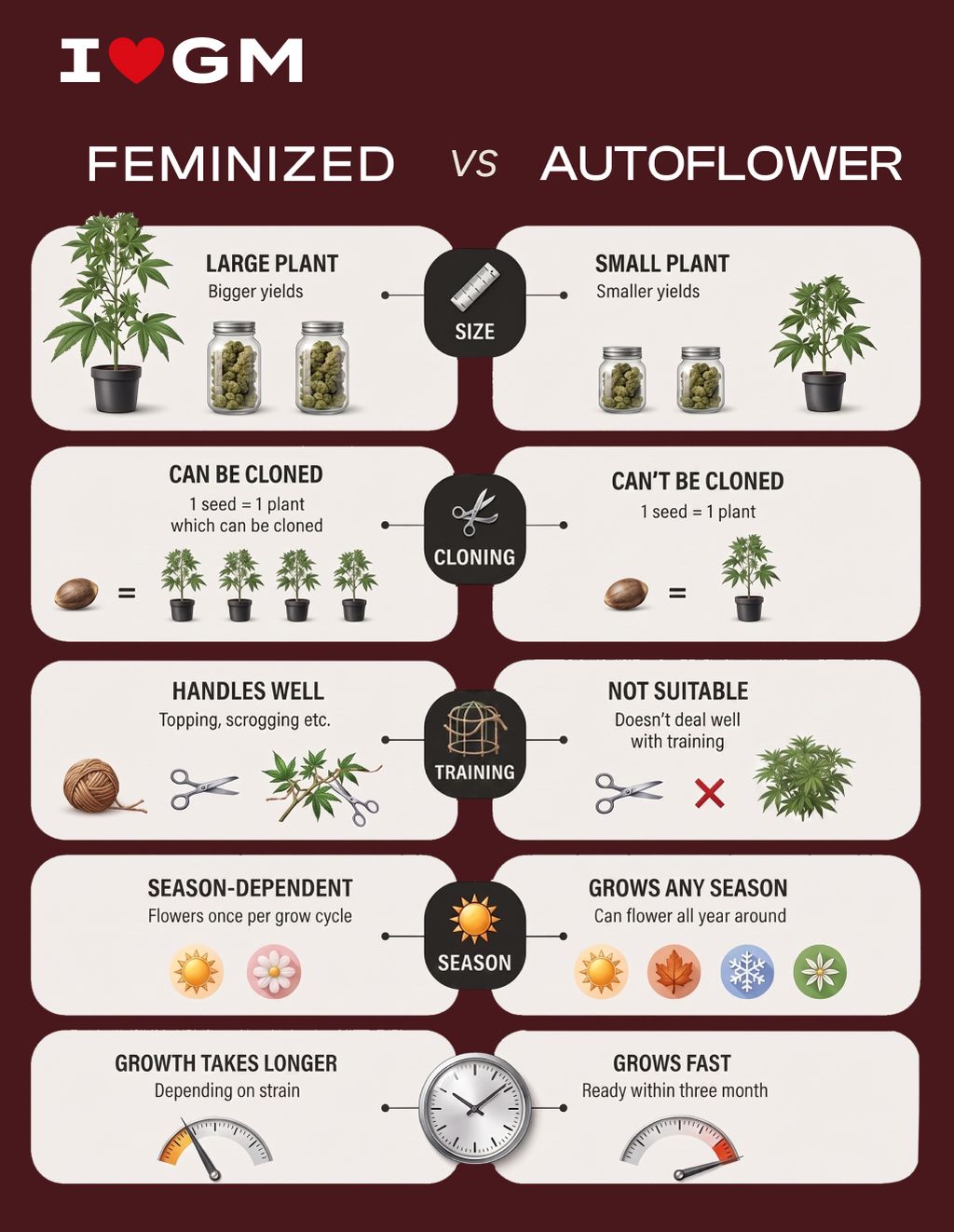
The pattern is clear: autoflowers trade size and peak yield for speed and simplicity, while feminized photoperiods trade speed for control and a bigger harvest. Neither seed type is better in every case, because the right choice depends on what the grower values most.
Which Seed Type Produces a Bigger Yield?
Feminized photoperiod seeds tend to produce larger yields per plant than autoflowers, because the grower controls how long the plant grows before flowering. A longer vegetative stage builds a bigger plant with more bud sites, so the harvest weight climbs. Autoflowers stay smaller because they start flowering on a fixed clock, which caps how large each plant gets.
Growers who want maximum weight per plant often start with high yield seeds in feminized photoperiod form, while growers running several fast cycles can match autoflower output across the calendar year.
How Do Feminized Seeds Differ From Regular Seeds?
Feminized seeds differ from regular seeds by removing roughly half the crop's male-plant risk. Regular cannabis seeds produce both male and female plants in unpredictable numbers, so a grower must sex each plant and pull the males before they pollinate the females.
Feminized seeds skip that gamble because they grow into female plants nearly every time. Regular seeds still matter for breeders, who need male plants to create new genetics and seed lines.
Which Cannabis Seed Type Should You Choose?
Your seed type choice depends on your timeline, grow space and experience, not on one type being universally better. New growers often want a forgiving plant and a fast result, while experienced growers may want full control over a larger harvest. The three sections below match each seed type to the grower it serves best.
Autoflower seeds: fastest harvest, smallest plant, lowest effort
Feminized photoperiod seeds: biggest yield potential, full timing control
Regular seeds: male and female plants for breeding work
When Autoflower Seeds Fit Best
Autoflower seeds fit growers who want speed and a smaller plant they can tuck into tight space. The short 8 to 12 week cycle suits beginners, balcony growers and anyone running several quick harvests a year. Because autoflowers do not need a light-schedule change, they forgive lighting mistakes that would stall a photoperiod plant.
Browsing the autoflower weed seeds category is a sensible starting point for a first fast grow, where lawful.
When Feminized Photoperiod Seeds Fit Best
Feminized photoperiod seeds fit growers who want maximum yield and control over the plant's size and shape. Holding a plant in its vegetative stage lets the grower train it, fill the space and build more bud sites before flipping to flower.
This control rewards growers with room, time and a few harvests of experience. The payoff is a larger harvest from each plant, if cultivation is lawful where you live.
When Regular Seeds Still Make Sense
Regular seeds make sense for breeders who need male plants to cross genetics and produce new seed lines. A breeder relies on male cannabis plants for their pollen, which feminized and autoflower seeds rarely provide.
Hobby growers focused only on buds rarely need regular weed seeds. New growers comparing options can start with the broader marijuana seeds for beginners resource before settling on a seed type.
Once you know which seed type fits your grow, you can browse cannabis seeds by category and choose a pack, where purchase and cultivation are permitted for eligible adults under federal, state and local rules.
Frequently Asked Questions
Are Autoflower Seeds Always Feminized?
No, but most are. Autoflowering refers to the flowering trigger, while feminized refers to plant sex, so the two traits are separate. Most autoflower seeds sold today are bred to be feminized as well, which is why a single pack usually gives fast timing and female-only plants.
Do Autoflowers Yield Less than Feminized Photoperiods?
Yes, usually less per plant. Autoflowers stay smaller because they flower on a fixed age-based clock, which limits plant size and total bud sites. Growers offset this by running more harvests per year or growing more plants at once.
Which Is Better for Beginners, Autoflower or Feminized?
Autoflower seeds suit most beginners because they are fast, compact and forgiving of light-cycle mistakes. Feminized photoperiod seeds reward growers who want a larger harvest and are ready to manage a longer grow. Both remove the male-plant guesswork that regular seeds carry.

Gabriel ILGM
Gab Wulff is an ecologist and designer linking sustainability, community gardening, and cannabis reform.