
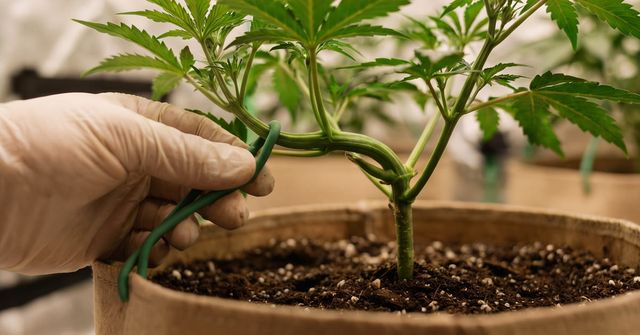
How to LST Autoflowers: Step-by-Step Guide
Low-stress training (LST) autoflowers is the safest way to reshape your plant's canopy for bigger yields without slowing its growth. Unlike high-stress techniques like topping, LST bends and ties stems without wounding auto plants, which have a short vegetative window and can't afford long recovery times. In this guide, you’ll learn how to LST autoflowers with:
Step by step instructions.
Guidance on what to do each week.
And which seed types respond best to low-stress training.

Gabriel ILGM
Table of contents
What is LST for Autoflowers?
LST for autoflowers is a training method that bends and ties stems into a flatter canopy without cutting or damaging the plant. Cannabis plants naturally direct most of their growth energy into one tall central shoot, a tendency called apical dominance. LST disrupts this by redirecting that energy into the side branches, encouraging multiple tops to develop at the same level.
The result is a wider, flatter canopy where more bud sites sit at the same height and receive similar light intensity. Trained autos often produce more evenly developed nugs than untrained plants because lower branches no longer compete in the shadow of a single dominant top.
There are, of course, other low-stress training cannabis techniques that apply to photoperiod varieties too, but LST for autoflowers generally means this specific method. The best part? You don't need special equipment or advanced growing knowledge to get started.
Can Autoflowers Handle High-Stress Training?
No, autoflowers begin flowering based on an internal genetic clock, not a light schedule. High-stress training techniques like topping and super cropping damage plant tissue, forcing a recovery period the plant can't always complete in time.
Photoperiod plants stay in the vegetative stage until you adjust the light schedule, regardless of whether you're growing regular or feminized cannabis seeds. That gives them time to recover fully from high-stress techniques before flowering begins.
Autoflowers don't have that buffer. Their vegetative window typically runs 3-5 weeks before flowering starts automatically (depending on the strain). HST applied too close to that transition can stunt an auto or slow its development enough to cut into your final yield.
LST sidesteps this risk entirely because it doesn't wound the plant. You're guiding the stems into a new position, not removing tissue or crushing branches. Autos keep growing on schedule while you reshape the canopy.
When Should You Start LST on Autoflowers?
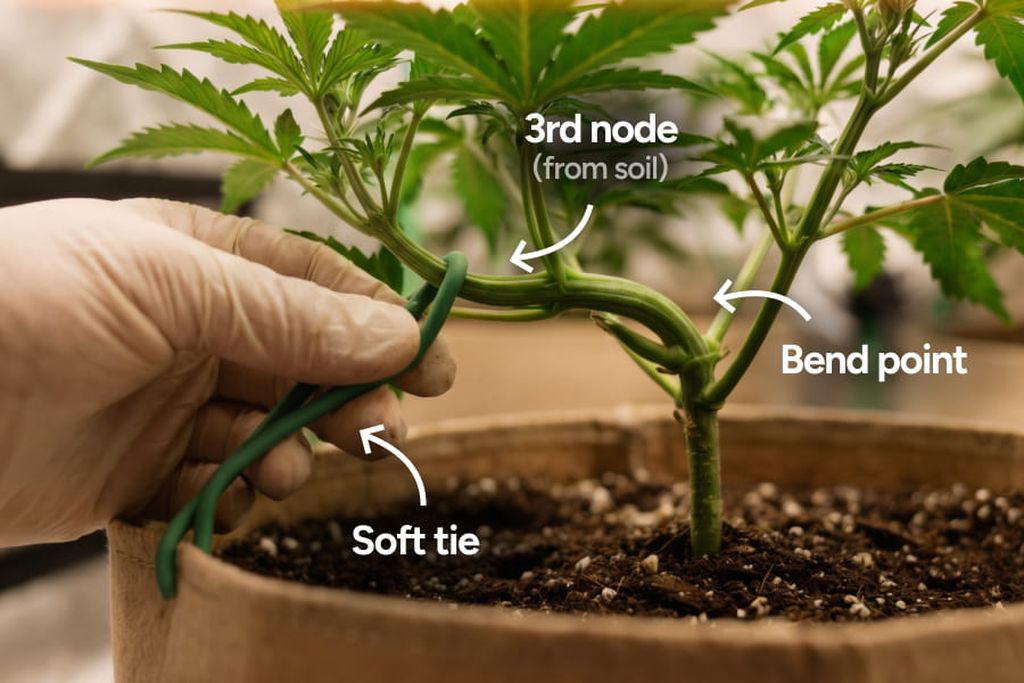
Low-stress training (LST) on autoflowers works best when you start between weeks 2 and 3, once the plant has developed 3-4 nodes. Nodes are the growth points along the stem where branches emerge.
At 3-4 nodes, the main stem is thick enough to handle bending without snapping. Before this point, the seedling is too fragile and the stem too thin to work with safely.
The outer edge of the LST window closes when your auto shows pre-flowering signs. These include small white hairs, called pistils, appearing at the nodes. Once you see those signs, stop adding new ties and let the plant shift its energy into bud production. Minor adjustments, like loosening a tie that's pressing into a thickening stem, are fine in early flower.
How to LST Autoflowers Step by Step
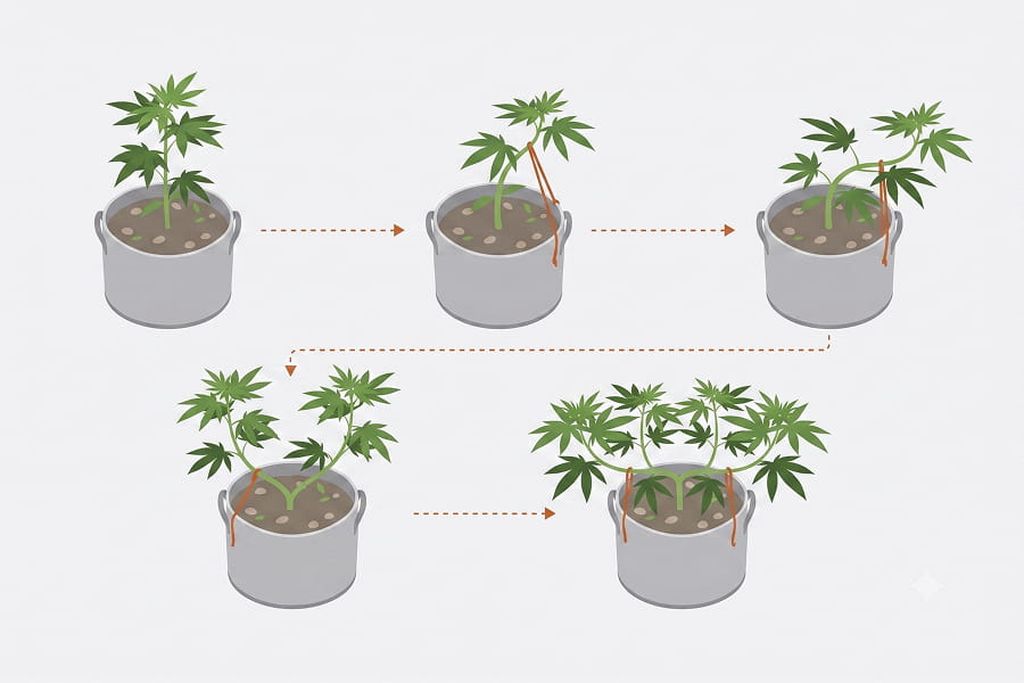
LST autoflowers requires four steps: gathering soft ties, bending the main stem, securing the branches and adjusting as the plant grows. The steps below apply to any autoflowering plant you're growing where cultivation is lawful.
The sections below cover:
Step1: What You Need to LST Your Autoflower — the tools and materials you need before you start.
Step 2: How to Bend and Tie Your Autoflower — the core bending and securing technique, step by step.
Step 3: Weekly Autoflower LST Adjustments — a timeline mapping the training window from first bend through early flowering.
Step 1: Get What You Need to LST Your Autoflower
LST on your autoflower requires three things:
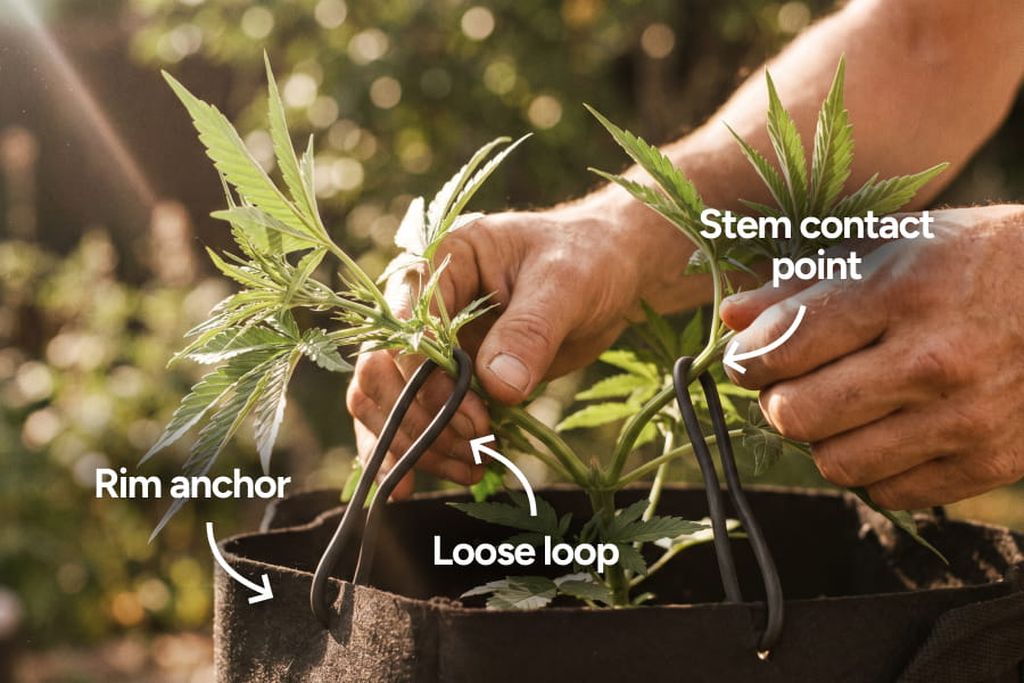
Soft plant ties: LST tape, rubber-coated garden wire or thick garden twine.
Anchor points: Drill holes around the pot rim or use small stakes pushed into the soil.
An autoflowering plant: With healthy growth and at least 3 nodes.
If your plant has less than 3 nodes, rather wait. Avoid thin wire and zip ties because they cut into the stem as it thickens over time.
Step 2: Bend and Tie Your Autoflower
Bending your autoflower starts with gently arcing the main stem horizontally before securing it with a soft tie. Here’s how to do it:
Support the base of the stem with one hand and apply slow, steady pressure with the other as you guide the top down.
Work in small increments rather than one big movement so the stem doesn't snap.
Once you're happy with the angle, attach a tie from the stem to your anchor point, leaving a little slack for the stem to thicken.
Over the next few days, the side branches will grow toward the light. As they develop, add ties to pull them outward and space them evenly around the pot.
The goal is a flat, open canopy where all the tops sit at roughly the same height. Check your plants daily and loosen any tie that looks like it's pressing into the stem.
Step 3: Make Weekly Autoflower LST Adjustments
Autoflower low-stress training or LST follows a short, predictable window that runs from week 2 or 3 through early pre-flowering. Here's what to do at each stage so you don't miss the window or push into flower with aggressive training still underway:
Weeks 1-2 (seedling): Don't train. Let the roots establish and the first nodes develop before you touch anything.
Week 3 (early veg): Make the first bend. The plant has 3-4 nodes and a thickening stem — secure the main stem with a soft tie and bring it toward horizontal.
Week 4 (mid-veg): Start adjusting. Side branches are rising toward the light. Add ties to pull them outward and space them evenly across the container.
Week 5 (pre-flower): Stop adding new ties. Loosen any that press into thickening stems and watch the nodes closely for the first white pistils.
Weeks 6+ (flower): Maintenance only. Loosen or remove ties as buds develop. No new bending from this point forward.
Once flowering is fully underway, stems become less flexible and more likely to snap under pressure. Maintenance ties are fine. Reshaping at this stage redirects energy away from bud production.
Does LST Increase Autoflower Yield?
Yes, LST increases autoflower yield by exposing more bud sites to direct light across a flattened canopy. An untrained auto develops one tall central cola that shades everything below it. Lower branches receive less light and produce smaller, airier flower clusters as a result.
LST replaces that single dominant top with multiple shoots at the same height, each receiving similar light intensity. The outcome is more evenly developed buds across the whole plant, not just at the top. Many growers report a noticeable improvement in flower density on trained branches, though exact results vary by genetics, environment and growing conditions.
Starting with strong genetics gives LST the best foundation to build on. Pairing LST with the highest yielding seeds gives you both the training advantage and the genetics to back it up.
LST vs No LST: What Changes for Autoflowers?
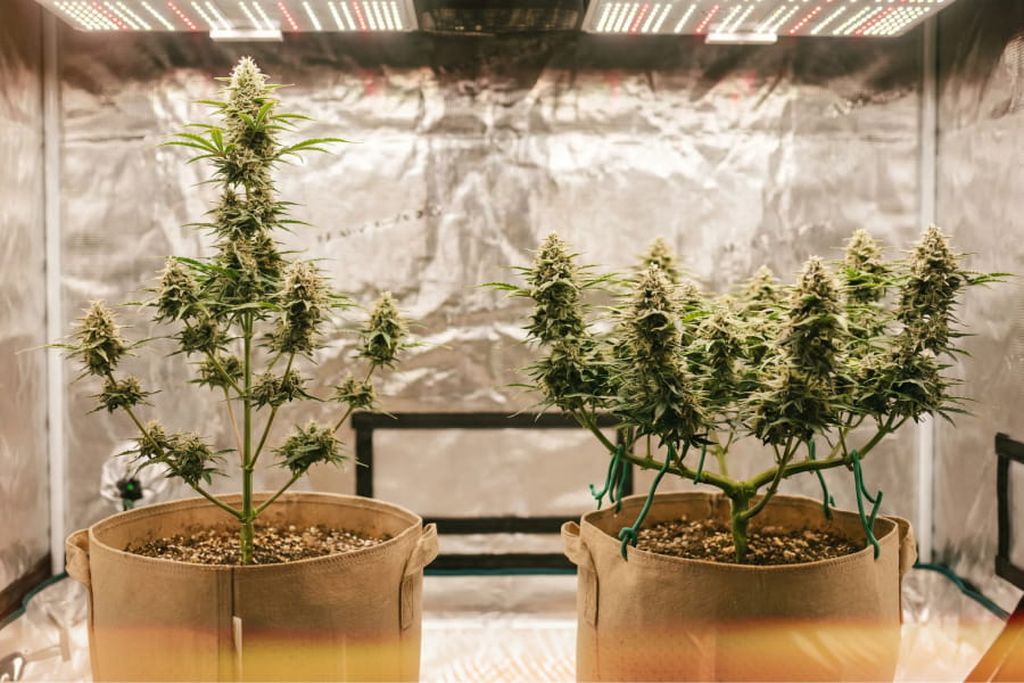
LST autoflowers produce broader canopies and more even bud development than untrained plants grown under the same conditions. Here's where trained and untrained autos differ most clearly across structure, yield potential and grow management:
Canopy shape: LST produces a flat, multi-topped canopy. Untrained plants grow tall with a single dominant central cola.
Bud site count: Training opens more sites to direct light. Without it, lower bud sites stay shaded under the canopy above.
Plant height: LST keeps the plant shorter and more compact. Untrained autos follow their natural vertical profile.
Airflow: A flattened canopy improves airflow throughout the plant. A dense central cola restricts it around the most productive growth.
Yield potential: The correct LST technique can increase yield above the genetic baseline. Untrained plants deliver what the genetics allow under the given conditions.
Grower effort: LST requires regular tie adjustments through weeks 3 and 4. Untrained growing needs minimal intervention beyond basic care.
An untrained autoflower still grows and produces buds. LST is an optional layer that shifts what the plant does with the light it already receives.
How LST Affects Your Autoflower Seed Choice
If you’re choosing cannabis seeds, it helps to know which seed type works best for low-stress training. LST rewards sativa-dominant and taller autoflowering genetics more than short, stocky indicas because longer stems give the technique more to work with.
A sativa-leaning auto that stretches to 80 or 100 cm gives you a wide canopy to flatten and spread once bending begins.
Compact indica-dominant autos still benefit from LST because bending improves airflow and light penetration even on a smaller plant. But the canopy spread and yield response are generally less dramatic.
If potency and canopy training are both priorities, sativa-dominant high THC seeds tend to stretch well and respond strongly to the flat canopy that LST produces. You'll find the widest range of trainable autos in our autoflowering seeds collection, from compact indicas to sativa-dominant stretchers.
If you prefer photoperiod genetics on a faster timeline, fast flowering seeds offer a trainable alternative (where cultivation is permitted).
FAQs About Low-Stress Training Autoflowers
Can You LST Autoflowers During Flowering?
You can make minor adjustments in early flower, but major reshaping should stop before your autoflower shows pre-flower signs. Once flowering is fully underway, stems stiffen and become more likely to snap under pressure. Loosen or remove ties that press into swelling stems, but don't add new bends once buds are forming.
When Should You Start LST on a Photoperiod Plant?
Photoperiod plants tolerate a wider LST window because you control when they enter the flowering stage. Start LST once a photoperiod plant has 4-6 nodes and a strong root system. Because you control the light schedule, you can LST repeatedly and extend veg time if the plant needs extra recovery before flowering begins.
Does LST Slow Down Autoflower Growth?
No, correctly applied LST doesn't slow autoflower growth because it doesn't wound the plant. You're bending and tying stems into a new position, not removing tissue or creating stress wounds. The risk of a slowdown comes from bending too aggressively, using ties that cut into stems or starting too late in the life cycle.
What Happens If You Start LST Too Late on an Autoflower?
Late LST, applied during or after pre-flowering, can redirect the plant's energy away from bud development. Stems also stiffen as flowering begins, making them harder to bend without snapping. If you've missed the window, skip the training and let the plant focus on producing buds.

Gabriel ILGM
Gab Wulff is an ecologist and designer linking sustainability, community gardening, and cannabis reform.