 SUPPORT
 SHIPPING INFO
 STRAIN FINDER
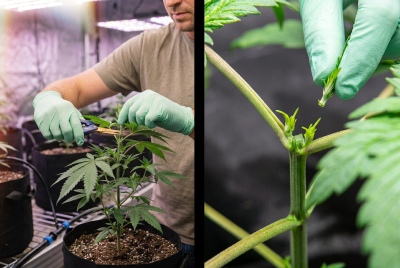
Knowing when to top weed plants is one of the easiest ways to grow a bushier plant with more bud sites. Topping cannabis plants means cutting the main stem to split one cola into two, and timing it right is what makes it work.
This guide covers when to top, how to do it step by step, topping vs fimming, and what changes between topped and untopped plants. By the end, you'll know exactly when to make your first cut and how to help your plant bounce back.
In short:
Top weed plants in the vegetative stage, once they show 4 to 6 nodes and stand 6 to 8 inches (15 to 20 cm) tall. Wait until the plant is past the fragile seedling stage so it recovers fast. Never top during flowering, because the plant shifts its energy into bud development and puts on little new vegetative growth then.
What Does Topping a Cannabis Plant Mean?
Topping a cannabis plant means cutting off the top growth tip of the main stem to split one cola into two. A node is the point on the main stem where branches and leaves grow out. A cola is a cluster of buds, and most weed plants put one big cola at the very top.
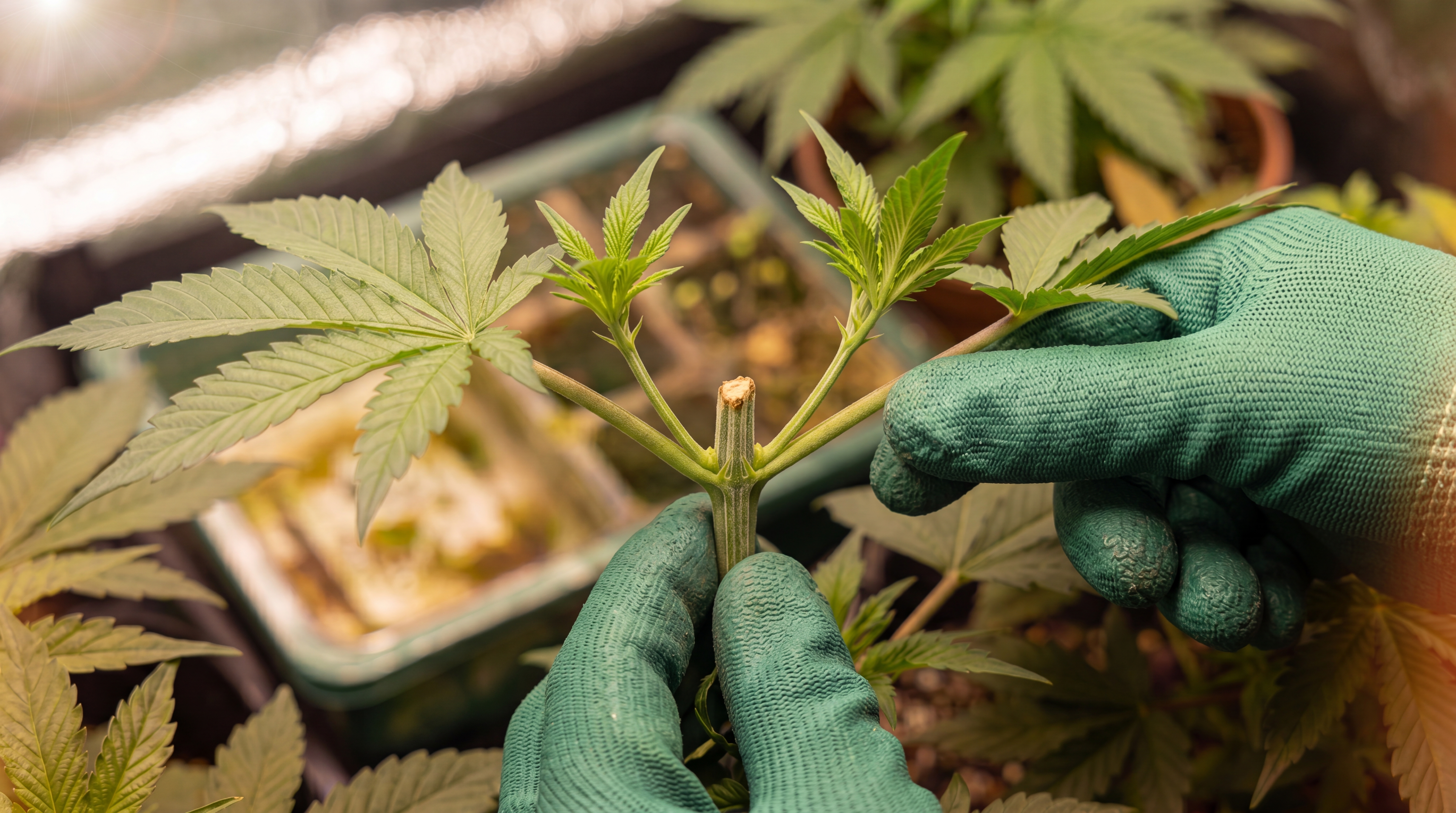
That single tall cola happens because of apical dominance, where the main stem pulls most of the plant's energy. Topping breaks that dominance, so the plant spreads its energy across more growth tips instead. The result is a flatter, wider plant with several colas rather than one.
Why Top Weed Plants?
Topping weed plants redirects growth energy from one main cola into several bud sites for a bushier, more even canopy. When you remove the top, you cut off the source of auxin that was keeping the lower buds dormant, so those buds wake up and start growing.
Topping gives you a few clear benefits:
More bud sites, since several colas replace one.
An even canopy that improves light penetration across the plant.
More productive lower branches, as shaded side shoots turn into new main colas.
Easier height control in a tent or small space.
Naturally, final yield gains still depend on genetics, your growing environment and lawful cultivation conditions.
When to Top Weed Plants
Weed plants are ready to top in the vegetative stage, once they grow 4 to 6 nodes. Most reach this point around 6 to 8 inches (15 to 20 cm) tall, well past the fragile seedling stage. Topping too early stresses a young seedling, and topping too late wastes vegetative time. This timing fits photoperiod plants, which veg until you change their light cycle.
Here's how to time your first cut:
How many nodes before you top: the node count and height that signal readiness.
When to top outdoor weed plants: the right window in an outdoor season.
When it's too late to top: the flowering cutoff you shouldn't cross.
How Many Nodes Before You Top a Weed Plant?
Weed plants are ready to top once they grow at least 4 to 6 nodes on the main stem. Some growers wait longer for a sturdier base. Count nodes from the bottom up, where each pair of leaves meets the stem. Indica and sativa plants hit that node count at different heights, so count nodes rather than guess when your plant is ready based on height alone.
When to Top Outdoor Weed Plants
Outdoor weed plants are topped in the vegetative stage, a few weeks after the last frost. This gives them time to recover and branch out before shorter days push them into flower. Top early enough that the plant finishes recovering well before the season triggers budding.
When is it Too Late to Top a Weed Plant?
Topping a weed plant becomes too late once it enters the flowering stage. In flower, the plant winds down vegetative growth within the first week or two and shifts its focus to buds. If your plant is already flowering, skip topping and use gentle low-stress training, or LST, to manage height. LST bends and ties branches down without cutting, so it won't shock a budding plant.
How to Top a Weed Plant (Step by Step)
Topping a weed plant takes one clean cut just above a node with sterile shears. You cut the main stem right above the next set of leaves, removing the very top growth tip.
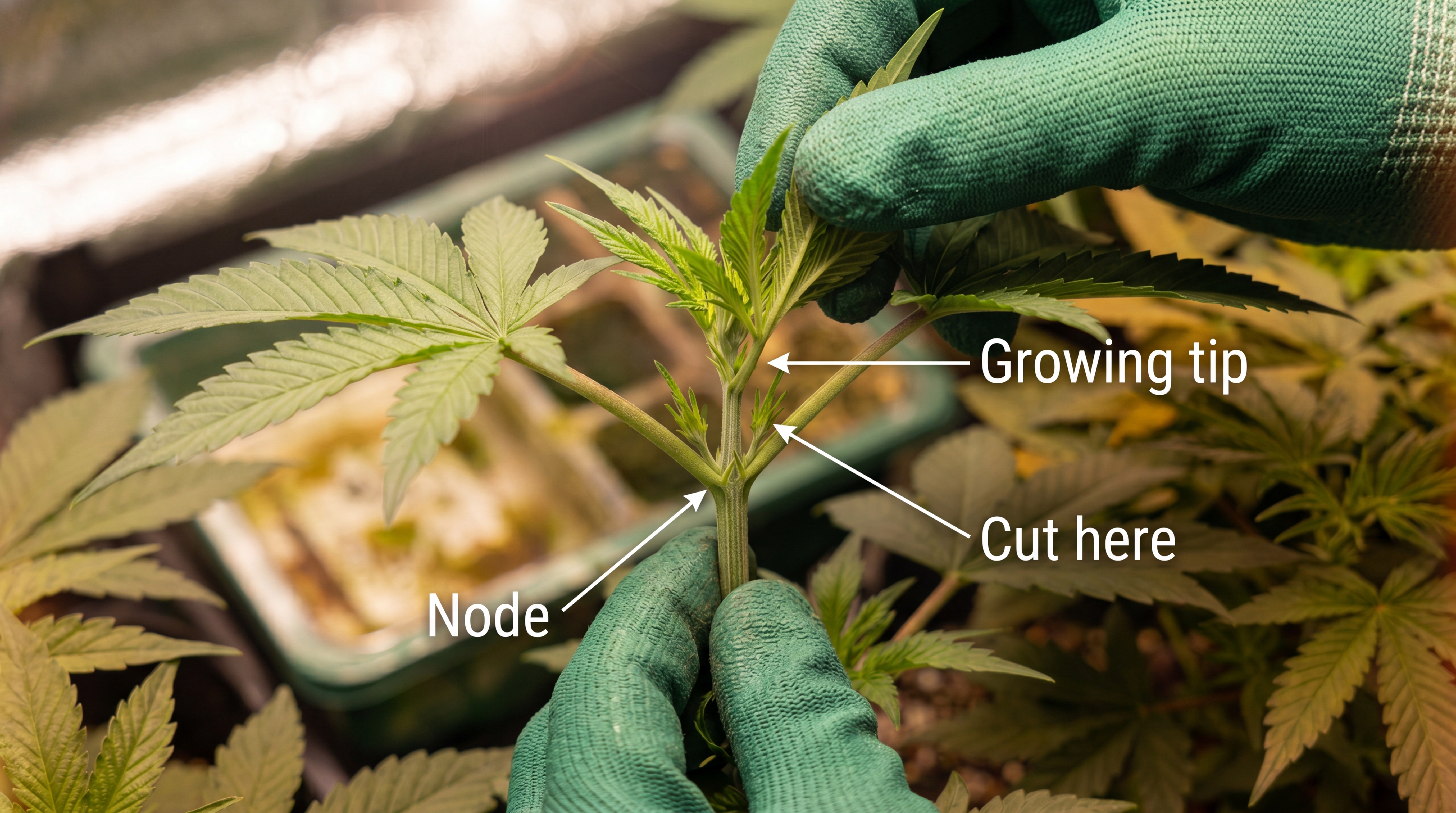
Follow these steps for a clean cut:
Check that your plant is healthy and has 4 to 6 nodes in the vegetative stage.
Sterilize sharp shears with alcohol and put on clean gloves to lower infection risk.
Find the main stem's top growth tip, then cut just above your chosen node.
Cut at a 45-degree angle so water runs off the wound instead of pooling on it.
After the cut, give the plant steady light and balanced cannabis nutrients so it can push out two new shoots.
Don't overfeed a stressed plant, since heavy doses can trigger cannabis nutrient lockout and slow recovery. New growth usually appears within a few days to a week.
Topping vs Fimming: What's the Difference?
Topping and fimming both remove growth from the top of the plant. The difference is how much you take: topping cuts the whole tip, while fimming removes only part of it. Here’s how the two techniques compare across different factors:
What you cut: Topping removes the entire growth tip. Fimming takes roughly 80% of it, leaving a small portion behind.
New shoots produced: Topping reliably produces 2 even colas. Fimming generates 3 to 4 shoots, but they tend to come in uneven.
Stress on the plant: Topping puts more stress on the plant. Fimming is slightly easier to recover from given the smaller cut.
Recovery time: Expect a slightly longer recovery after topping. Fimming's partial cut means the plant bounces back a little faster.
Precision: Topping is high-precision and predictable — you know exactly what you're removing. Fimming is less precise and results can vary between cuts.
Best use case: Topping suits growers building an even canopy or running a mainlining setup. Fimming works better when you want more shoot sites quickly and don't need perfect symmetry.
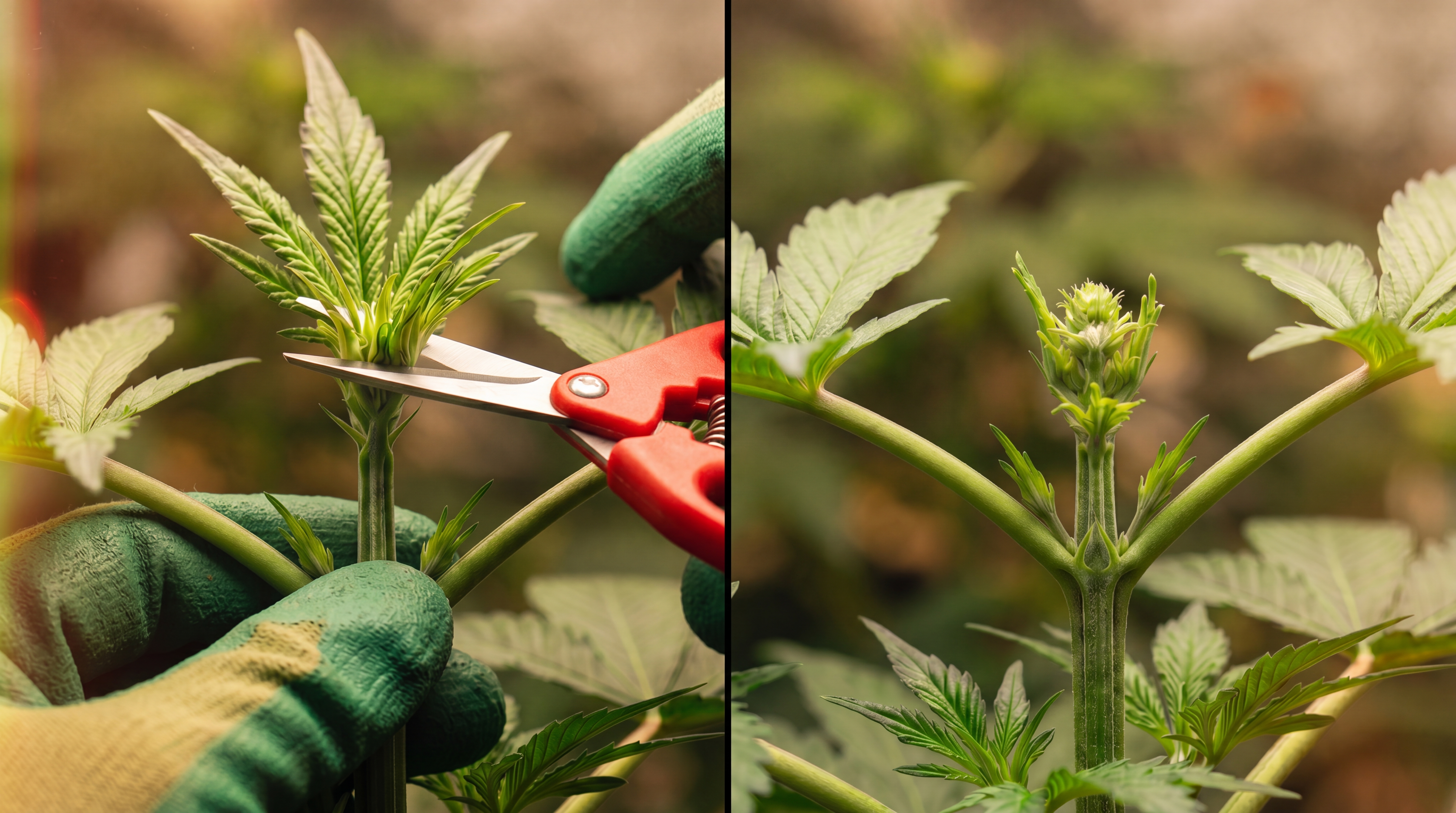
Pinching is a gentler cousin that squeezes the stem to slow growth without cutting it.
What Does Fimming a Cannabis Plant Mean?
Fimming a cannabis plant means taking off about 80% of the newest top growth instead of cutting the whole tip. The name comes from growers who "missed" a clean topping cut and got more shoots anyway. Fimming stresses the plant less, but the new shoots grow in less evenly than with topping.
Topping vs Fimming: Which Should You Use?
Topping suits growers who want two even, controllable colas, while fimming suits those who want more shoots fast. Choose topping for an even canopy or for mainlining, where repeated topping builds a symmetrical manifold. Choose fimming when you want extra bud sites and a quicker, lower-stress cut.
Topped vs Untopped Weed Plants: What Changes?
Topped weed plants grow wide with several colas, while untopped plants keep one tall central cola. That single cola gives an untopped plant the classic Christmas-tree shape, with shaded lower branches.
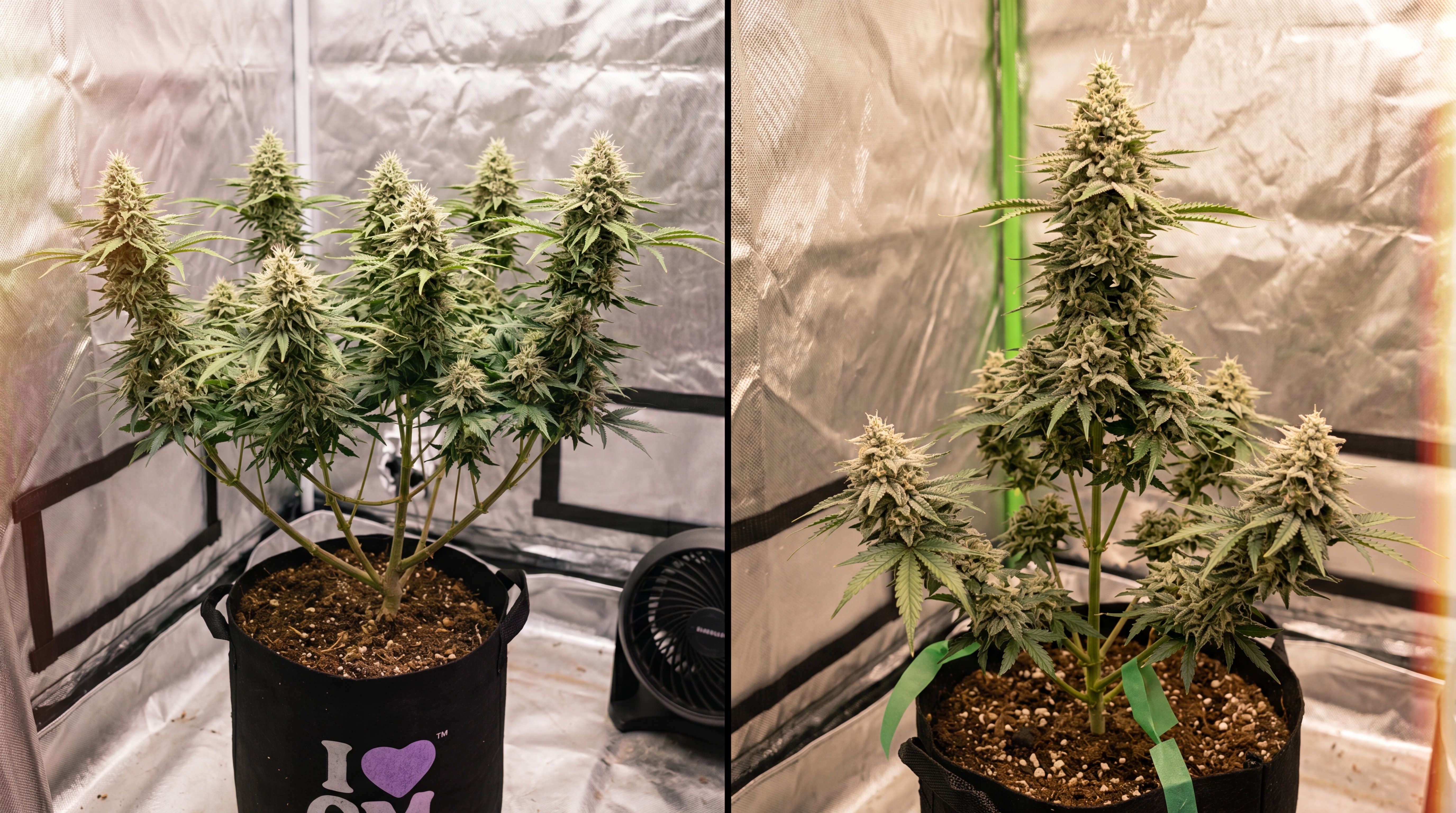
Canopy shape: Topping produces a wide, bushy plant with multiple colas. Untopped plants grow tall with one dominant central cola in the classic Christmas-tree shape.
Bud sites: A topped plant develops several main colas across the canopy. An untopped plant puts most of its energy into a single dominant cola.
Height: Topped plants stay shorter and sit more comfortably under fixed lighting. Untopped plants stretch taller and can push into the light if space is limited.
Light penetration: A wide, flat canopy distributes light more evenly across bud sites. The Christmas-tree profile leaves lower branches in the shade of the growth above.
Stress and recovery: Topping requires a recovery window of a few days before growth resumes. Untopped plants carry no training stress and develop without interruption.
Yield in fixed space: Topped plants tend to yield more in the same footprint by putting more bud sites in the light. Untopped plants typically yield less in the same space, though genetics and environment always play a role.
Can You Top Autoflowers?
No, topping autoflowers is risky, because their fixed age-based timeline leaves little room to recover before flowering. Autoflowers, or autos, start budding by age instead of a light-cycle change like photoperiod plants. A hard cut early on can stunt an auto and shrink its final yield.
If you’re growing autoflower seeds, low-stress training is usually the safer way to shape the plant. LST bends branches into an even canopy without the shock of a cut.
How Many Times Can You Top a Weed Plant?
You can top a weed plant 2 to 3 times in most grows, leaving 1 to 2 weeks between cuts. Each topping can double your colas, so one plant goes from 2 to 4 to 8 main colas. Growers who repeat topping in a balanced pattern call the result a manifold, or mainlining. Stop topping about 2 weeks before you flip to flower, so the plant can shift energy to buds.
How Your Cannabis Seeds Affect Topping Results
Your cannabis seeds decide how well a plant handles topping, because genetics drive vigor, stretch and recovery speed. A clean grow starts with strong cannabis seeds, since vigorous genetics bounce back from a cut faster. Photoperiod feminized seeds give you the long vegetative window topping needs to pay off.
If you're new to training, beginner cannabis seeds are bred to be forgiving when you make your first cut. Always check federal, state and local laws before buying or growing any weed seeds.
Frequently Asked Questions
What Week Should You Top Weed Plants?
Most growers top around week 4, after the seedling stage and once 4 to 6 nodes appear. Week 3 is usually too early, since the plant is still too fragile to recover well.
How Long Does It Take For a Weed Plant to Recover From Topping?
A healthy cannabis plant recovers in a few days to a week, with new shoots showing at the cut. Keep light, water and feeding steady during this window to speed up regrowth.
When Should You Stop Topping Outdoor Weed Plants?
Stop topping outdoor plants at least 2 weeks before they start flowering in late summer. Late cuts leave too little time to recover before the plant focuses on buds.
Is Fimming or Topping Better for Beginners?
Fimming is often easier for beginners, because it stresses the plant less and forgives a sloppy cut. Topping gives more control, but it asks for cleaner timing and a steadier hand.


