
 SUPPORT
 SHIPPING INFO
 STRAIN FINDER

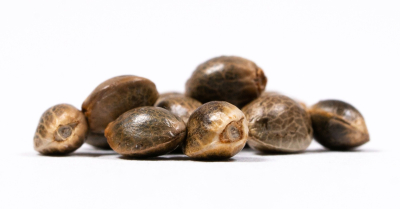
Weed seeds are small, hard and oval, usually about 1/16 to 3/16 inch long, about the size of a peppercorn. Their shells range from pale tan through brown and gray to nearly black, and many carry darker mottling or stripes.
The markings on that shell do tell you something real about how well the seed matured. What they can't tell you is whether it will sprout, whether it will grow into a male or a female plant, or which strain it came from.
This guide covers what cannabis seeds look like when healthy, how to tell a good seed from a bad one, and why a seed's looks can’t reveal its viability, sex or strain.
What Does a Weed Seed Look Like? Size, Shape, Color & Shell
Marijuana seeds look like small, hard, oval pebbles, tan to near-black, often with darker stripes or mottling. Botanically, each one is an achene, a small dry fruit that holds one seed inside a hard casing and never splits open on its own. That’s why it feels more like a tiny pebble than a soft kernel.
Size and Shape
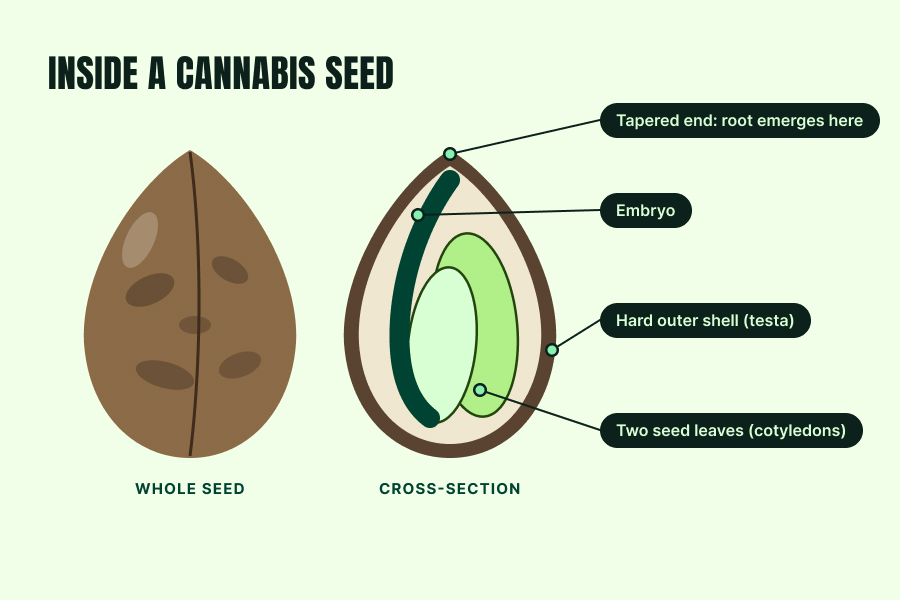
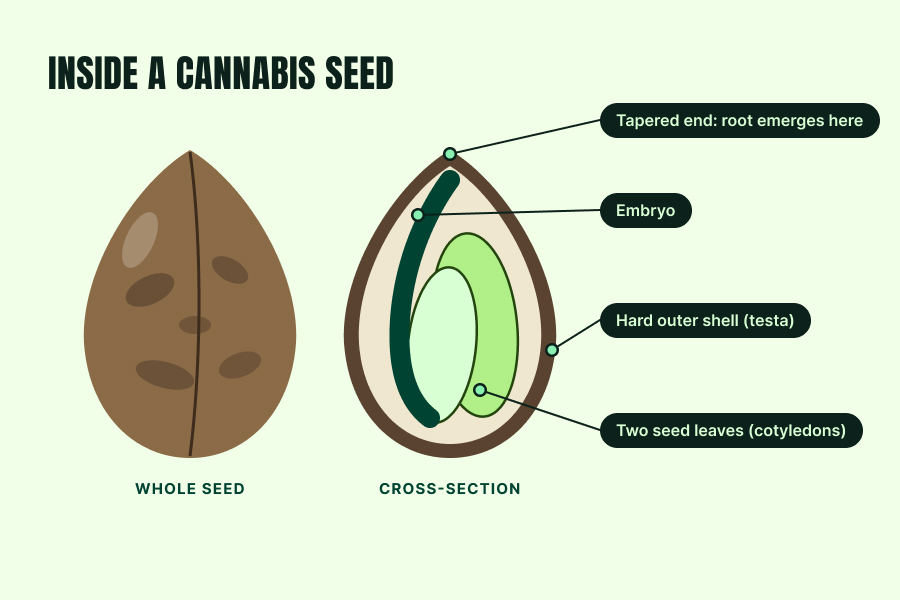
The usual 1/16 to 3/16 inch range is a typical spread, not a hard cutoff. Weed seeds a little smaller or larger still turn up in perfectly normal batches. Seen from the side, the seed is egg-shaped with one end slightly pointed, and a fine ridge usually runs around its edge where the two halves of the shell meet.
The pointed end matters at planting time, since that is where the root pushes out. Seeds from different varieties, and even from the same plant, can differ visibly in size, so a pack that looks a little mixed is nothing to worry about.
Color and Surface Pattern
A mature seed's base color can be anything from light sandy tan to a deep charcoal brown. Layered over that, many seeds carry a darker pattern, which can look like blotches, marbling, fine flecks or the bold bands growers call tiger stripes.
Patterning is common but not universal. A completely normal cannabis seed can be almost plain, and seeds collected from one plant often vary in both shade and marking. Some shells also look faintly glossy when fresh. That shine fades as seeds rub against each other and against fingers, so a dull finish tells you nothing about what kind of seed it is.
Shell and Feel
Between your fingers, a healthy marijuana seed feels hard and solid, never papery or soft. The hard outer casing is called the testa. It’s a protective coat, not the seed itself. Underneath it is the embryo, which already includes its first two rounded seed leaves before it’s ever planted. Because the shell is what keeps that embryo whole, its condition counts for more than its color. Color is cosmetic, while a sound shell is doing a job.
Good vs Bad Marijuana Seeds: What Appearance Tells You
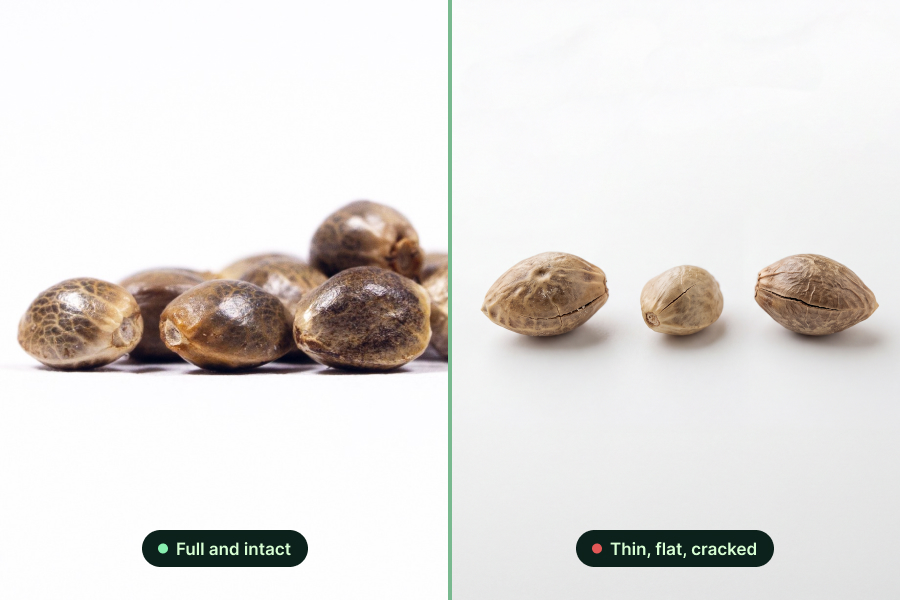
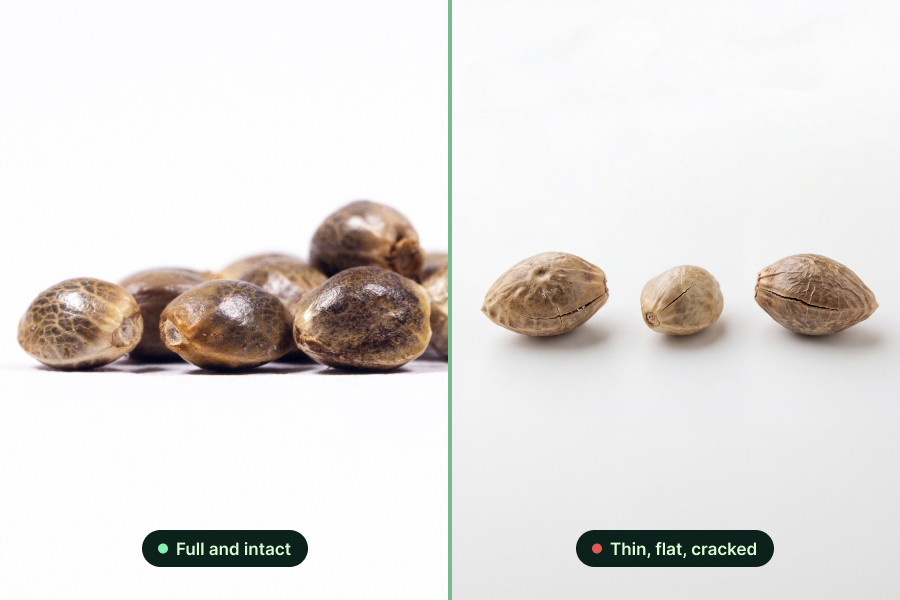
The quickest way to tell if a weed seed is good is to check that it's plump, hard and undamaged. A bad one is usually flat, soft, cracked or weightless. Color tells you the least. Check these signs in this order:
-
Shape: seen from the side, a healthy seed bulges evenly through the middle. One that looks pressed flat, or clearly smaller than the rest of the pack, probably never finished maturing.
-
Firmness: a good seed is hard to the touch. One that gives under light pressure is likely immature.
-
Damage: a split, punctured, crushed or misshapen shell can no longer fully protect the embryo inside. This is the clearest warning sign.
-
Weight: a sound seed feels solid for its size. One that seems to weigh almost nothing may be empty inside.
-
Color, last: dark mottling or stripes point to a seed that ripened fully on the plant.
Why color comes last: the outer coloring wears off easily. Seeds rubbing together in a pack, passing through fingers or getting knocked around in shipping can lose their markings and end up plain tan. A mature seed stripped this way can still sprout and grow a normal plant.
So if a pale seed is plump and firm, it’s most likely mature. If it’s flat, small and soft, the seed is more likely immature, whatever its shade. Underdeveloped weed seeds have lower germination odds, and any seedlings they produce may start off weaker. When sorting a batch, set aside damaged and underdeveloped seeds first, and give plain tan seeds the benefit of the doubt.
How to Identify Well-Developed vs. Underdeveloped Cannabis Seeds
Well-developed seeds:
-
Shape: Plump and fully rounded.
-
Shell: Hard and unbroken.
-
Color: Tan, brown, gray, or nearly black. Seeds may have patterns or be a solid color.
-
Size: Varies naturally between and within varieties.
-
Feel: Solid for their size.
Underdeveloped or damaged seeds:
-
Shape: Flat, thin, or noticeably undersized.
-
Shell: Soft, flimsy, split, punctured, or crushed.
-
Color: Often pale or greenish-white, although color alone does not indicate seed quality.
-
Size: May be small, particularly when combined with a flat shape and soft shell.
-
Feel: May feel unusually light, hollow, or give under light pressure.
Can You Tell if a Weed Seed Will Grow Just by Looking?
No, looks can’t confirm that a seed will germinate. A flawless-looking seed can sit in the medium and never sprout, while a plain one comes up fast and grows well. A sound, undamaged shell improves the odds. It can’t guarantee anything.
The things that matter most are invisible. Viability falls as seeds age, and poor storage speeds that decline, but neither leaves a mark on the shell. A seed kept cool and dry for a year and one that sat through several summers in a warm drawer can look exactly the same.
That's one reason to buy marijuana seeds from a reputable seed bank: you know their source and how they've been handled, which a found seed or an old stash can't tell you.
Two popular home checks are less useful than they seem:
-
The float test. A seed that sinks is not proven viable, and one that floats is not proven dead. Sitting in water also starts the seed taking up moisture, so it only makes sense right before you plant.
-
The squeeze test. A gentle pinch shows whether the shell feels firm. Press any harder and you risk cracking a seed that was perfectly good.
The only real test of viability is germination. Past that point, inspecting a seed tells you nothing new, so the next step is to germinate your cannabis seeds and see which ones sprout.
Once it sprouts, a pale root appears from the pointed end first. The seedling then lifts two smooth, rounded seed leaves, which formed while the seed was still developing on the mother plant. The familiar jagged, finger-like cannabis leaves only show up after that, as the seedling's first new growth.
Can You Tell a Weed Seed's Sex, Type or Strain by Looking?
No, sex, type, and strain are written in a cannabis seed's genetics, not on its shell. Here's how that plays out for each:
-
Sex: nothing on the shell shows whether a weed seed will become a male or a female plant. The idea that female seeds have a round dimple or ring at the base is a myth.
-
Feminized vs regular: feminized seeds look exactly like regular ones, and they aren't bigger or shinier. The real difference is that male plants are much rarer from feminized seeds, so there's less weeding out to do.
-
Autoflower vs photoperiod: the seeds look identical. An autoflowering plant starts flowering according to age rather than waiting for a 12/12 light schedule, while a photoperiod plant flowers once its nights get long enough.
-
Strain: lab measurements have found small shape differences between some varieties, but they overlap too much to identify a cultivar and are far too subtle to see by eye.
Go by the label and the breeder's information instead. Picking between feminized vs regular seeds, or autos and photos, is a call you make from the pack, never from the seed in your hand. Sex only becomes visible once the plant flowers: females grow thin, usually white pistils, while males form small ball-shaped pollen sacs.
Bagseed, Found Seeds & Hemp Seeds: Does Origin Change What You See?
No, a seed you find in a bag of bud looks no different from one out of a labeled pack, and you check it the same way. Where a seed came from changes how much you know about its future, not what it looks like.
A seed in your flower simply means pollen reached that flower while it was still developing. One seed doesn't prove the whole crop was badly grown. Like any other seed, it could be mature, underdeveloped or damaged, so sort it by shape, shell and firmness like the rest.
Hemp and marijuana are the same species, and their seeds can't be told apart by sight. Food hemp is a different matter. Hulled hemp seeds, sold as hemp hearts, have had the hard shell removed, leaving only a soft, pale kernel. A shell-less kernel like that cannot grow.
You can plant a seed with no label, and many growers do. Just go in knowing that its sex, flowering behavior and genetics stay unknown until the plant shows them.
Frequently Asked Questions
How Long Do Cannabis Seeds Last?
Stored well, cannabis seeds can stay viable for years, though germination rates drop as time passes. Cool, dark, dry and stable storage slows that decline.
Do Cannabis Seeds Smell Like Anything?
No, cannabis seeds have little or no distinctive smell. The aroma people link with cannabis comes from the flowers, not the seeds, so scent won't help you identify a seed or judge its quality. Go by its structure, shell condition and how fully formed it is.
Can a Cracked Cannabis Seed Still Grow?
Yes, a cracked cannabis seed can grow, but it's less likely to. A shell that is split or broken no longer fully protects the embryo, so failure is more likely than with an intact seed. A faint mark on the surface is not the same as a structural crack. One exception: if the split appeared after soaking and a pale tip is poking out, the seed isn't damaged. It has started to germinate and is ready to plant.


