
 SUPPORT
 SHIPPING INFO
 STRAIN FINDER

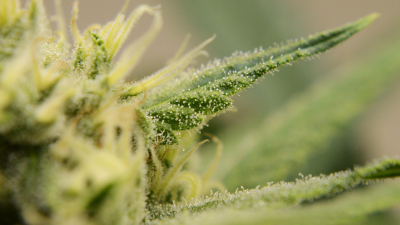
Sugar leaves are the small, frosty leaves that poke out of your buds, named for the trichome coating that makes them look dusted with sugar. They carry real resin, just less of it than the flower they grow out of. Most growers trim them off at harvest, though that's a preference, not a rule. Whatever lands in the trim pile is usable material, so it pays to know what to do with it.
Below, you'll find out what sugar leaves are, how they compare to fan leaves, and how much THC they carry. We'll also cover whether to trim them, how to dry and store your trim, whether they're worth smoking, and the best ways to use what's left over.
What Are Cannabis Sugar Leaves?
Cannabis sugar leaves are the small leaves that grow out from inside and around the buds. They usually carry one blade or a few and sit tight against the flower instead of reaching out on a long stem. You'll notice them properly during flowering, as the buds stack up and the plant lays down resin.
The name is purely descriptive. There's no actual sugar anywhere on the plant. What you're looking at is a coating of glandular trichomes — the same resin glands that produce cannabinoids and terpenes, and give cannabis buds their frosted appearance.
Coverage varies a lot. One plant can finish with leaves so frosted that it's hard to see where the leaf stops and the bud begins, while another finishes with the same leaves nearly bare. You'll often see that difference between top colas and lower growth on a single plant.
Three structures show up on the same bud, and they're easy to mix up. The sugar leaves are leaves, the orange or brown hairs are stigmas (or pistils), and the tiny crystal-like specks are the trichomes themselves. Each plays its own part in basic cannabis plant anatomy, and telling them apart makes it easier to see what you're cutting.
Sugar Leaves vs. Fan Leaves
Sugar leaves are the small leaves growing out of the buds, while fan leaves are the big multi-fingered ones that reach out from the nodes and do the photosynthetic work through the grow. Sugar leaves typically carry considerably more visible resin, which makes them the only one of the two worth much once the buds are off the branch.
Sugar Leaves vs. Fan Leaves: Key Differences
Sugar leaves:
-
Where they grow: Emerge from within and around the buds.
-
Size and shape: Small, usually with one blade or just a few.
-
Role on the plant: Minor leaf growth among the flowers.
-
Visible resin: Often have substantial trichome coverage.
-
At harvest: Trimmed according to preference, typically close to the buds.
Fan leaves:
-
Where they grow: Extend outward from nodes and branches.
-
Size and shape: Large, with multiple finger-like blades.
-
Role on the plant: Support photosynthesis and overall plant growth.
-
Visible resin: Usually have very little trichome coverage.
-
At harvest: Often removed early in the trimming process.
These two cannabis leaf types also handle very differently. Fan leaves pull away cleanly at the stem and are the main target of defoliation during the grow, so many are gone before harvest and the rest usually come off before the plant goes up to dry. Sugar leaves are tangled into the flower, so removing them takes deliberate scissor work, not a quick cleanup.
Do Sugar Leaves Contain THC?
Yes, sugar leaves can contain THC and other cannabinoids, because they carry the same resin glands as the flower. The concentration is generally lower than in the buds themselves, though generally higher than anything you'd find on a fan leaf.
How much lower depends on the plant in front of you. Cannabis genetics set the ceiling, and the amount of resin a plant puts out also tracks with how it was grown, how mature it was when you cut it, and where on the plant the leaf was sitting. Leaves buried in the lower growth rarely look like the ones wrapped around a top cola.
What you can't do is read potency off the sparkle. Visible frostiness doesn't reliably tell you what's in the material, and a frosty-looking leaf isn't proof of a strong one.
A more useful way to size up your pile is to look at the ratio, not any single leaf. Trim that's mostly small, resin-dusted leaf from close to the bud is worth more of your time than a bag of bulky leafy material with a few sparkly pieces in it. That ratio decides which of the methods further down are worth the effort.
Should You Trim Sugar Leaves Off Your Buds?
Most growers trim most of the sugar leaves off, but there's no single correct trim level. It comes down to how you dry, how you want the jar to look, and how much scissor time you're willing to put in, so it's more of a cosmetic and handling call than a verdict on quality.
Reasons to trim sugar leaves off:
-
Tighter, more uniform buds that are easier to handle and store.
-
Less leafy material in the finished jar.
-
A smoother smoke.
-
Clean separation of your trim from your flower while you work.
Reasons to leave sugar leaves on:
-
Slower moisture loss during the dry, which can help in a hot, dry room.
-
Heavily frosted leaves are perfectly good material that would otherwise end up in the trim pile.
-
More weight in the jar, though the extra weight is leaf and adds no cannabinoid content to the flower.
-
Close trimming is slow work, and a light tidy takes a fraction of the time.
Let your drying space settle the argument. In a hot, dry room, leaving more leaf material behind slows things down in your favor. In a humid room, the same extra material can slow the dry too much and raise the risk of mold, so trim closer and let air move through the buds.
Timing splits two ways. Wet trimming happens straight after the chop, while the leaves are still stiff and stand out from the bud, which makes them easy to cut. Dry trimming happens once the plant has dried and the leaves have curled in around the flower, where they offer a little protection on the way down.
Both are standard practice, and the better fit depends on your plan for drying cannabis. Whichever you pick, cut the sugar leaves at the base where they meet the bud and drop the clippings straight into a clean container, keeping the frosty close-to-bud material separate from the bulkier leaf.
Drying and Storing Sugar Leaf Trim
Dry sugar leaf trim the same way you dry your buds, then store it airtight, because fresh clippings are wet plant material that goes off fast. Left in a heap or sealed in a bag, fresh trim compacts, holds heat, and goes moldy, which is where a lot of homegrown trim ends up before anyone gets around to using it.
Here are four steps to keep your sugar leaf trim usable:
-
Dry it like your buds. Spread it out with some air movement in the same cool, dark, reasonably ventilated space you dry flower in.
-
Check it early. Thin leaf material gives up its moisture faster than dense buds, so it's ready well before the hanging branches are.
-
Store it airtight. Once dry, keep it sealed, cool, and out of direct light, the same way you'd store cannabis flower.
-
Label it. Mark the container with the plant it came from and the harvest date, because trim from different plants isn't interchangeable and you won't remember.
Decide between drying and freezing before you start. Some sugar leaf uses call for fresh or fresh-frozen material, not dried leaf, and if that's your plan, bag the trim and get it into the freezer promptly instead of drying it.
If your sugar leaf trim smells musty, sour, or like ammonia, or you can see mold in it, nothing will rescue it. Throw it out.
Can You Smoke Sugar Leaves?
Yes, you can smoke sugar leaves — they're the same plant material the buds grow out of, and they carry resin. But most growers find it a worse experience than smoking the flower, for a few reasons:
-
Leaf material tends to smoke harsher, and growers commonly report more throat irritation from leafy material than from trimmed buds.
-
It's less resin-dense, so you get through more of it for a comparable effect.
-
It has to be properly dried first. Damp leaf isn't a smoking option, and moldy leaf never is.
Most of this actually happens in the middle ground. Leaving heavily frosted sugar leaves attached and smoking them along with the bud is a very different proposition from packing a bowl with loose leaf, and it's far more common. A lightly trimmed bud off a resinous plant can smoke close to a manicured one.
Fan leaves are a much weaker smoke. They're harsh and give very little back, so the answer to whether you can smoke weed leaves in general is usually no.
If you want the same material without the combustion, vaporizing dried sugar leaf is the gentler route. Decide bud by bud rather than for the whole harvest, and send less frosty leaf to one of the methods below. For most growers, pure sugar leaf is a backup smoke, not a first choice.
What Else Can You Do With Sugar Leaves?
Sugar leaves can be turned into kief, hash, rosin, edibles, tea, or topicals, and anything too low in resin can go into the compost heap. It largely depends on how much trim you have and how resinous it is. A handful of heavily frosted leaf points somewhere different than three bags of bulk material.
Ways to Use Leftover Cannabis Sugar Leaves
Kief or dry sift
-
What it needs: Dried sugar leaf trim and a mesh screen or sifting box.
-
Best for: Small batches of resin-dusted leaf.
-
Effort: Low.
Ice water hash
-
What it needs: Larger volumes of trim, ice, water, and filter bags. Trim can be dried or fresh-frozen.
-
Best for: Growers with plenty of saved trim.
-
Effort: High.
Dry ice hash
-
What it needs: Dried trim, dry ice, and mesh bags.
-
Best for: Faster mechanical separation from a dry pile.
-
Effort: Medium.
Rosin
-
What it needs: Dried trim, or kief or hash made from it, plus heat and pressure.
-
Best for: Turning separated resin into a solventless concentrate.
-
Effort: Medium.
Edibles and infusions
-
What it needs: Dried, decarboxylated trim and butter or oil.
-
Best for: Bulkier trim with moderate resin coverage.
-
Effort: Low to medium.
Tea
-
What it needs: Dried or fresh sugar leaves and hot water.
-
Best for: Using small amounts of leftover sugar leaf in a traditional preparation.
-
Effort: Low.
Topicals
-
What it needs: Infused oil already made from your trim.
-
Best for: Growers who have infused oil available.
-
Effort: Medium.
Compost or mulch
-
What it needs: A compost pile or garden bed.
-
Best for: Bulky leaves with low resin coverage.
-
Effort: Low.
Anything you plan to eat or infuse needs heat first. Cannabinoids sit in raw plant material mostly in their acid forms, THCA and CBDA, so the material has to be decarboxylated before an infusion behaves the way you expect. Heating your trim before it goes into the butter or oil is what gives a batch of cannabutter the effect you're after.
Not every pile deserves processing. Bulky, barely frosted leaf makes disappointing butter and poor hash, and it does more good in the compost than in a jar. Growing, processing, and using cannabis is governed by the laws where you live, so check what applies to you before you do anything.
Sugar Leaf FAQs
What's the Difference Between Trim and Shake?
Trim is the leaf material you cut away from the buds, mostly sugar leaves. Shake is the small broken-up pieces of bud that come loose through handling, drying, and time in the jar. The two often share a container, but trim is leafier and less resinous, while shake is flower material and generally more potent, so keep them separate when you can.
Are Sugar Leaves the Same Thing as Bracts?
No, bracts are the small leaf-like structures that make up the flower and enclose its reproductive parts. Sugar leaves are true leaves growing from within and around the bud. The two sit side by side, both carry trichomes, and both look frosty late in flowering, which is why growers mix them up so often.
Should You Remove Sugar Leaves During Flowering?
No, most growers leave the sugar leaves alone through bloom because they sit tight against developing buds, and pulling at them risks tearing flower material you want to keep. Defoliation during flowering is generally aimed at fan leaves shading bud sites or blocking airflow through the canopy, not at the small leaves on the buds themselves.
Why Do Sugar Leaves Change Color Before Harvest?
Sugar leaves commonly yellow, fade, or take on color near the end of flowering as the plant draws resources out of its leaves. Late yellowing isn't automatically a problem, and plenty of growers expect it. Color change earlier in flowering is a different signal that can point to something else going on in the grow, so the timing matters more than the color itself.
Do Autoflowers Have Sugar Leaves?
Yes, sugar leaves grow on any cannabis plant that produces buds, whether it's an autoflower or a photoperiod plant. What changes from plant to plant is how many there are and how much resin they carry, and that comes down to genetics and growing conditions, not flowering type. Compact autos often leave you with a smaller trim pile overall.


