
 SUPPORT
 SHIPPING INFO
 STRAIN FINDER

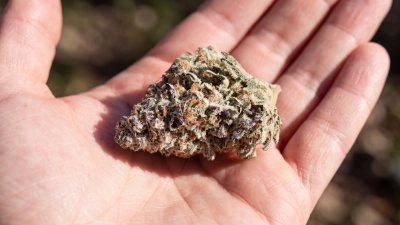
Cannabis flower is the dried, cured buds of female cannabis plants, also called bud or weed flower, and it’s the part people smoke. It’s also where the plant’s cannabinoids are most concentrated, in tiny resin glands covering the buds.
How strong that flower turns out depends on genetics and growing conditions, so if you’re growing for potency, the story starts long before the jar, with the right high-THC seeds.
Below, you’ll see how plants form buds, what a bud is made of and what’s inside it, and how growers dry and cure it into finished flower. You’ll also learn how flower is graded, how to spot quality, and the main ways people use it.
What Is Cannabis Flower?
Botanically, each bud is an inflorescence, a tight cluster of many small flowers growing along the stem. Female plants form these dense, resin-coated clusters, and once they’re harvested, dried, and cured, they become the product sold as flower.
So what part of the marijuana plant do you smoke? The buds. Fan leaves, stems, and seeds aren’t what’s sold or smoked as flower. Fan leaves contain much lower levels of cannabinoids than buds, which is why growers trim them off before the flower is finished.
Growers and shoppers use a handful of names for the same thing:
-
Flower: the industry term you’ll see on dispensary menus and seed listings.
-
Bud: the everyday word, so weed buds, weed flower, and flower weed all point to the same product.
-
Nug: a single piece of bud.
-
Weed: broader slang that can mean cannabis in general, not just the buds.
-
Weed flour: a misspelling of flower, not a separate product.
Is Marijuana a Flower? How Cannabis Plants Make Buds
Yes. Cannabis is a flowering plant, and both male and female plants flower. Only females make buds. Males make small pollen sacs instead, and a few plants develop both (hermaphrodites). Pollinated female flowers start developing seeds, so growers who want seedless buds, often called sinsemilla, remove males once they can tell male and female plants apart.
Male plants
-
Produce: Pollen sacs
-
Reproductive role: Release pollen
-
Grower action: Removed when seedless buds are the goal
Female plants
-
Produce: Buds (flower clusters) with pistils
-
Reproductive role: Catch pollen and develop seeds if pollinated
-
Grower action: Kept and grown for harvest
Every bud comes from a female plant, so the type of cannabis seeds you start with decides how much male-sorting you’ll do:
- Regular seeds can grow male or female plants.
- Feminized seeds make male plants far less likely, but not impossible, so check plants as they start to flower.
- Autoflowering seeds start flowering primarily based on age rather than a light change, and every autoflower ILGM sells is feminized.
- Clones, cuttings taken from a known female, skip seeds and the question of sex entirely.
Photoperiod plants start flowering when nights get longer, as summer turns to fall outdoors or when indoor growers flip the lights to about 12 hours on and 12 off. Autoflowers don’t need that switch, but light, temperature, and growing conditions still shape how they develop.
Parts of a Cannabis Flower Bud
A cannabis flower bud is built from bracts, pistils, trichomes, and small sugar leaves, packed tightly along the stem. Dense clusters of buds along a branch form a cola, and the main cola sits at the top of the plant’s central stem.
Growers often call the small swollen pods “calyxes,” but botanically they’re bracts, leafy structures wrapped around each flower’s ovary. The difference is worth knowing because bracts, not the visible hairs, carry some of the highest trichome densities in the bud.
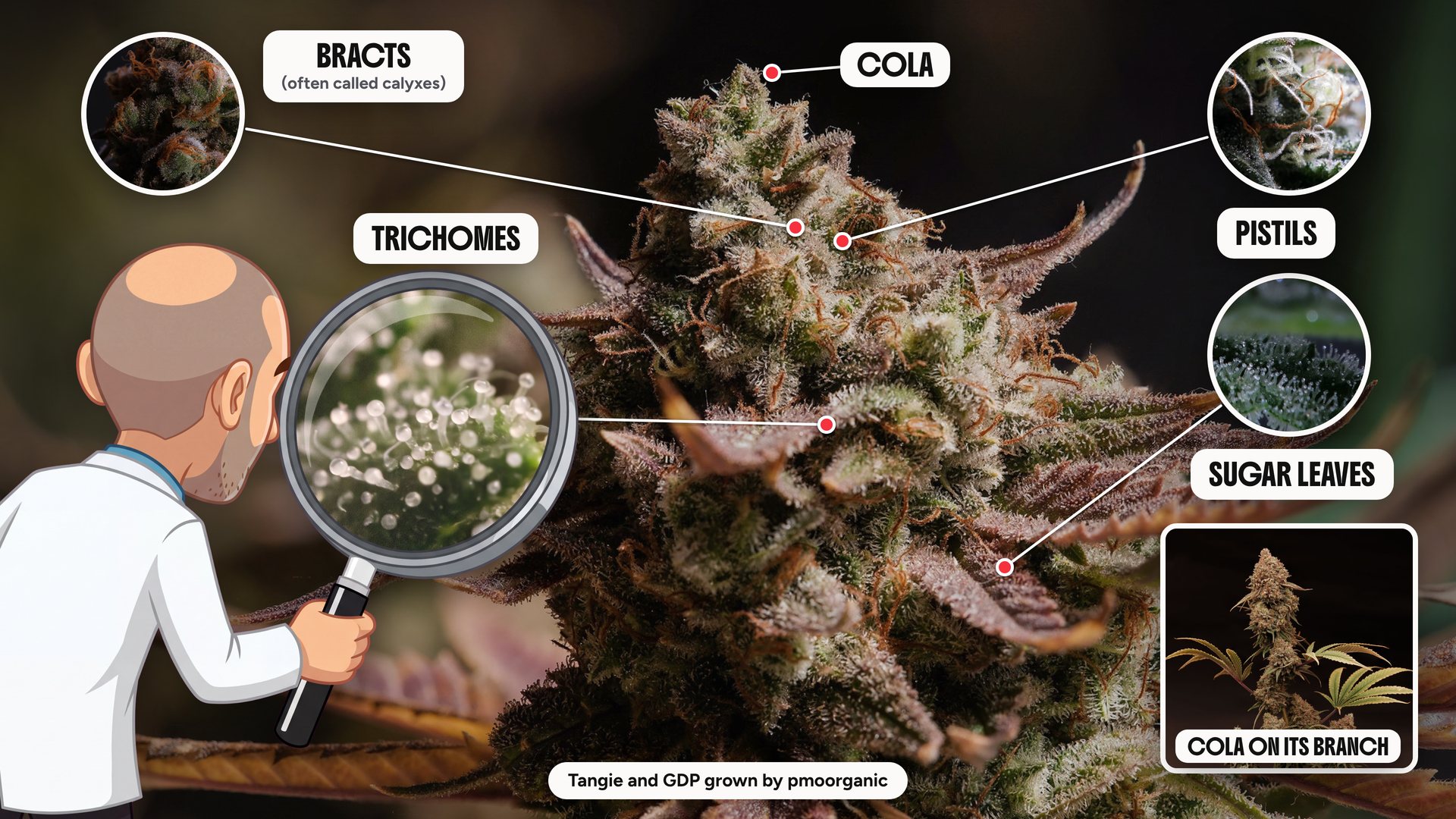
Bracts (often called calyxes)
-
What they are: Small, leaf-like pods surrounding each flower’s ovary
-
Why they matter: Among the most resin-covered parts of the bud
Pistils
-
What they are: Hair-like stigmas extending from the bracts
-
Why they matter: Catch pollen and often darken from white to orange or brown as flowers mature
Trichomes
-
What they are: Tiny glandular resin heads covering the bud
-
Why they matter: Produce and store cannabinoids and terpenes
Sugar leaves
-
What they are: Small, resin-dusted leaves growing out of the bud
-
Why they matter: Trimmed close to the bud after harvest
Cola
-
What it is: A dense cluster of buds along a branch
-
Why it matters: The main cola is often the largest bud on the plant
Pistil color is a common sign that flowers are maturing, but it isn’t a reliable harvest test on its own. Many growers judge ripeness by the trichome heads instead, checking them under magnification as they shift from clear to cloudy and then amber.
What’s Inside Cannabis Flower: THC, Cannabinoids and Terpenes
Cannabis flower contains cannabinoids, mainly THCA, plus terpenes that give each strain its aroma and flavor. Both are made in the trichomes, the resin glands that coat the buds.
THCA
-
What it is: The main cannabinoid in raw cannabis flower
-
What to know: Converts into THC when heated
THC
-
What it is: The main intoxicating cannabinoid
-
What to know: Levels vary with genetics and growing conditions. High-THC flower can test above 20% by dry weight
CBD
-
What it is: A non-intoxicating cannabinoid
-
What to know: Present in meaningful amounts only in some plants
CBG and CBN
-
What they are: Minor cannabinoids
-
What to know: Usually found in small amounts. CBN also builds up as THC breaks down over time
Terpenes
-
What they are: Aromatic compounds
-
What to know: Give buds their citrus, pine, earthy, or skunky aromas and flavors
Raw flower contains mostly THCA, not THC. Heat converts it through a process called decarboxylation, which happens on its own when flower is smoked or vaporized. That’s why raw bud doesn’t deliver what people expect from THC, and why edibles need a separate heating step.
Claims that specific terpenes produce specific effects aren’t settled science, so read terpene lists as aroma notes, not effect labels.
From Plant to Bud: How Cannabis Flower Is Harvested, Dried and Cured
Growers harvest mature buds, trim away leaves, dry the buds slowly, then cure them in sealed containers so the flower becomes smokable and keeps its aroma. Each step affects how the finished flower smells, burns, and stores.
-
Harvest. Growers cut plants or branches once the buds are mature. Timing affects the finished flower, and knowing when to harvest is a separate skill worth learning before the first chop.
-
Trim. Fan leaves come off, and sugar leaves are clipped close to the bud. Some growers trim before drying and others after.
-
Dry. Buds hang or rest on racks in a dark, ventilated space. Drying too fast can leave flower harsh and weak-smelling, while drying slowly in damp air raises the risk of mold.
-
Cure. Dried buds go into airtight jars, which growers open periodically (“burping”) to release moisture. Curing smooths the smoke and helps hold onto aroma.
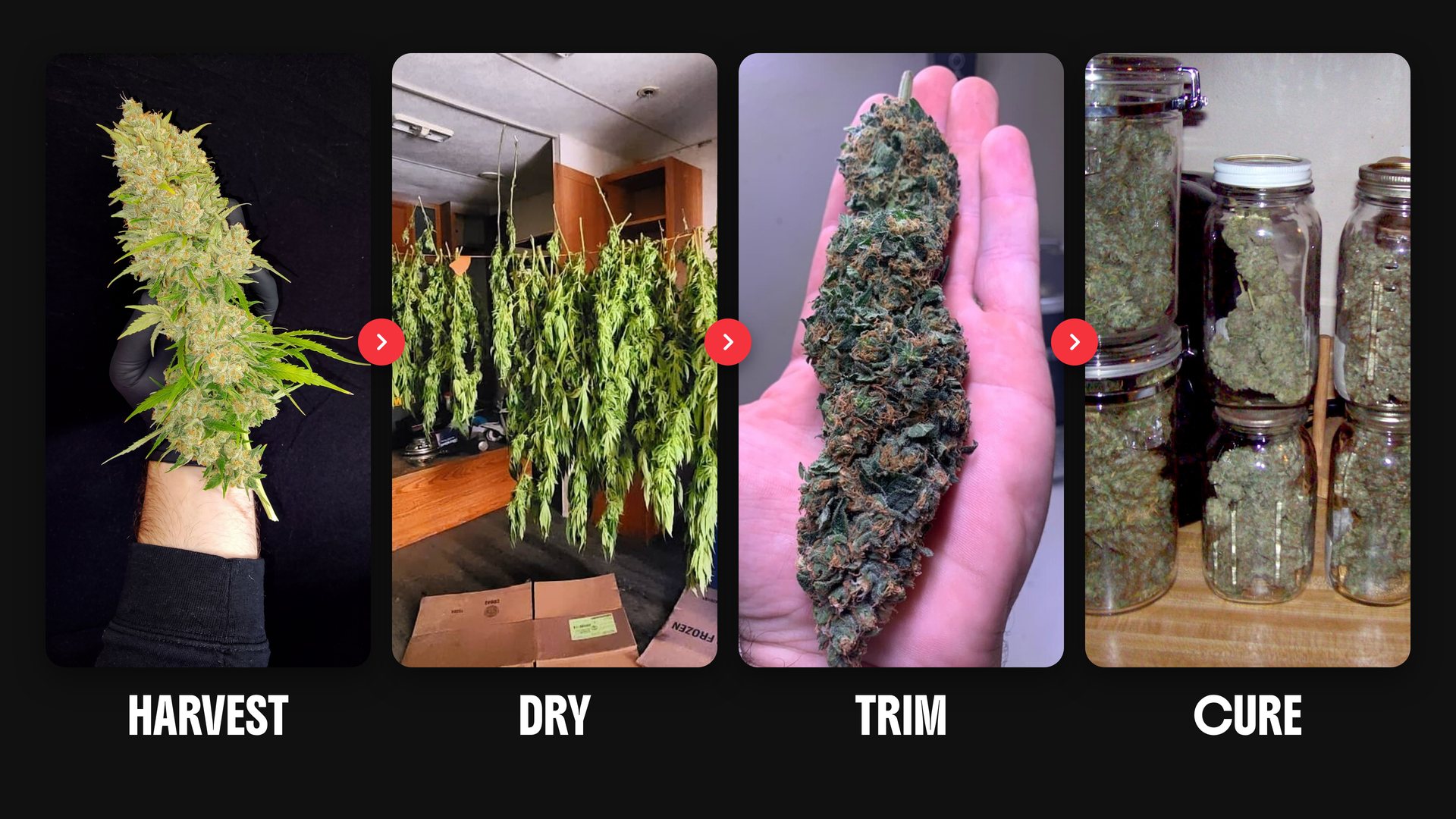
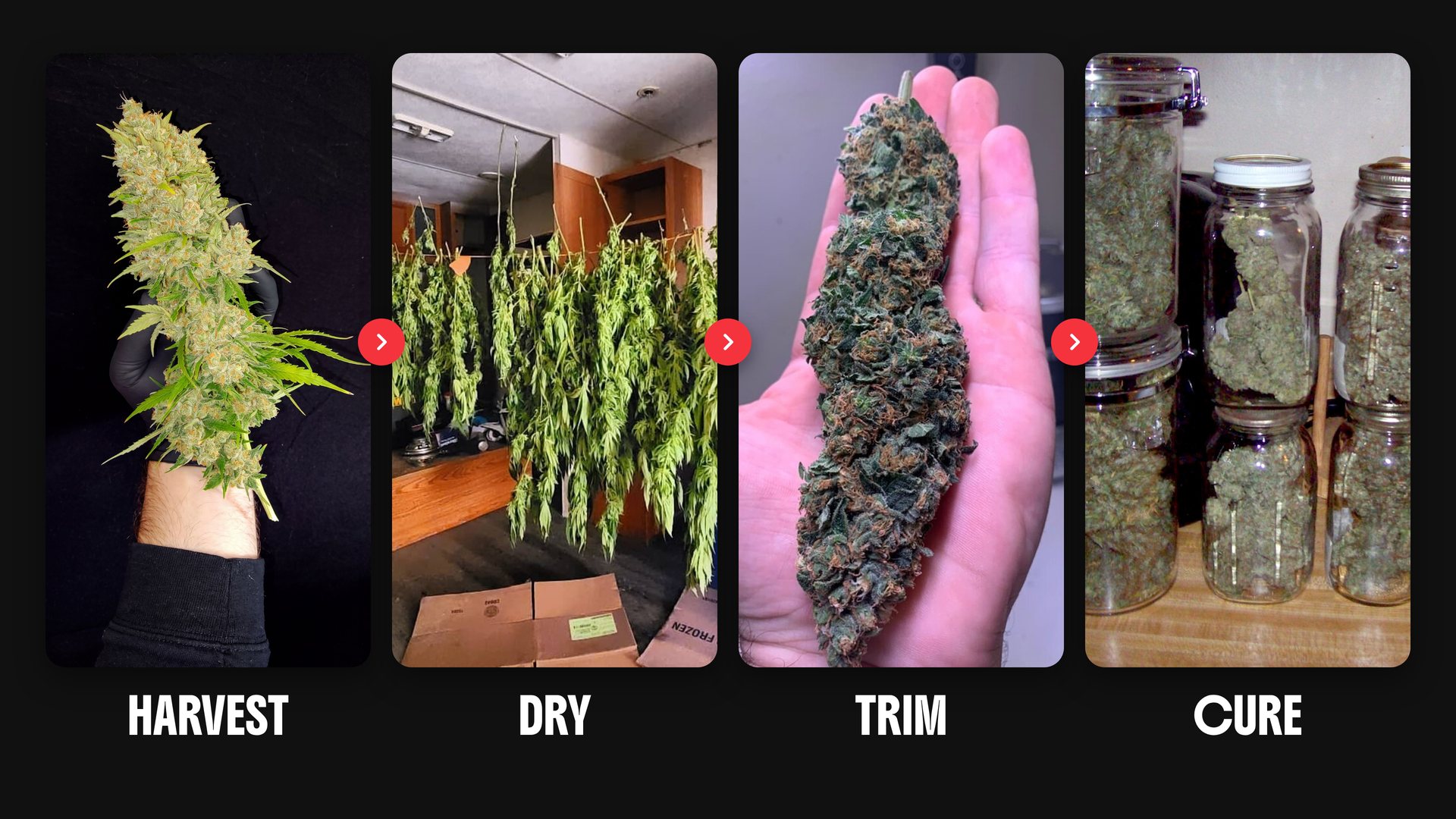
Many growers dry in a dark room at around 60°F (15°C) and 60% relative humidity, which usually takes one to two weeks, and move buds to jars once small stems snap instead of bending. Jars are commonly burped once or twice a day for the first week or so, then less often as the cure goes on.
Your space and strain will shift these numbers, so treat them as a starting point.
Types of Weed Flower
Weed flower is usually sorted two ways: by strain label (indica, sativa, or hybrid) and by bud grade (top-shelf buds, popcorn buds, shake, and trim). The two are independent, so the same hybrid can show up as large top-shelf buds or as shake.
Indica, Sativa and Hybrid Labels
Indica and sativa started as descriptions of plant shape and heritage. Indica is linked with relaxing effects and sativa with energizing ones. But a 2021 Nature Plants study found the labels poorly match a plant’s genetics and track only a few aroma compounds.
Indica
-
Plant / heritage meaning: Shorter, bushier plants with broad leaves
-
Caveat: Commonly associated with relaxation, but not a reliable predictor of effects
Sativa
-
Plant / heritage meaning: Taller plants with narrow leaves
-
Caveat: Commonly associated with energy, but not a reliable predictor of effects
Hybrid
-
Plant / heritage meaning: A cross of indica and sativa genetics
-
Caveat: Covers a wide range of genetic mixes
Bud Grades: Top-Shelf, Popcorn, Shake and Trim
Grades describe the bud itself, not the strain. Size alone tells you nothing about potency.
Bud Grades:
Top-shelf buds: Large, dense, well-trimmed buds, usually from upper colas
Popcorn buds: Small buds from lower branches
Shake: Loose bits that break off buds during handling
Trim: Sugar leaves and small leaf pieces removed during trimming
How to Spot High-Quality Marijuana Flower
High-quality marijuana flower looks well-trimmed and resinous, smells strong and fresh, feels slightly sticky but dry enough to break apart, and shows no sign of mold. Several of these signs reflect how well the flower was dried and given a proper cure.
Look
-
Good sign: Intact buds with visible trichomes and a neat trim
-
Warning sign: Excessive leaf material, crushed buds, or dusty surfaces
Smell
-
Good sign: Strong, distinct aroma
-
Warning sign: Faint, grassy, hay-like, or musty smell
Feel
-
Good sign: Slightly sticky but breaks apart with gentle pressure
-
Warning sign: Crumbles into powder or feels damp and spongy
Mold
-
Good sign: Clean surface with no fuzz or webbing
-
Warning sign: White or gray fuzz, dark spots, or a musty odor
Mold is the one dealbreaker. Fuzzy white or gray growth looks different from trichomes, which are tiny glistening heads, and moldy flower shouldn’t be used.
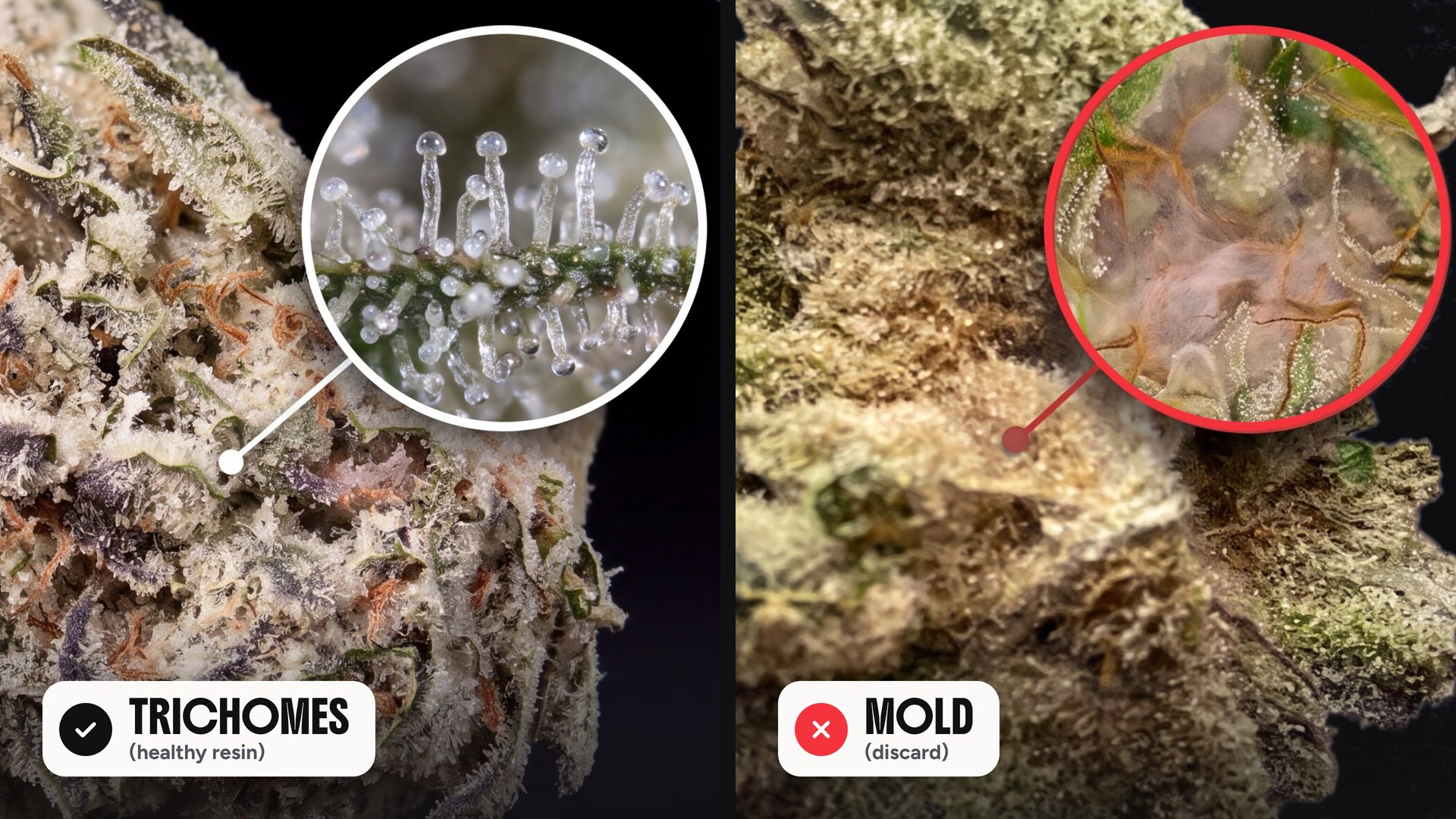
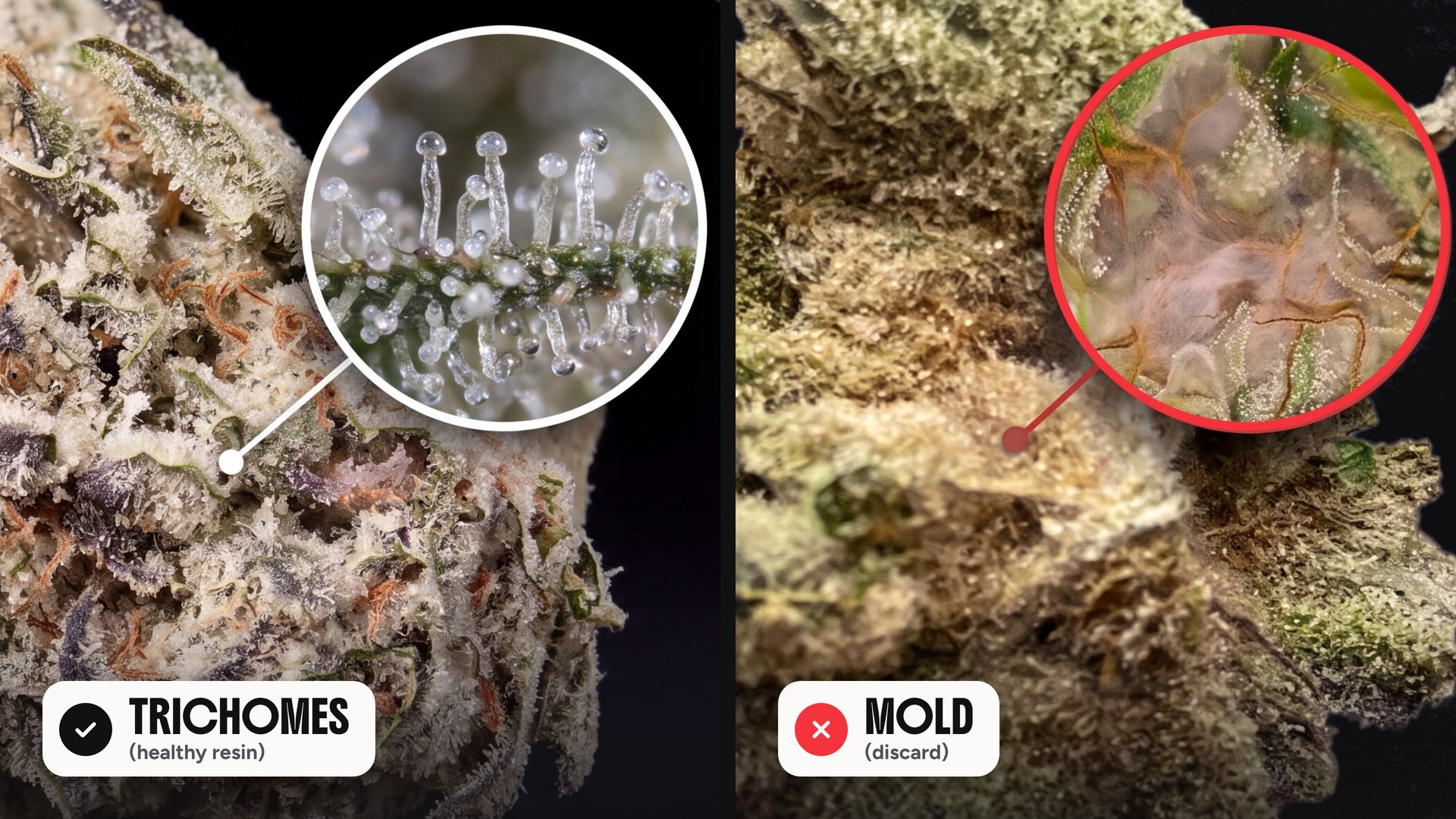
Over-dried bud is less of a problem but tends to smoke harsh and smell weak, because aroma compounds fade as flower dries out. Don’t read too much into frost or color, either. A heavy trichome coat shows resin, not a lab-tested THC level, and bud color doesn’t indicate strength.
How to Use Cannabis Flower
You can use cannabis flower in three main ways: smoke it in a joint, pipe, or bong, vaporize it, or decarboxylate it and infuse it into oil or butter for edibles. Grinding comes first for most methods because broken-up flower burns or heats more evenly than a whole nug.
Smoking
-
How it works: Ground flower burns in a joint, pipe, or bong
-
How it differs: Heat converts THCA into THC as the flower burns
Vaporizing
-
How it works: A device heats flower without burning it
-
How it differs: Releases cannabinoids and terpenes as vapor instead of smoke
Edibles
-
How it works: Decarboxylated flower is infused into butter or oil
-
How it differs: Effects take longer to start and last longer than smoking, so wait before taking more
Use cannabis only where it’s legal and only if you’re an adult.
Cannabis Flower FAQs
What Is Infused Flower, and How Do You Smoke It?
Infused flower is bud that’s coated or mixed with a concentrate such as oil, distillate, or kief. You smoke it the same way as regular flower, in a joint or pipe, but it’s much stronger than plain flower. Start with a smaller amount than usual and pace yourself.
How Should You Store Cannabis Flower?
Store cannabis flower in an airtight glass jar in a cool, dark place. Heat, light, and air dry flower out and slowly break THC down into CBN, while too much moisture raises the risk of mold. Keep the jar somewhere children and pets can’t reach.
Can You Grow Your Own Cannabis Flower From Seed?
Yes, where home growing is legal. Feminized or autoflowering seeds are the simplest starting point for most first-timers. Flowering time depends on the strain and your setup, so check each strain’s details before planting.


